 Select Language
 English
Turning Expanded Polystyrene into Reusable Feedstock with a Polystyrene Shredder
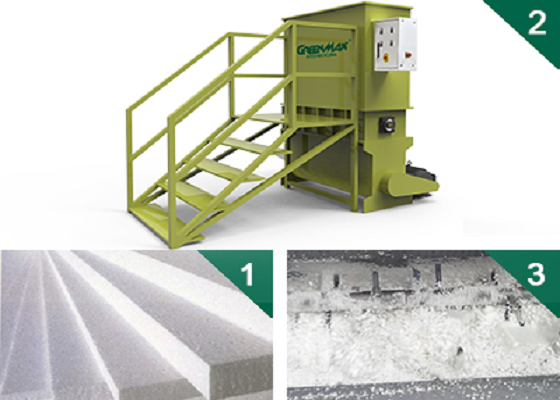
Expanded polystyrene (EPS) is everywhere—from protective packaging for appliances to insulated boxes for seafood and cold-chain logistics. The problem is not that EPS is impossible to recycle, but that it is inconvenient to recycle. It is extremely light, bulky, and easily contaminated, so hauling loose foam to a recycler can cost more than the material is worth. This is why a Polystyrene shredder has become a practical first step for many recycling programs: it transforms oversized foam into a controlled, consistent form that is easier to handle, store, and prepare for the next recycling stage.
A Polystyrene shredder is designed to reduce EPS into smaller pieces through cutting and shearing action. Once EPS is shredded, the material’s volume becomes more manageable, and downstream processes become more stable. For example, shredded EPS can be fed more evenly into a densifier or melting unit, or it can be bagged in bulk for transport. Just as importantly, shredding helps sites separate obvious contaminants and standardize input size, which improves productivity and reduces equipment downtime later in the line.
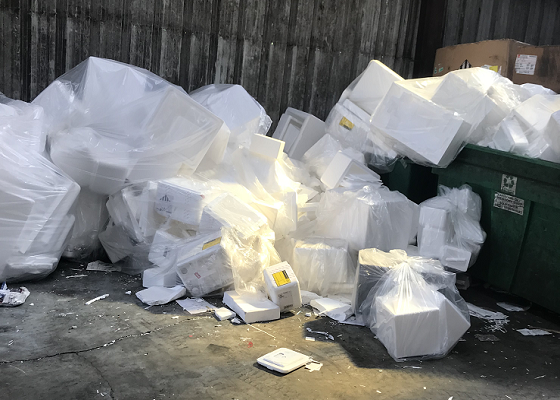
In one practical application, a recycling operator handling large volumes of appliance packaging installed a GREENMAX Polystyrene shredder to solve a basic logistics issue. Previously, workers were breaking foam manually to fit it into bins, which was slow and inconsistent. After switching to mechanical size reduction, the operator began feeding bulky EPS blocks directly into the shredder. The machine produced uniform fragments that were easy to pack and store, and the site gained more control over material flow. Because the output was consistent, the operator could also schedule pickups more efficiently, reducing the number of “air shipments” where trucks moved mostly empty volume rather than useful weight. The result was a cleaner, more predictable pre-processing step that made the entire EPS recycling workflow easier to manage.
Shredding can also support a more specialized goal: converting EPS into polystyrene beads for reuse. Many people associate “beads” with raw plastic pellets, but in EPS recovery, bead-sized particles can be produced through controlled shredding and screening so the output behaves more like a standardized feedstock. In another GREENMAX-focused scenario, an operator collected clean, dry EPS from packaging streams and ran it through a GREENMAX polystyrene shredder configured for finer reduction. After shredding, the material was processed to achieve a bead-like consistency—small, relatively uniform granules that were easier to meter and blend. This bead-style output helped the operator supply a downstream user who needed predictable particle size for manufacturing trials and material testing. By turning foam into polystyrene beads rather than irregular chunks, the recycler improved handling, dosing, and overall material usability.
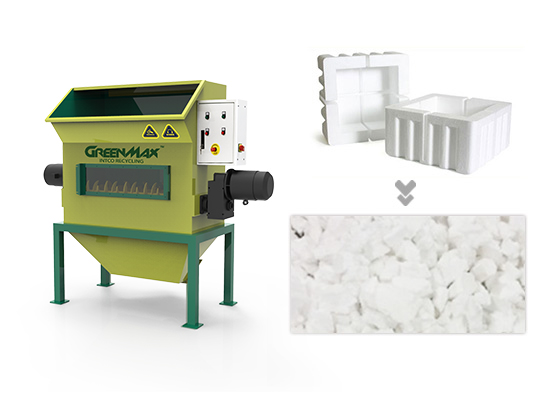
It’s important to note that a Polystyrene shredder is usually not the final step in EPS recycling. Instead, it acts as an enabler for higher-value processing. Shredded EPS flows better into hot-melt systems and densifiers, and it can reduce energy waste by keeping feeding continuous and stable. Even when the goal is simply to ship material out, shredding helps increase storage density, reduce breakage, and keep operations tidy—small operational wins that add up quickly in real facilities.
As EPS recycling expands, the role of the Polystyrene shredder becomes more central. Whether the objective is to prepare foam for densification or to create bead-like polystyrene feedstock, shredding is often the step that turns an awkward, low-density waste into a material that can move through an industrial recycling chain with speed and consistency.