 Select Language
 English
Norway has a long coastline and a well-developed fishing and aquaculture industry, making seafood an important part of the country's economy. With the growth of seafood processing and distribution, large quantities of EPS fish boxes are generated every day, creating an increasing need for efficient and sustainable waste management.
EPS is widely used for fish boxes because it is lightweight, insulating, and effective at protecting seafood during transportation. However, used fish boxes are bulky and have a low density, making them costly to store, transport, and dispose of. Fish box recycling offers seafood businesses a practical way to reduce waste while improving resource efficiency.
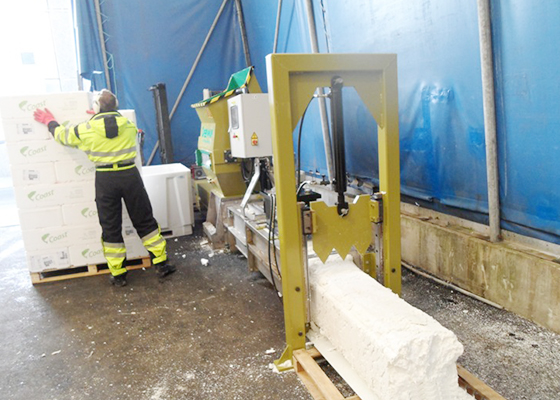
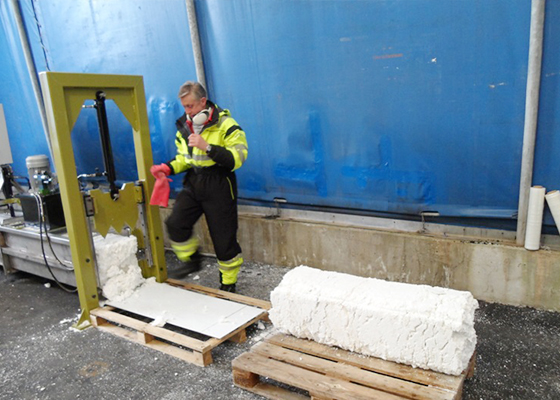
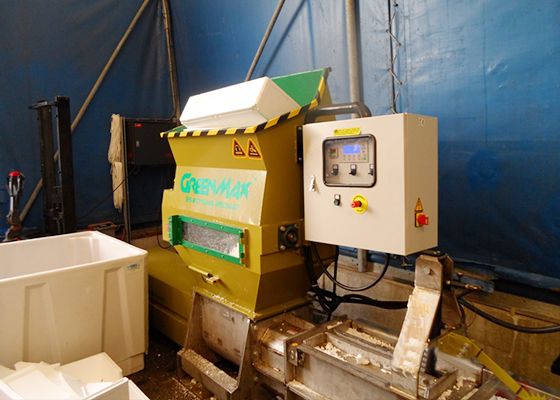
GREENMAX EPS compactor can compress loose fish boxes into dense EPS blocks, significantly reducing their volume. This makes the material easier to store and transport while helping seafood processors reduce waste disposal and logistics costs. On-site compaction can also free up valuable warehouse space and improve daily waste management.
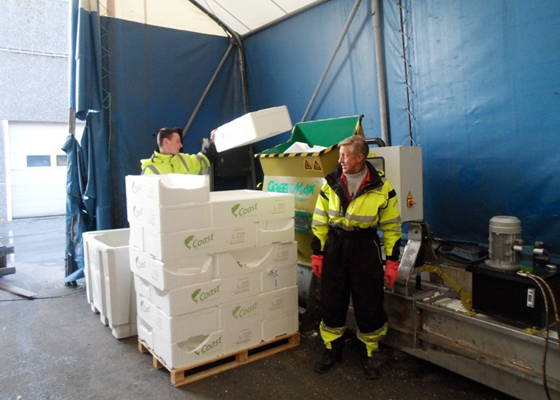
A Norwegian fish processor has adopted GREENMAX equipment to process its used fish boxes. By compacting the EPS packaging directly at its facility, the company can reduce the volume of waste before transportation and send the compressed material into the recycling chain. The recovered EPS can then be further processed and reused as a secondary plastic resource.
As Norway's seafood industry continues to grow, EPS fish box recycling can help seafood processors reduce packaging waste and support a more circular economy. With suitable recycling equipment, used fish boxes can be transformed from bulky waste into a recyclable resource while improving storage, transportation, and overall operational efficiency.
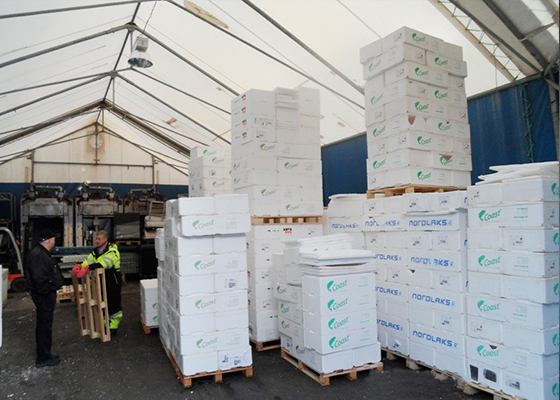
Accumulated waste fish boxes:
GREENMAX EPS Compactor is working:
Cutting the Compacted EPS blocks: