 Select Language
 English
EPS melting machine: Assisting in the upgrade of EPS recycling in South Carolina USA
In South Carolina, USA, the booming logistics, furniture manufacturing, and e-commerce retail industries have generated a large amount of EPS (expandable polystyrene) foam waste - from furniture transport packaging to cushioning pads for electronic products. This lightweight but space-consuming waste has long plagued the local recycling system. It wasn't until the introduction of the EPS melting machine that the region's low efficiency and high cost of EPS recycling were fundamentally changed, injecting new vitality into the recycling industry.
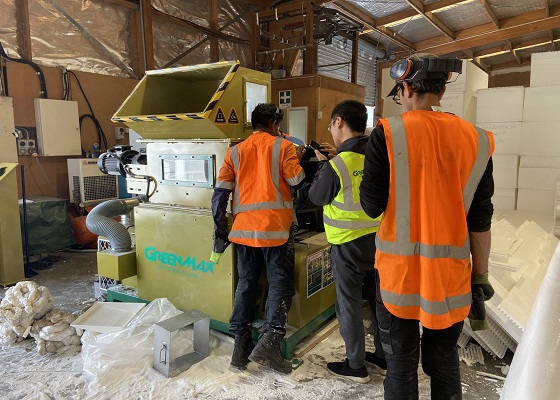
Carolina Recycle Solutions, a large recycling company in Charleston, South Carolina, is one of the first institutions in the state to introduce EPS melting machines. In 2023, the company purchased two GREENMAX Mars series hot melting machines specifically to handle EPS waste from furniture factories, logistics parks, and community recycling points within a 30-kilometer radius. These wastes are manually sorted to remove impurities such as tape and labels before being sent to the melting machines: the equipment first crushes EPS foam into fine particles, then melts it into liquid form in a temperature-controlled environment at 160-180°C, and finally extrudes and cools it through molds, forming high-density ingots with a density of up to 1.1g/cm³ — the originally fluffy EPS foam is compressed to 1/90 of its original volume, significantly reducing storage and transportation costs.
.png)
Prior to this, EPS waste in South Carolina primarily relied on traditional cold pressing methods, which not only had a limited compression ratio (only 1/50) but also resulted in lower purity of recycled materials, leading to low market acceptance. In contrast, the ingots produced by EPS melting machines, with a purity of over 98%, are eagerly purchased by local plastic recycling factories for use in products such as outdoor decorative panels and flower pot bases, forming a complete closed loop of "recycling - processing - reusing." Data shows that a single company, "Carolina Recycle Solutions," can process about 1,200 tons of EPS waste annually through a hot melting machine, which is equivalent to reducing approximately 21,000 cubic meters of landfill space and saving nearly 2,000 tons of crude oil resources.
The EPS melting machine's impact on South Carolina's recycling industry goes far beyond this. From an environmental standpoint, it reduces soil pollution from EPS waste in landfills and harmful gas emissions from incineration, helping the state achieve its goal of a 35% reduction in solid waste by 2030; from an economic perspective, the melting machine has driven the development of the local recycling industry chain - not only do recycling companies obtain stable income from selling ingots, but it has also created over 20 jobs related to waste collection and transportation, allowing nearby furniture factories to purchase recycled materials at prices 30% lower than virgin materials, thus reducing production costs.
Today, South Carolina has eight recycling companies that have introduced EPS melting machines, and the state's environmental protection department has launched subsidy policies to encourage small and medium-sized recycling points to upgrade their equipment. The application of EPS melting machines is driving South Carolina's transformation from an "EPS waste trouble area" to a "circular economy demonstration state," providing a replicable model for EPS recycling in other parts of the United States.
.jpg)