 Select Language
 English
Why Burning EPS Creates Secondary Pollution—and How a GREENMAX EPS recycling machine Is the Better Alternative
Expanded polystyrene (EPS) is everywhere: fish boxes, protective packaging, cold-chain insulation, and building materials. Yet when EPS becomes waste, many sites still treat it as a nuisance rather than a recyclable resource. Because EPS is mostly air, it quickly overwhelms storage areas and dumpsters, and hauling it “as-is” is expensive. Under this pressure, some operators choose the fastest disposal route—burning or sending EPS to incineration. The problem is that burning EPS does not make pollution disappear; it often turns a visible solid-waste issue into a more complex and harmful air-quality problem.
The first risk is secondary pollution from incomplete combustion. In real-world conditions—especially open burning, small furnaces, or poorly controlled incineration—plastic rarely burns perfectly. Research on polystyrene and styrene combustion has shown that burning can produce significant soot and organic pollutants, and the emissions profile changes depending on conditions and feedstock. One study specifically reported that soot and organic pollutant emissions can be high, and noted differences between styrene and polystyrene combustion products. Soot is not just “smoke”; it is fine particulate matter that can carry toxic compounds and travel far beyond the burn site.
The second risk is the formation of toxic compounds that people can inhale. Unregulated plastic burning has been highlighted as a contributor to serious atmospheric and health impacts, largely because of particulate matter exposure and the chemical complexity of the resulting emissions. For EPS specifically, another concern is that when polystyrene is heated and breaks down, it can release volatile organic compounds, including styrene. Styrene exposure is associated with irritation and neurological effects depending on dose and duration, and public health summaries emphasize that health outcomes depend on how much is inhaled and for how long. In practical terms, that means the “fumes” from burning EPS are not just unpleasant—they can pose real risks to workers and nearby residents, particularly where burning is repeated or occurs in enclosed or semi-enclosed areas.
Beyond immediate air impacts, burning EPS can also create lingering environmental burdens. Particulates and semi-volatile compounds can deposit onto soil and surfaces, and in wet conditions can be washed into drainage systems. This is why burning is often described as causing “secondary pollution”: the waste is no longer a single, contained solid stream; it becomes airborne pollutants and residues that spread, settle, and persist.
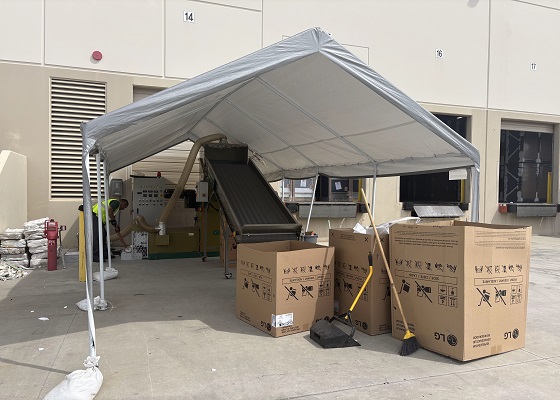
A cleaner route is to prevent EPS from becoming a combustion problem in the first place by making recycling logistically easy. This is where an EPS recycling machine changes the equation. Rather than trying to destroy EPS with fire, a recycling-focused process aims to stabilize it, densify it, and return it to a circular material flow. GREENMAX positions its EPS solution around two practical steps—size reduction and densification—so sites can handle EPS efficiently without burning. In the GREENMAX EPS recycling solution, a heavy-duty crusher breaks EPS into smaller pieces (noted as roughly 20–50 mm), and then the system compresses the foam at about a 50:1 ratio, turning bulky waste into dense blocks that are far easier to store and transport. GREENMAX also highlights surface-melting technology in its ZEUS series to reduce re-expansion and loosening after compaction, which helps keep blocks stable during handling and shipping.
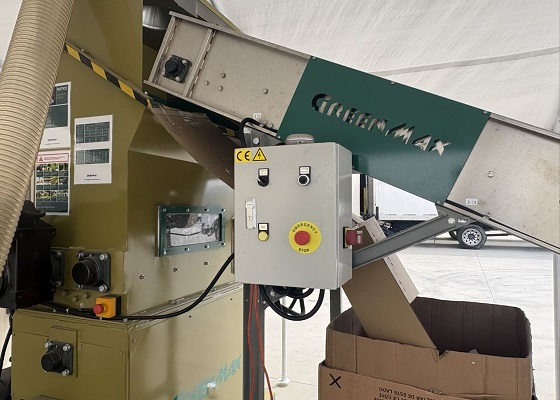
The benefits of using a GREENMAX EPS recycling machine go beyond “saving space.” First, it reduces the temptation to burn by eliminating the core logistical pain point—volume. When EPS is densified, a site can consolidate weeks of foam into a manageable footprint, keeping operations cleaner and safer. Second, densified EPS becomes a tradable intermediate: blocks can be shipped more economically to downstream recyclers because you are transporting material, not air. Third, this approach avoids the occupational exposure risks associated with smoke and fumes, and it aligns better with tightening environmental expectations around uncontrolled burning and waste handling.
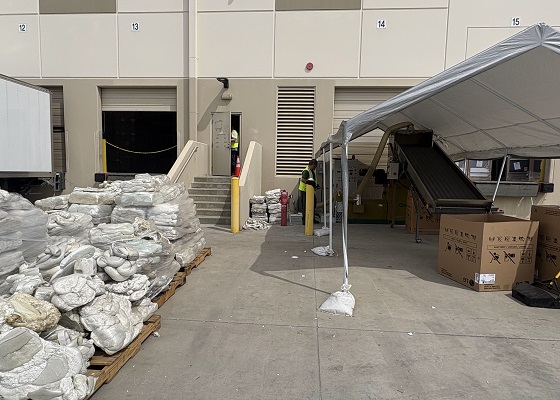
A real example is a Tacoma recycling center that faced rising EPS volumes and storage pressure. According to GREENMAX’s published case study, the facility adopted a GREENMAX M-C200E densifier to stabilize logistics and keep more EPS out of landfill, while also meeting compliance requirements such as UL certification for the installed unit. The story is typical of what many operators experience: the waste stream is not going away, and disposal shortcuts create long-term liabilities. By using an EPS recycling machine to densify on-site, the center improved day-to-day material control and created a clearer path for recycling rather than defaulting to disposal.
Ultimately, burning EPS is a short-term fix that can create longer-term environmental and health costs through soot, hazardous combustion byproducts, and irritant gases. A GREENMAX EPS recycling machine offers a practical alternative: it transforms EPS from a bulky liability into dense, manageable blocks that can move through legitimate recycling channels. When the goal is both operational efficiency and cleaner environmental outcomes, choosing recycling over burning is not just better optics—it is better risk management and better stewardship of air quality for the people who live and work nearby.