
 Select Language
 English
US Recycler Turns EPS Foam Waste into Revenue with GREEMAX Foam Densifier M-C200
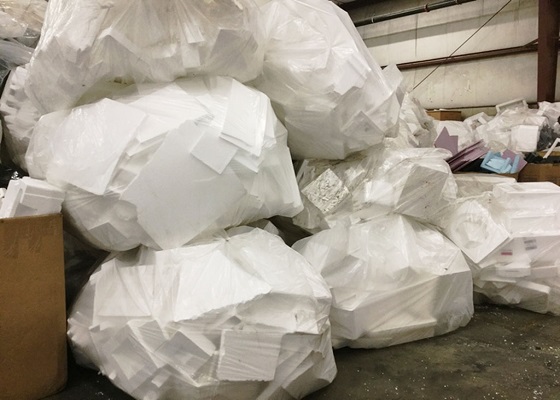
For recycling companies, EPS foam can be difficult to handle profitably. It takes up valuable warehouse space, fills trucks quickly and often has few local recycling outlets. Although EPS is recyclable, transporting loose foam can cost more than the material is worth.
Gold Circuit E-Recycling faced this problem while collecting computers, household electronics and related packaging in Maryland. By using GREENMAX foam densifier M-C200, the company was able to process bulky EPS and EPE foam into dense, transportable material with resale potential.
Starting with a Small Foam Densifier
Gold Circuit initially installed a small foam compactor to test the local market. As collection volumes increased, the company found that accepting EPS packaging offered more than lower disposal costs.
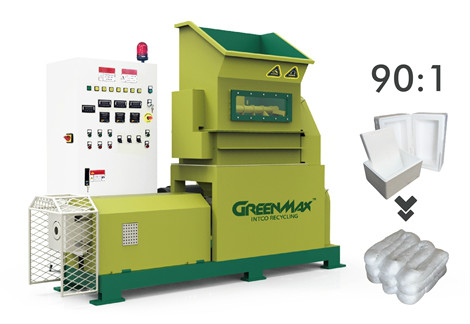
It also gave customers a convenient way to recycle electronics and packaging through the same provider. This helped Gold Circuit differentiate its services from companies that only accepted electronic products. After moving into a larger warehouse, the company expanded its foam recycling operation and installed a GREENMAX foam densifier.
Gold Circuit Chose GREENMAX foam densifier M-C200
Gold Circuit needed equipment that could handle more than standard white EPS packaging. Its incoming material also included polyethylene foam such as EPS, commonly used to protect electronic products during transportation.
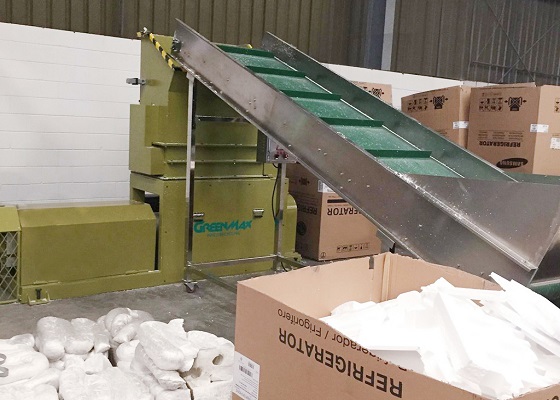
GREENMAX foam densifier M-C200 uses crushing, heating and screw extrusion to turn loose foam into dense ingots. Its published EPS volume reduction ratio is up to 90:1, significantly reducing the space required for storage and transportation.
Turning Foam Recycling into a Business Service
For Gold Circuit, the value of the foam densifier M-C200 was not limited to producing dense foam ingots.
Processing the material onsite reduced the warehouse space occupied by loose packaging. It also allowed more foam to be loaded into each shipment, making transportation more economical. At the same time, the company could accept foam from customers who were already using its electronics recycling services. EPS recycling gradually became an additional service rather than a waste-management burden. INTCO Recycling also became an important downstream partner, providing an outlet for qualified densified foam. The material can be further processed and used in the production of recycled plastic products.
For recyclers receiving a steady supply of clean EPS or EPE packaging, the same approach can work: reduce the volume onsite, control logistics costs and secure a reliable outlet for the processed material. When these parts are planned together, bulky foam waste can become a manageable and potentially saleable recycling stream.FAQ
1. How much can foam densifier MARS M-C200 reduce EPS foam volume?
The machine can reduce EPS foam volume by up to 90:1. Actual performance depends on the density and condition of the material.2. Can GREENMAX MARS foam densifier M-C200 process EPE foam?
Yes. It can process EPS and selected EPE, XPS and EPP materials. A material test is recommended before purchasing.
3. Does INTCO Recycling buy densified EPS foam?
INTCO Recycling purchases qualified densified foam based on its cleanliness, density, quantity and current market requirements. Acceptance conditions should be confirmed in advance.