
 Select Language
 English
Turning Foam Waste into Savings: How a Foam Compactor Cuts Freight and Landfill Costs
Foam waste looks harmless—lightweight, clean, and easy to pile up. But that “lightweight” advantage disappears the moment you try to manage it at scale. Expanded foam such as EPS and EPE is mostly air, which means you pay to transport volume, not weight. A few bins can quickly become a full truckload of air, and every pickup comes with labor, scheduling, and transportation charges. On top of that, landfill and tipping fees keep rising, while many regions are tightening rules around bulky packaging waste. For facilities shipping products daily, foam disposal becomes a hidden line item that quietly drains margins.
A foam compactor solves this problem in the most straightforward way: it removes the air. By compressing foam into dense, stackable blocks, a compactor dramatically reduces the space foam occupies. When the volume drops, the number of collections drops with it. Fewer pickups mean fewer invoices, less time coordinating haulers, less forklift traffic moving loose bags, and less floor space sacrificed to waste storage. The savings are easy to understand—if you can fit several weeks of compacted foam into the space that previously held a few days of loose scrap, you immediately cut transportation frequency and the total cost of hauling.
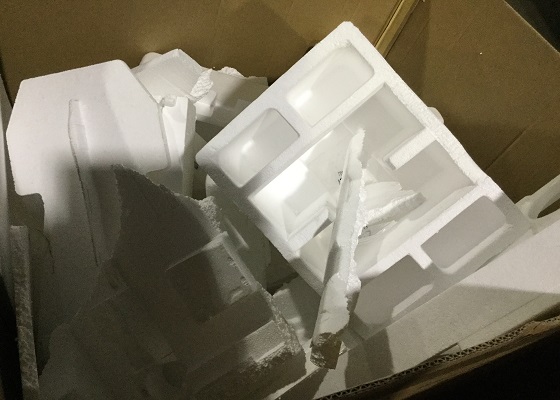
Landfill costs are the second major drain. Loose foam often fills containers quickly, so companies end up paying high tipping fees for minimal actual material. Compaction increases the density and stabilizes the load, which helps you avoid “air hauling” and reduces the number of landfill-bound loads. In many cases, compacted foam is also easier to handle for downstream recycling channels because it is uniform and efficient to store and transport. Even when recycling is not immediately available, compacting still lowers disposal costs by reducing the logistics burden and the number of trips.
One example comes from a packaging and fulfillment operation that was dealing with large volumes of EPS foam from incoming product protection and outbound packing adjustments. The facility faced constant overflow: oversized bags, frequent pickups, and mounting landfill charges. After installing a GREENMAX foam compactor, the waste flow changed almost overnight. Instead of storing loose foam in multiple bulky containers, the team began compacting it continuously into dense blocks. With the foam volume reduced significantly, pickups were consolidated from frequent collections into scheduled, less frequent loads. The company also recovered valuable floor space previously used as a “temporary foam warehouse,” and the warehouse team reported fewer interruptions because waste handling became a routine step rather than a recurring emergency. Most importantly, the monthly disposal budget became predictable—and noticeably lower—because freight charges and landfill-related expenses stopped scaling with foam volume.
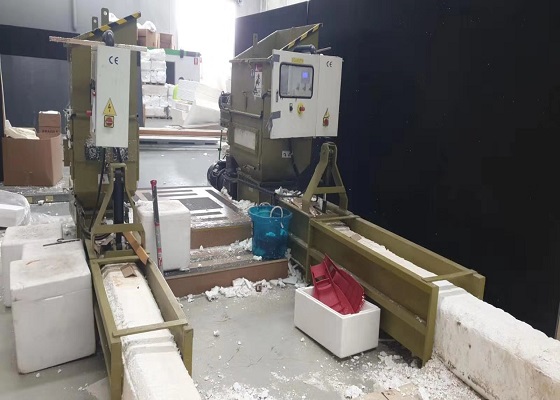
In a cost-sensitive environment, waste is not just an environmental issue; it is a logistics bill. A foam compactor targets the biggest cost driver—volume—so companies spend less on transportation and less on disposal. For operations that generate foam waste every day, compaction is one of the fastest ways to convert a messy problem into measurable savings.