 Select Language
 English
Turning EPE Foam Waste into Value with a Foam Densifier: The GREENMAX Advantage
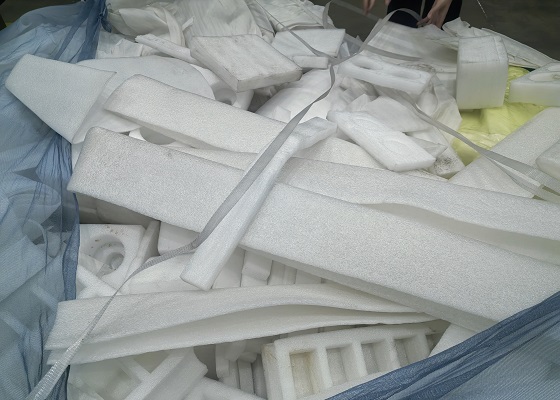
EPE (expanded polyethylene) foam is one of the most widely used protective packaging materials in modern distribution and manufacturing. Its light weight, flexibility, and shock-absorbing performance make it ideal for preventing damage during shipping and handling. That is why EPE is commonly found as end caps, sheets, rolls, and custom inserts across many industries. In practice, the largest volumes of EPE foam waste typically come from electronics and appliance packaging lines, furniture and home-goods distribution, automotive parts protection, medical device shipments, e-commerce fulfillment centers, and packaging fabrication workshops where offcuts are generated daily. The challenge is not whether EPE can be recycled—it is whether recycling can be done efficiently when the material is so bulky and low-density.
This is exactly where a foam densifier becomes the key to making EPE recycling practical. Loose EPE takes up enormous space, quickly overruns storage areas, and forces recyclers to transport “air” instead of material. Trucks may look full, yet carry very little weight. The result is frequent pickups, rising fuel and labor costs, and an overall recycling process that feels expensive and inconvenient. A foam densifier changes the economics by compressing loose EPE into dense, stable blocks. Once densified, EPE becomes easy to stack, store, and ship, and it can enter downstream reprocessing pathways as a usable feedstock instead of being treated as a disposal burden.
GREENMAX positions its EPE recycling solution around this exact bottleneck: volume. In a typical setup, EPE is fed into the densifier, where it is reduced and compacted through screw compression, then extruded into compact blocks. These blocks are far easier to manage on-site and significantly cheaper to transport to recyclers, where they can be processed into reusable plastic materials. By turning soft, scattered foam into a consolidated output, a foam densifier helps recyclers achieve consistent logistics planning and makes it easier for waste generators to keep their sites clean and organized.
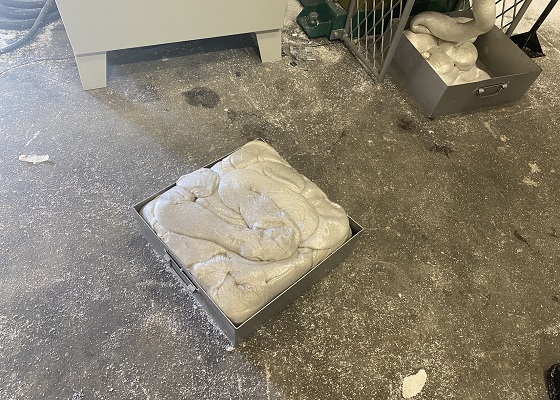
However, densification alone is not always enough for real-world operations. One common issue recyclers face is output stability. Some compacted foam can rebound, loosen, or shed small fragments during handling and transportation—especially with softer polyethylene foams. This is where GREENMAX’s hot melting technology becomes a practical advantage. GREENMAX highlights surface hot-melting features in its densifier concept to help “seal” the outer layer of the compressed block. This surface treatment improves block integrity, reduces scattering, and keeps the material in a more stable form during storage and shipping. For facilities generating EPE waste, this means less mess, better site safety, and fewer foam pieces escaping into the workspace. For recyclers and downstream partners, it means cleaner, more uniform blocks that are easier to load, unload, and process.
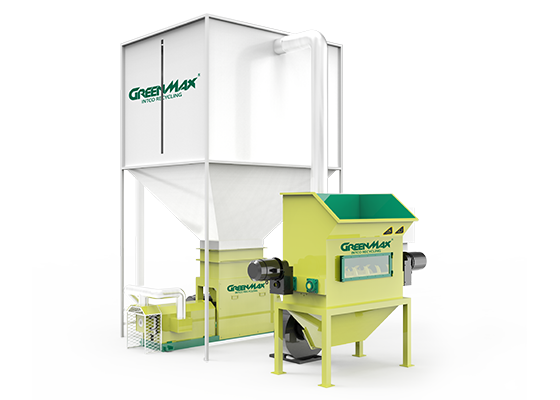
A real GREENMAX case shows how this approach can support EPE recycling under demanding conditions. In Oregon, USA, a nonprofit Producer Responsibility Organization (PRO) needed a scalable foam recycling system that could meet compliance requirements while handling variable inbound streams. GREENMAX worked with the organization on a customized M-C300 foam densifier designed to process both EPS and EPE, allowing operational flexibility as the incoming mix changed. The final configuration was adapted to suit real collection and processing conditions, including features such as separate crushing and feeding chambers to reduce labor requirements and support stable, continuous operation. This case reflects a common reality in foam recovery networks: material types and volumes fluctuate, and a densifier solution must be robust enough to keep processing consistent while controlling space and staffing demands.
When you compare loose collection to densified collection, the difference is immediate. With loose EPE, logistics dominates cost: frequent trips, poor payload density, and constant pressure on storage space. With a foam densifier, the workflow becomes far more efficient. Each shipment carries substantially more usable material, transport frequency drops, and overall handling becomes more predictable. At the same time, the hot-melt-enhanced block form helps reduce post-processing mess and improves the consistency of the outbound material, increasing the likelihood that the EPE will be accepted by downstream recyclers and converted into new products rather than diverted to disposal.
Ultimately, EPE recycling succeeds when it is designed for real operational constraints—limited floor space, rising transport costs, and the need for clean, stable outputs. By combining high-density compaction with hot melting technology that improves block integrity and reduces scattering, GREENMAX demonstrates how a foam densifier can turn EPE foam waste into a manageable, transport-ready resource. The result is a cleaner site for waste generators, lower logistics costs for recyclers, and a more reliable recycling loop that supports long-term circularity.