 Select Language
 English
Turning Bathroom and Home Furnishing EPS Packaging into Value with an EPS Densifier
EPS Packaging Is Essential but Difficult to Manage
Bathroom and home furnishing products often require reliable protective packaging during transportation. Mirrors, bathroom cabinets, shower enclosures, ceramic sanitary products, countertops and furniture components can easily be damaged by impact or vibration. Expanded polystyrene is therefore widely used to provide cushioning and protection throughout distribution.
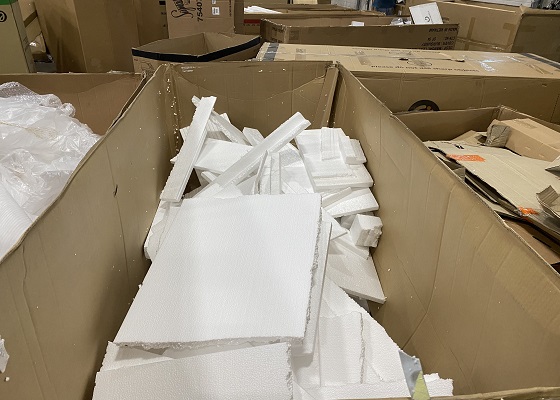
Once the products reach a warehouse, retailer or installation site, however, the protective packaging immediately becomes waste. This is where EPS recycling becomes challenging. EPS is extremely lightweight but takes up considerable space, which means that a relatively small amount by weight can quickly fill storage areas and waste containers.
For distributors and home furnishing companies handling continuous deliveries, an EPS densifier can change the economics of this waste stream. Instead of storing and transporting loose foam, businesses can process it on-site and turn it into dense, manageable material.
Why EPS Recycling Matters to the Home Furnishing Industry
EPS is technically recyclable, but practical EPS recycling depends heavily on collection, sorting and transportation efficiency. EUMEPS states that EPS is fully recyclable and reports that 372,000 tonnes of EPS packaging waste were collected in Europe in 2021. It also set a target for recycling activities covering 50% of EPS packaging waste by 2025. EUMEPS has further reported that EPS packaging recycling rates in many European markets already exceed 50%.
The regulatory direction is also becoming clearer. The EU Packaging and Packaging Waste Regulation has applied since August 12, 2026. Under the regulation, Member States are expected to reach a 55% recycling rate for plastic packaging by 2030. For many plastic packaging formats outside specific contact-sensitive categories, the regulation also establishes a 35% minimum recycled-content requirement by 2030.
These targets create a clear vision for the bathroom and home furnishing supply chain: protective packaging should increasingly move from a disposal model toward a circular material model. Efficient EPS recycling at warehouses, distribution centers and retail operations can become an important part of that transition.
How an EPS Densifier Improves the Recycling Process
The main obstacle to recycling EPS is not necessarily the material itself, but its volume. Transporting untreated foam often means paying to move large quantities of air.
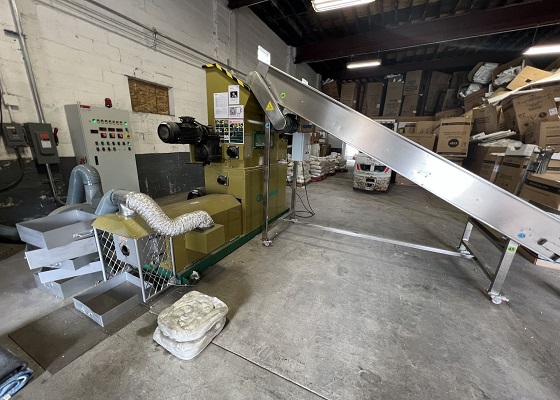
An EPS densifier solves this problem by first crushing the loose foam and then using heat to melt and consolidate it into dense ingots. The resulting material occupies only a fraction of the original volume and is much easier to stack, store and transport.
For a bathroom furniture distributor, for example, EPS corner protectors, molded packaging inserts and protective blocks from mirrors, cabinets and sanitary products can be collected near the unpacking area. Instead of repeatedly filling dumpsters with lightweight foam, the waste can be fed into an EPS densifier and processed as part of a regular recycling workflow.
This makes EPS recycling more practical because transportation becomes more economical and downstream recyclers receive a denser, more valuable material stream.
GREENMAX Case: EPS Recycling in the Home Furnishing Sector
A relevant example comes from Top-Line Furniture, a U.S. home furnishing company that generated increasing quantities of EPS packaging waste through its distribution operations. As the volume grew, managing loose foam became a storage and handling challenge.
After researching available recycling options, Top-Line Furniture selected the GREENMAX M-C50 foam EPS densifier for its packaging waste. According to the published case, operating the machine for approximately one day per week was sufficient to process about one week's accumulated foam, and the system could be handled by one operator. GREENMAX also provided a buy-back pathway for the densified material.
This home furnishing case is directly relevant to bathroom-product distributors because the waste problem is similar: valuable products arrive protected by large volumes of molded EPS, while warehouses must find an efficient way to manage the packaging after unpacking.
With an EPS densifier, the company can shift from paying primarily for disposal and transportation toward recovering recyclable polystyrene material. It also keeps work areas cleaner and reduces the warehouse space required for loose packaging.
Creating a Circular Future for Bathroom Packaging
The future of EPS recycling will depend on more than simply placing foam into a recycling bin. Businesses need systems that connect collection, volume reduction, transportation and downstream material recovery.
For bathroom and home furnishing companies, installing an EPS densifier close to the waste-generation point can help create that connection. Clean EPS packaging can be separated from cardboard, film and other materials, densified on-site and prepared for further recycling.
Recovered polystyrene can then enter recycling processes and be converted into new plastic raw materials for applications such as molding products, construction profiles and other manufactured goods. EUMEPS notes that mechanical recycling remains one of the most established and energy-efficient pathways for clean EPS packaging waste.
As packaging regulations become stricter and companies pursue measurable sustainability targets, EPS recycling can increasingly become part of normal warehouse operations rather than an occasional environmental project.
GREENMAX provides EPS densifier solutions designed to help businesses reduce foam volume, simplify storage and transportation, and build a more practical recycling process. For bathroom furniture manufacturers, sanitary ware distributors and home furnishing retailers, turning bulky packaging into recyclable material can support both operational efficiency and long-term circularity.
.jpg)
Q&A: Can Bathroom Packaging EPS Really Be Recycled?
Yes. Clean EPS protective packaging can be collected and processed through an EPS densifier before being sent for downstream recycling. The key is to keep the material separated from incompatible waste and minimize contamination.
Q&A: When Does an EPS Densifier Make Sense?
An EPS densifier is particularly useful when a company generates EPS packaging continuously and loose foam is creating storage, transportation or disposal problems. For high-volume bathroom, furniture and home furnishing distribution operations, on-site densification can make EPS recycling substantially easier to manage.