
 Select Language
 English
EPP Recycling Is Growing in the Automotive Industry
Today, the Expanded polypropylene (EPP) foam market will grow steadily. According to relevant reports, the growth rate will exceed 4.2% by 2031. This is inseparable from the extensive use of EPP in the automobile industry. As we all know, expanded polystyrene (EPS) is very well-known, but it is not popular in the automobile industry. This is because EPP is superior to EPS in high heat resistance and high impact energy absorption, which makes EPP often used in automobile parts, such as decorative materials and bumpers.
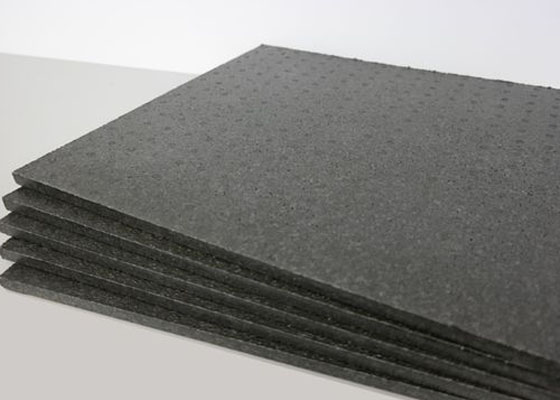
As the old saying goes, every coin has two sides. Although EPP packaging is superior to EPS in the application of auto parts, it is difficult to recycle because its hardness is higher than EPS. And its wide application means a huge amount of waste meanwhile. Nowadays, EPP recycling has been paid more and more attention to the development of environmental protection. EPP densifier is an excellent method.
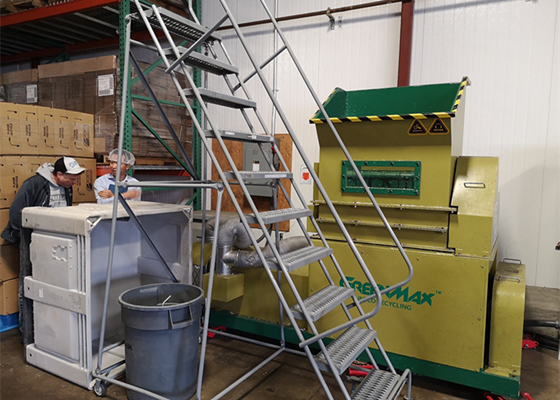
As a material of auto parts, one of the most difficult reasons to deal with EPP is its high hardness, but the crushing knife equipped with an EPP densifier can perfectly solve this problem. As long as the waste EPP waste is put into the hopper, the crusher will start to operate and cut the EPP into many small pieces. Some people may worry that EPP densifier can't cut EPP very small, but it's not a trouble for recycling companies like GREENMAX. The two-stage crushing knife designed by GREENMAX can completely crush EPP. Then the hot-melting system of the EPP densifier will compact the EPP waste into densified ingots.
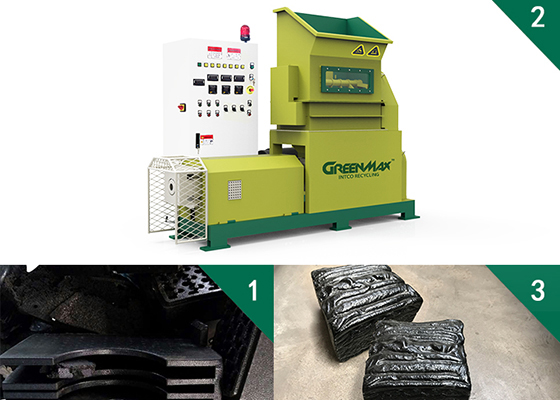
The biggest advantage of EPP densifier in recycling EPP is that it can use the hot melting machine as a bridge between waste EPP and plastic particles so that EPP recycling can be realized 100%. With the further popularization of home appliances and the popularity of EPP, EPP recycling should be paid more attention to.
INTCO Recycling purchases recycled EPP foam ingots from recycling companies, which helps create a more complete recycling chain for EPP waste. After the waste EPP is crushed and densified, the ingots are easier to store and transport, and can then be reused in the production of recycled plastic products. This not only improves the recycling value of EPP waste, but also helps reduce plastic pollution and save resources.
FAQ
1. Is EPP more difficult to recycle than EPS?
Compared with EPS, EPP has a tougher structure and higher hardness. This means stronger crushing equipment is needed during the recycling process. Specialized machines such as EPP densifiers are designed to handle these materials efficiently.
2. How does an EPP densifier work?
EPP densifier first crushes waste EPP foam into small pieces. The material then goes through a hot-melting and compression process, which turns the loose foam into compact ingots. These ingots are easier to transport, store, and reuse in recycled plastic manufacturing.
3. What happens to recycled EPP foam ingots?
NTCO Recycling purchase recycled EPP foam ingots and process them into recycled plastic materials. These recycled materials can then be used to manufacture new plastic products.