 Select Language
 English
Styrofoam Recycling Solution: How GREENMAX Creates Value Beyond the Machine
Styrofoam waste is one of the most challenging materials in the recycling industry. It is light, bulky, and expensive to transport in loose form, which is why many companies still treat it as a disposal problem rather than a recyclable resource. But the real opportunity in foam recycling does not come from equipment alone. It comes from building a complete Styrofoam recycling solution that connects collection, processing, densification, logistics, and downstream reuse into one workable system.
This is exactly where GREENMAX stands out. GREENMAX is not positioned simply as a machinery supplier. Internal marketing materials describe it more broadly as a global waste processing system supplier, emphasizing cooperation and long-term value creation rather than one-time equipment sales. That positioning matters because many customers do not only need a recycling machine. They also need a reliable way to handle the processed material after the machine has done its job. In other words, the success of Styrofoam recycling depends not only on reducing volume, but also on whether the densified material can re-enter the market efficiently.
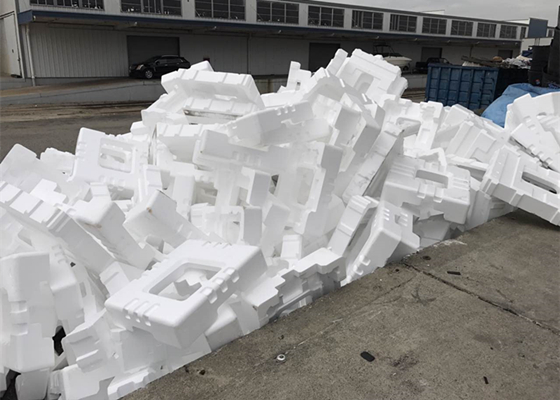
A traditional machine-only model often leaves the customer with a new problem after recycling begins. Loose EPS foam is turned into ingots or blocks, but then the customer must still find a stable buyer, understand market quality requirements, and manage transport and resale channels. For many warehouses, retailers, seafood processors, agricultural packaging users, and appliance distributors, that is the point where recycling becomes difficult. They may be willing to process Styrofoam waste on site, but they still need confidence that the resulting material has a destination.
That is why the GREENMAX model is more compelling as a full Styrofoam recycling solution. The machine is only one part of the value. The broader idea is to help customers turn waste Styrofoam into a tradable recycled commodity. In practical terms, this means GREENMAX is able to support both equipment deployment and material circulation. Instead of asking customers to solve the downstream side by themselves, the company’s model is designed to make recycling more commercially complete. This is the difference between selling a machine and enabling a recycling business.
GREENMAX’s equipment portfolio reflects that logic. Its foam recycling systems are designed for efficient waste processing and material recovery, and public internal visuals repeatedly frame GREENMAX equipment within the context of broader recycling systems rather than isolated stand-alone units. For customers dealing with Styrofoam packaging, this means the goal is not merely to compress waste for temporary storage, but to create a cleaner and denser output that is easier to transport and more attractive for downstream reuse.
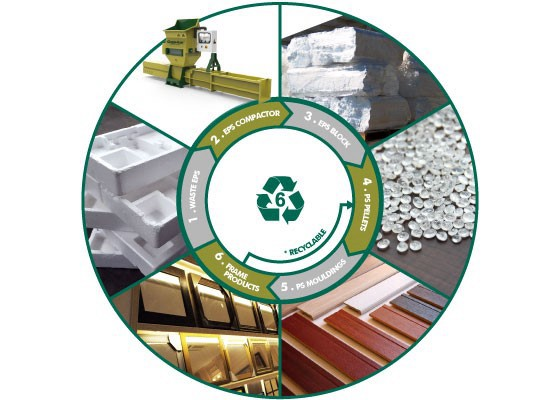
A useful GREENMAX case can be seen in internal promotional material featuring an Italian customer named ECO, with the processed material identified as EPS agricultural boxes. This case is important because agricultural EPS boxes are a very typical Styrofoam waste stream. They are bulky, often generated in large quantities, and expensive to handle when unprocessed. In a case like this, a customer does not only need a machine that can reduce volume. The real value comes from converting used EPS boxes into recycled material that can move back into the recycling chain. That is exactly the kind of scenario where a full Styrofoam recycling solution becomes more meaningful than equipment alone.
From the customer’s perspective, the advantage is clear. Instead of paying repeatedly for storage and disposal of loose foam, the customer can install a GREENMAX recycling machine on site, process the Styrofoam into denser output, and then connect that processed material to a buyback or downstream recovery channel. This changes the economics of foam recycling. Waste is no longer only a cost center. It becomes part of a circular material flow. For businesses that generate significant volumes of EPS packaging, this kind of model can reduce disposal pressure, improve site cleanliness, lower transport inefficiency, and create more predictable recycling outcomes.
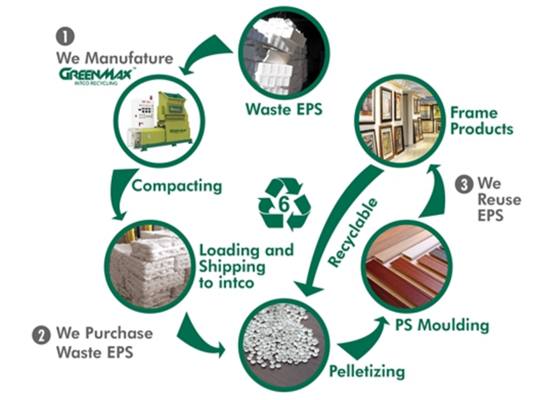
That is why the phrase Styrofoam recycling solution matters so much. It reflects a complete approach rather than a single product. GREENMAX’s value is not only in helping customers densify foam, but in helping them close the loop. For many companies, the biggest barrier to Styrofoam recycling is not whether the machine can do the job. It is whether the recycled material will have a practical next step. By combining recycling machinery with support for downstream material recovery, GREENMAX gives customers a stronger reason to recycle in the first place.
In the end, the future of Styrofoam recycling will depend on solutions that are operationally realistic and commercially sustainable. Machines are essential, but they are only the beginning. A stronger recycling model must also answer what happens after processing. GREENMAX’s approach is attractive because it does exactly that. It offers customers not just a way to reduce foam waste, but a more complete Styrofoam recycling solution built around equipment, material recovery, and ongoing recycling value.