
 Select Language
 English
Styrofoam Recycling for Appliance Repair and Refurbishment Centres
Appliance repair and refurbishment centres receive refrigerators, washing machines, televisions and other large products from retailers, manufacturers and customer return programmes. Some appliances arrive in their original packaging, while refurbished units may need to be repacked before shipment. This creates a regular flow of moulded Styrofoam corners, base pads and protective inserts.
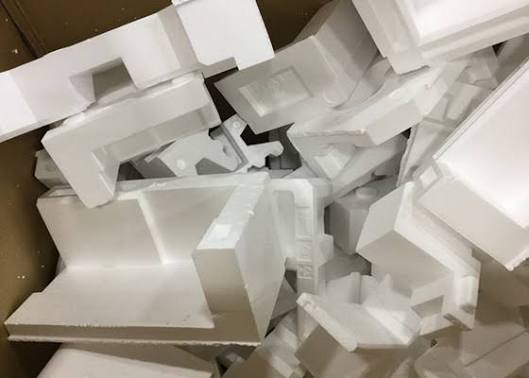
Packaging that remains clean and undamaged may be reused for outgoing appliances. Damaged, broken or surplus Styrofoam is less useful in its loose form. It weighs very little but quickly fills waste containers and storage areas, leading to frequent collections even when the actual weight of the material is low.
Loose Styrofoam Takes Up Repair and Storage Space
Space is important in an appliance refurbishment centre. Returned products need room for inspection, repair, testing, parts storage and preparation for resale. When loose Styrofoam accumulates around these work areas, it can interfere with normal material movement and occupy space that could otherwise be used for appliances.
Placing the foam in a general waste container does not solve the volume problem. A container may fill quickly while holding very little actual polystyrene. The business may then pay for repeated collections based largely on the space occupied by the packaging.
The amount of waste can also change from week to week. A large delivery, product recall or seasonal increase in appliance returns may create far more packaging than the normal average. Before selecting equipment, the centre should record its weekly EPS weight, collection frequency, occupied storage space and peak volumes.
Foam Densifier for Styrofoam Recycling
GREENMAX foam densifier crushes loose Styrofoam, heats the material and extrudes it into dense ingots. The hot-melting process can reduce EPS volume by up to 90:1, depending on the material condition and operating process.
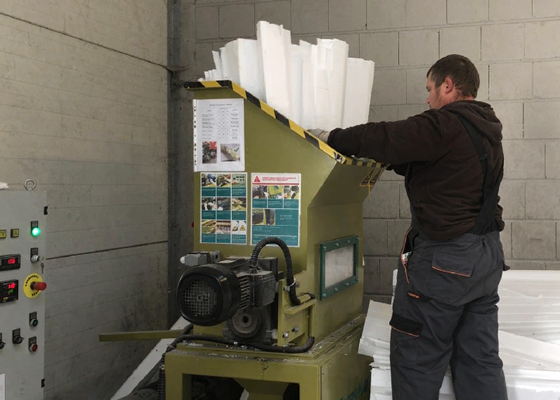
After densification, the material requires much less storage space and is easier to stack, handle and transport. Instead of arranging frequent collections of loose packaging, the refurbishment centre can store the dense ingots until enough material has accumulated for an economical shipment.
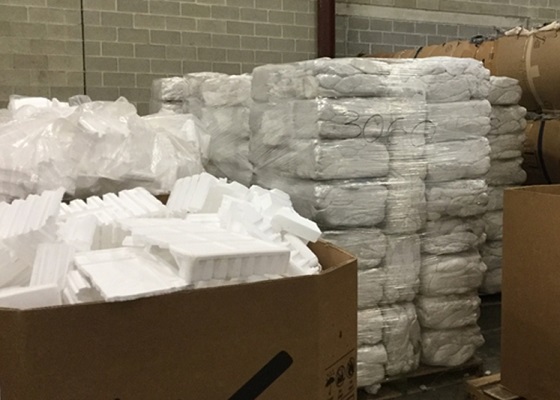
The appropriate equipment capacity depends on the amount of foam, available operating hours and peak return periods. Smaller centres may feed the machine manually, while higher-volume operations can use a conveyor to maintain a more consistent feeding process.
Dense EPS ingots can be processed into recycled polystyrene pellets and used in products such as picture frames, decorative mouldings and other plastic components. INTCO Recycling also purchases qualified densified foam material according to its quality and current purchasing requirements, connecting GREENMAX equipment with a downstream recycling route.
GREENMAX Appliance Foam Recycling Solution
Appliance Warehouse operates home appliance recycling facilities in New Jersey and Pennsylvania. As its New Jersey operation expanded, the warehouse began receiving more EPS packaging than its existing process could handle. After comparing available equipment, the company selected a GREENMAX MARS series foam densifier to process the Styrofoam on site.
The machine converts loose appliance packaging into dense ingots that require less storage space and are easier to transport to a downstream recycler. According to the project records, the recycling operation generated nearly $40,000 in revenue during its first six months. When the Pennsylvania facility later outgrew its older equipment, Appliance Warehouse also selected a GREENMAX foam densifier to increase its processing capacity.
GREENMAX can configure Foam Densifier according to the centre’s packaging type, weekly volume, available space and working schedule. Testing sample material before equipment selection can confirm its composition, processing performance and finished ingot quality.
FAQ
1. Can used appliance packaging be recycled?
Clean and dry EPS corners, base pads and inserts can normally be recycled after tape, film, cardboard and other contaminants have been removed. Packaging contaminated with oil, chemicals or repair residue should be assessed separately.
2. Can refrigerator insulation be processed with Styrofoam packaging?
Not automatically. Internal refrigerator insulation may be polyurethane rather than EPS and should not be mixed with the packaging stream. The material must be identified before processing.
3. When should a refurbishment centre consider a densifier?
A densifier may be suitable when loose EPS regularly occupies repair or storage space, causes frequent waste collections or is generated in sufficient quantities to support an economical recycling shipment.