
 Select Language
 English
Styrofoam densifiers have already demonstrated exceptional value across various regions and industries in the United States.
In the United States, actions against 'white pollution' have been noticeably accelerating in recent years: In March 2025, Avon, Colorado, launched the state's first municipally operated Styrofoam (EPS) compression recycling center, open year-round for public drop-off, setting a new model for end-to-end recycling by local governments. Meanwhile, industry surveys show that in 2022, North America recycled approximately 168 million pounds of transportation EPS packaging through 'off-curb' channels (such as designated drop-off points, commercial recycling, and mail-back programs), with the recycling network and technology continuing to expand.
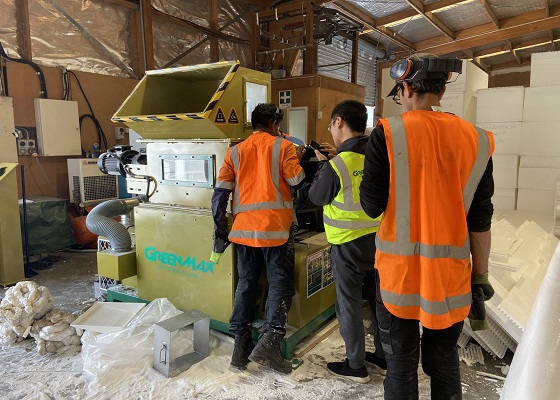
The key equipment supporting these changes is the 'Styrofoam densifier.' This device rapidly compresses Styrofoam, which is 98% air and difficult to transport, into high-density blocks through a thermal melting process. It reduces the volume ratio to several dozen to one, significantly lowering storage and transportation costs, and transforms low-value foam waste into valuable recyclable material, establishing a closed-loop recycling system.
U.S. practices in three industries
1)Home Appliances and Electronics Retail
A nationwide chain of electronics and home appliance retailers replaced old equipment with high-throughput styrofoam densifiers, increasing foam processing speed to eight times the original, achieving a block density of about 22 pounds per cubic foot, significantly reducing labor and disposal costs. A home appliance warehouse in New Jersey introduced a styrofoam densifier and earned nearly $40,000 in additional recycling revenue within six months, demonstrating the dual benefits of 'cost reduction + revenue generation.' 2) Medical and Hospital Logistics2) Healthcare industry
The Baltimore-Washington Medical Center under the University of Maryland System extensively uses foam containers in catering and logistics. It employs styrofoam densifiers to carry out a closed-loop management of sorting, compression, and external sale. In hospital settings, hygiene and space management are emphasized; densification can reduce storage space and handling frequency, while collaboration with downstream recycling companies enables sustainable disposal.
3) Seafood Cold Chain and Fish Box Recycling
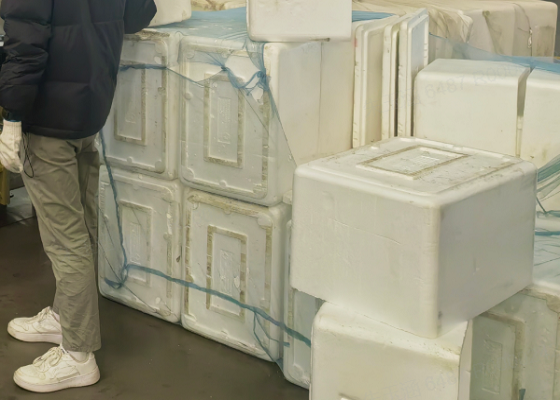
The seafood industry has long relied on EPS insulated fish boxes. In the United States, seafood processing and distribution companies use styrofoam densifiers to compress used fish boxes on-site. This not only reduces storage pressure in cold storage and at docks but also transforms bulky, low-density waste into sellable plastic blocks, turning them from a "cost center" into a "revenue point." Driven by industry events such as the Boston Seafood Expo, cases of companies adopting cold pressing or hot-melting processes continue to emerge, becoming standard facilities at ports and processing plants.
From new municipal recycling stations to densification retrofits on the corporate side, the Styrofoam densifier is turning ‘hard to transport, hard to collect’ EPS into ‘profitable, easy-to-sell’ recycled material. For industries with high foam usage such as retail, healthcare, and cold chain, combining stable downstream procurement with transparent recycling data can not only steadily reduce disposal costs and free up space, but also directly generate material revenue, driving the U.S. domestic plastic circular economy toward a more efficient 'reduce—densify—recycle—reuse' closed loop.
.jpg)