
 Select Language
 English
Styrofoam Densifier Capacity: How Much Does Your Business Need?
Styrofoam densifier capacity is usually stated in kilograms per hour, while many businesses measure their EPS waste in boxes, bags or truckloads. Converting this loose volume into weight is the first step towards choosing a suitable machine.
The aim is not simply to buy the largest model available. The densifier should clear the incoming EPS within the planned working time without leaving excessive capacity unused. Weekly weight, peak volume and operating hours provide a more reliable basis for comparison than the size of the waste pile alone.
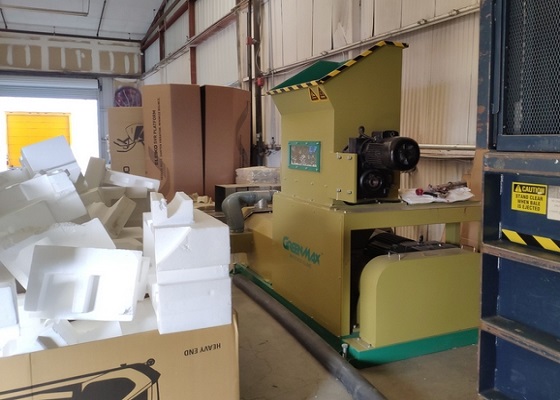
How to Calculate Densifier Capacity
Start by weighing the EPS generated during a normal working week. If the volume changes seasonally, repeat the measurement during a busier period so that the result reflects the actual peak.
The basic calculation is:Weekly EPS weight ÷ planned operating hours = required hourly capacity
For example, a facility producing 3,000 kg of EPS per week and planning to run the densifier for 20 hours would need an average capacity of 150 kg/h. A machine rated at around 200 kg/h would provide enough room for changes in volume without being unnecessarily oversized.
A margin of around 20% to 30% above the normal requirement can help cover busy periods, maintenance stops and uneven feeding. Operating time also affects the result. A warehouse running the machine for two hours each day needs a higher hourly capacity than a factory processing the same weekly volume across a full shift. The feeding method should be considered as well. Large molded pieces and irregular batches may slow the process, while a conveyor can provide a steadier flow. For this reason, rated capacity should be treated as a practical reference rather than a fixed output for every EPS waste stream.
GREENMAX Densifier Capacity Options
GREENMAX offers several hot-melt Styrofoam densifiers for different processing volumes. The figures below are approximate and may vary according to the density, shape and feeding condition of the EPS.
| Model | Approximate Capacity | Suitable Operations |
| Foam densifier M-C100 | 100 kg/h | Retail sites, smaller warehouses and manufacturers |
| Foam densifier M-C200 | 200 kg/h | Distribution centers and medium-volume recyclers |
| Foam densifier M-C300 | 300 kg/h | Large plants, returns centers and high-volume recyclers |
These machines crush, heat and extrude loose EPS into dense ingots, reducing its volume by up to 90:1. The finished material requires far less storage space and allows more weight to be loaded into each shipment.
The final choice should account for the incoming volume, available power, feeding method and number of working hours. Where the required capacity falls between two models, the decision usually comes down to whether the smaller machine can run longer or the larger model is needed to clear peak volumes quickly. More equipment details are available on the GREENMAX Styrofoam densifier.
Why PRC Chose GREENMX Styrofoam Densifier M-C300
PRC Industries operates service locations in the United States and Canada, where returned products are repaired, reprocessed or prepared for further use. These activities generate a regular supply of EPS protective packaging. The company previously relied on a second-hand foam machine. Its processing speed could no longer keep up with the incoming material, while the actual compression ratio was below 30:1. Even though the machine was running, loose foam continued to occupy warehouse space.
PRC Industries selected the GREENMAX foam densifier M-C300, which has an approximate EPS processing capacity of 300 kg/h and a volume reduction ratio of up to 90:1. The higher throughput helped the warehouse process its accumulated foam more quickly, while the denser ingots improved loading efficiency.
A 40HQ container can carry up to approximately 40,000 lbs of processed EPS ingots, depending on material density and loading conditions. This allows the company to transport more recovered polystyrene in each shipment rather than paying to move loose foam.
The project shows why Styrofoam densifier capacity should be based on the amount of EPS entering the facility, not simply on whether the current machine still operates.
FAQ
1. How do I calculate the Styrofoam densifier capacity I need?
Divide the weekly EPS weight by the number of hours available for processing. Allow additional capacity for peak periods and changes in the incoming volume.
2. How much can a Styrofoam densifier reduce EPS volume?
A GREENMAX hot-melt Styrofoam densifier can reduce EPS volume by up to 90:1. Actual performance depends on the material density and operating conditions.
3. Should I choose a larger densifier for future growth?
Some additional capacity is useful when EPS volume is expected to increase, but an oversized machine may remain idle. Current weekly weight, peak volume and realistic growth plans should guide the decision.