 Select Language
 English
Salmon Packaging Industry Recycling: Wet EPS Fish Boxes into Value with an EPS Compactor
In the salmon packaging industry, expanded polystyrene (EPS) boxes remain a common choice for protecting fresh fish through long, cold supply chains. EPS is lightweight, insulating, and cost-effective, which is why it is widely used at processing plants, seafood wholesalers, and cold-storage logistics hubs. The downside appears after the fish is delivered: used salmon boxes quickly become a bulky, messy waste stream. They occupy a disproportionate amount of space, and because they often contain residual moisture from ice, meltwater, and rinsing, many facilities struggle to recycle them consistently. As a result, a large share of EPS fish-box waste is still treated as general waste in regions where collection infrastructure is limited or where transport costs outweigh the material value.
Recycling EPS from seafood packaging is not impossible—far from it. Clean EPS can be densified and reprocessed into new plastic products, and many markets already accept compacted EPS as a feedstock for downstream recyclers. The real barrier is operational. Salmon boxes are low-density, so even a small daily volume can fill bins and storage zones. They are also seasonal in many areas, creating spikes that overwhelm waste handling. Add water, and the problem grows: wet EPS is heavier, more inconvenient to handle, and more expensive to transport in its loose form. Facilities that want to improve sustainability and reduce disposal costs need a way to stabilize this waste stream on-site before it becomes a logistics headache.
.jpg)
That is where an EPS compactor fits naturally. Unlike heat-based systems, an EPS compactor uses cold compression to reduce volume without melting. EPS boxes are fed into the machine, compressed through a mechanical/hydraulic process, and discharged as dense blocks. This transformation changes everything about how EPS waste behaves. Loose fish boxes that once demanded constant housekeeping become stackable, predictable output. More importantly for seafood operations, cold compaction remains practical even when the material contains moisture. Because the process is not dependent on heating the polymer, a well-designed EPS compactor can handle wet, post-use salmon boxes without the same sensitivity to water that heat-melt approaches may face in day-to-day plant conditions.
In real salmon operations, moisture is not an exception—it is the norm. Boxes are opened near ice, fish is handled in chilled rooms, and wash-down procedures are frequent. Wet EPS is often one of the main reasons recycling programs stall: staff dislike handling dripping boxes, storage areas become unhygienic, and transport contractors charge more for multiple low-payload pickups. Cold compression helps address these issues by turning wet EPS into a contained, compact form that is easier to move and store. Once compacted, the waste is less likely to blow around, less likely to overflow bins, and easier to stage for scheduled collection.
.png)
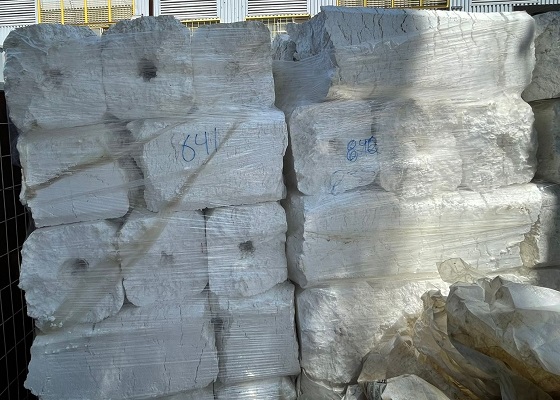
A practical example comes from a salmon packaging site that needed a reliable method to recycle used EPS fish boxes while maintaining hygiene and limiting extra labor. The company chose a GREENMAX EPS compactor to manage daily EPS waste at the source. Before installation, the site experienced the classic symptoms: storage congestion, frequent waste runs, and inconsistent recycling because wet boxes were hard to keep under control. After introducing the compactor, the workflow became simpler. Operators fed used salmon boxes directly into the machine as part of routine clean-up, and the EPS compactor produced dense blocks that could be stored neatly until a full shipment was ready. The site also found that cold compaction was particularly forgiving for moisture-containing EPS. Instead of needing to dry material aggressively or separate “too wet” boxes, the operation could keep the recycling stream moving with minimal interruption, which improved both compliance and staff acceptance.
Downstream benefits followed naturally. Compact blocks reduced transport frequency and increased payload efficiency, making recycling economically feasible even when material prices fluctuated. The compacted EPS also presented a more standardized form for recyclers, who prefer dense, consistent feedstock. In the salmon industry, where daily operations are time-sensitive and sanitation is strict, the most effective recycling solutions are those that fit smoothly into existing routines. An EPS compactor does exactly that by converting a bulky, wet waste stream into a manageable commodity.
As sustainability expectations rise across seafood supply chains, salmon brands and processors are under pressure to reduce landfill disposal and demonstrate practical circularity. While infrastructure and policies vary by region, one reality stays the same: EPS fish boxes will remain part of cold-chain packaging for the foreseeable future. With an EPS compactor, facilities can take immediate control of EPS waste on-site, reduce volume and logistics costs, and make recycling a stable, repeatable part of daily production—especially when dealing with wet salmon boxes that would otherwise be rejected or neglected.