
 Select Language
 English
Rising Crude Oil Prices Make EPS Recycling More Valuable Than Ever
As global crude oil prices continue to rise, industries that rely on petroleum-based materials are facing increasing production costs. Expanded Polystyrene (EPS), widely used in packaging, insulation, and protective transport applications, is one such material derived from petroleum. When oil prices increase, the cost of producing virgin EPS resin inevitably follows. In this context, recycled EPS is no longer just an environmental choice—it has become an economically strategic material. Companies that incorporate recycled EPS into their manufacturing processes are discovering a powerful way to reduce costs while meeting growing expectations for sustainable production.
EPS is produced from styrene, a chemical derived from crude oil. When oil prices surge, the cost of producing new styrene and virgin EPS rises accordingly. Manufacturers that rely solely on virgin material must absorb these price fluctuations or pass them on to customers, which can reduce competitiveness in a price-sensitive market. However, recycled EPS provides a stable and cost-efficient alternative. By reprocessing waste EPS into reusable raw material, companies can partially decouple their production costs from volatile oil markets.
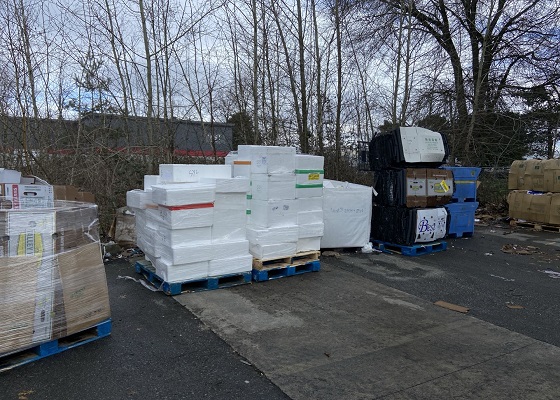
Recycled EPS can be processed into compacted blocks or pellets and reintroduced into manufacturing for products such as picture frames, building materials, plastic accessories, and packaging components. Because the base material has already been produced once, the energy required to process recycled EPS is significantly lower than producing new resin from petroleum. This translates directly into lower raw material costs and a smaller environmental footprint.
The economic advantage becomes particularly clear when efficient recycling equipment is used. GREENMAX EPS recycling machines are designed to compress large volumes of waste foam into dense blocks or pellets, dramatically reducing transportation costs and enabling manufacturers to turn waste into a valuable resource. By converting bulky foam waste into compact material suitable for remanufacturing, businesses can transform disposal costs into new revenue streams.
One manufacturer in Europe provides a clear example of how recycling EPS can reduce costs while improving sustainability. The company produces decorative picture frames, many of which are made from recycled polystyrene. In the past, the manufacturer relied heavily on purchasing virgin plastic pellets, which made the business highly sensitive to fluctuations in oil prices. As petroleum costs rose, their raw material expenses increased significantly.
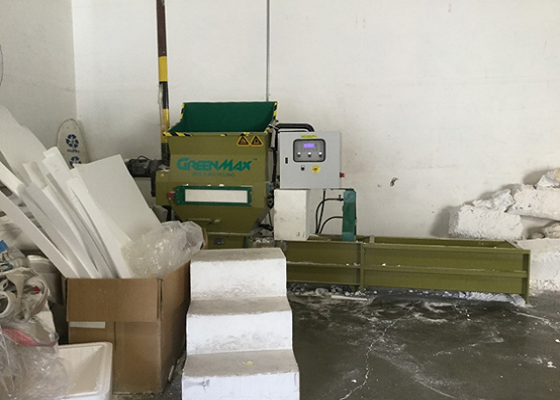
To solve this problem, the company installed a GREENMAX EPS compactor to recycle post-consumer foam packaging collected from local sources. The compactor reduced the volume of waste EPS by up to 50 times, producing dense blocks that could be transported efficiently to their processing facility. These blocks were then processed into recycled plastic pellets used in the production of new frames. By integrating recycled EPS into their supply chain, the company significantly lowered its dependence on virgin resin. This not only stabilized production costs but also allowed them to market their products as environmentally friendly, which became an important selling point in the European market where sustainability standards are increasingly emphasized.
Another successful case can be found in Southeast Asia, where a packaging manufacturer sought to control rising material costs while improving its environmental practices. The company handled large volumes of EPS packaging waste generated from electronics shipments. Previously, this waste was treated as disposal material, requiring transportation to landfills and creating unnecessary handling costs.、After adopting a GREENMAX EPS densifier, the company began processing its own EPS waste on-site. The machine compressed loose foam packaging into dense ingots that could be sold to plastic recyclers or reused in the production of new plastic components. As a result, the company not only eliminated the cost of waste disposal but also created a secondary revenue stream. More importantly, the recycled EPS material was later incorporated into certain packaging accessories produced by the company. This allowed them to reduce the amount of virgin plastic purchased each year, directly lowering their production costs at a time when oil prices were climbing.
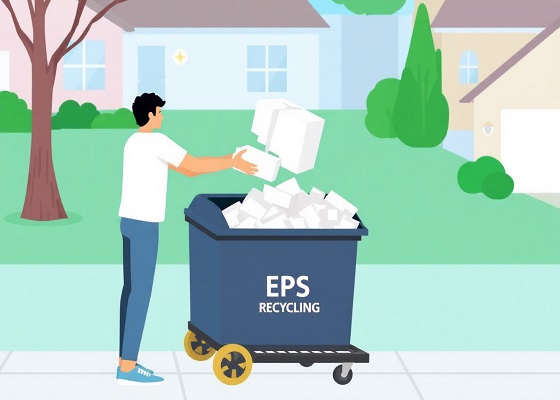
These examples highlight an important trend across many industries. As raw material prices increase, manufacturers are actively searching for ways to stabilize supply chains and reduce dependence on virgin petroleum-based plastics. EPS recycling provides a practical solution that addresses both economic and environmental challenges at the same time.
Today, sustainability has also become a key factor influencing purchasing decisions. Governments, retailers, and consumers are increasingly prioritizing environmentally responsible products. Many “green” products on the market already incorporate recycled materials as a core component of their design. In fact, the presence of recycled content is often a defining characteristic of environmentally friendly goods. Using recycled EPS allows manufacturers to reduce carbon emissions, decrease landfill waste, and demonstrate a commitment to circular economy principles.
From an environmental perspective, recycling EPS significantly reduces the amount of foam waste entering landfills or the natural environment. Because EPS is lightweight but bulky, it occupies large volumes of landfill space if not recycled. Compressing and recycling this material helps optimize waste management while conserving petroleum resources that would otherwise be required to produce new plastic.
As crude oil prices remain unpredictable, the importance of material efficiency will only grow. Companies that integrate recycling into their production processes are positioning themselves for long-term resilience. By converting foam waste into reusable raw material with equipment such as GREENMAX EPS recycling machines, manufacturers can reduce costs, stabilize material supply, and contribute to a more sustainable industrial system.
In an era where economic pressure and environmental responsibility intersect, recycled EPS is proving to be both a smart business decision and a meaningful step toward greener manufacturing.