 Select Language
 English
Recycling Styrofoam with GREENMAX Styrofoam Hot Melting Machine: A Practical Path to Global Foam Circularity
Styrofoam, commonly known as expanded polystyrene or EPS, has become an essential material in packaging, logistics, construction, seafood distribution, appliances, and e-commerce. Its light weight, shock absorption, and insulation performance make it difficult to replace in many industries. However, the same feature that makes Styrofoam useful also makes it difficult to recycle: most of its volume is air. Loose EPS occupies large storage space, fills dumpsters quickly, and makes transportation uneconomical when it is not densified at the source. This is why the GREENMAX Styrofoam hot melting machine has become an increasingly practical solution for companies that want to turn bulky foam waste into a compact, recyclable material.
The market background shows why this technology is becoming more important worldwide. According to Grand View Research, the global expanded polystyrene market was valued at USD 17.82 billion in 2024 and is projected to reach USD 29.04 billion by 2033, with a CAGR of 5.6% from 2025 to 2033. The same report notes that EPS demand is supported by construction, packaging, automotive, and consumer goods applications, while recycling technologies are also influencing the market’s development. As EPS consumption continues to grow, recycling pressure is also increasing. In the United States, EPA data show that in 2018, 80,000 tons of polystyrene containers were generated, while less than 5,000 tons were recycled. The EPA also reported that 140,000 tons of polystyrene bags, sacks and wraps, plus 330,000 tons of other polystyrene packaging, were generated that year, with only 20,000 tons recycled, equal to 3.6% of PS containers and packaging. These figures demonstrate a clear gap between foam usage and foam recovery, creating a strong need for efficient on-site densification.
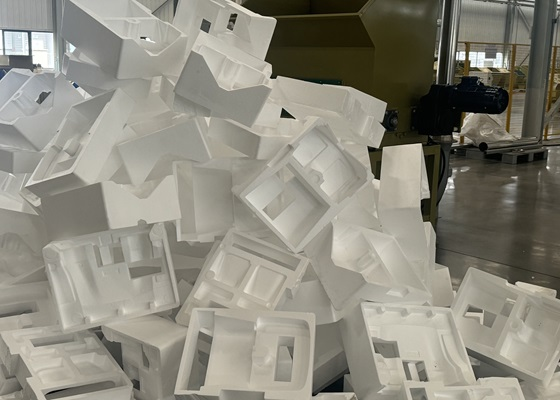
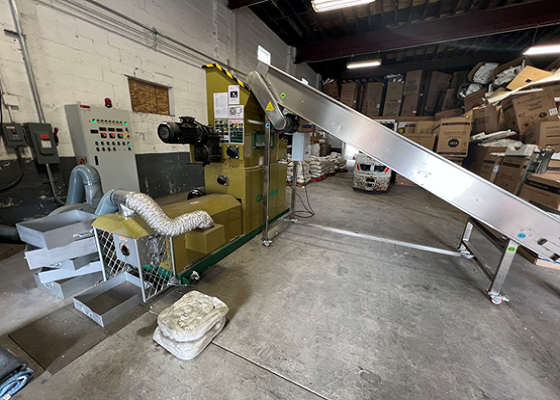
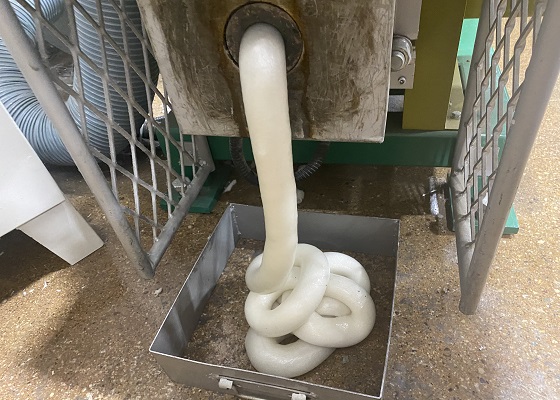
The GREENMAX Styrofoam hot melting machine addresses this challenge by crushing, heating, melting, and extruding loose foam into dense blocks or ingots. Compared with loose foam, the melted blocks are much easier to stack, store, handle, and ship to downstream recyclers. The GREENMAX Mars Series hot melt machine is designed for EPS and EPE foam and can also process materials such as EPP, PSP, XPS, food trays, and cups. The MARS C200 model, for example, has a maximum capacity of 200 kg per hour, a compression ratio of 90:1, and a compressed density of 600–800 kg/m³. This means a business can dramatically reduce the space taken by foam waste and make recycling commercially viable instead of treating Styrofoam as a disposal burden.
A strong example comes from a recycling center in Tacoma, Washington, where incoming EPS volumes were rising quickly. The site sometimes received around 40 cubic yards of foam every two days, while local downstream collection was not always reliable. Old equipment could no longer keep up with the growing volume, and mixed inbound foam streams, including EPS and EPE, increased operational pressure. After an on-site review, the recommended solution was a GREENMAX M-C200E foam densifier. The machine helped the center process mixed foam into dense ingots or logs, achieving volume reduction of up to about 90:1 and making storage and transportation far more manageable. For this American customer, the GREENMAX Styrofoam hot melting machine did more than reduce waste volume; it transformed a recurring space and logistics problem into a steady recycling workflow.
The global popularity of hot melting technology is closely connected to this practical value. Foam recycling is not only an environmental issue but also a logistics issue. In North America, Europe, Asia Pacific, and other regions, recyclers, retailers, seafood processors, appliance distributors, construction material suppliers, and packaging users all face the same problem: loose foam is too bulky to move profitably. Hot melting technology solves the core economic barrier by converting low-density waste into high-density recycled feedstock. This is why the technology is increasingly adopted by companies that need stable, continuous, and cost-effective foam recycling.
GREENMAX also strengthens the recycling chain by providing more than equipment. INTCO Recycling states that it manufactures and sells GREENMAX foam compactors and densifiers, buys compressed foam blocks, and turns them into frame products. The company also reports recycling 100,000 tons of waste EPS every year, helping reduce 300,000 tons of carbon emissions. This closed-loop model is important because many companies hesitate to recycle Styrofoam not because they lack waste material, but because they lack reliable outlets for the densified product.
As global EPS consumption continues to rise, the GREENMAX Styrofoam hot melting machine offers a realistic bridge between environmental responsibility and business efficiency. It reduces storage pressure, lowers transportation difficulty, improves the value of waste foam, and supports the wider adoption of Styrofoam recycling around the world. For companies handling large amounts of EPS, hot melting technology is no longer a niche option; it is becoming one of the most practical tools for building a scalable foam recycling system.