 Select Language
 English
Recycling EPP in the United States: Challenges and Practical Solution with a Foam Compactor
Expanded Polypropylene (EPP) is widely used in the United States in automotive parts, protective packaging, reusable food containers, and consumer goods because of its lightweight structure, high durability, and excellent shock absorption. However, as EPP usage grows, the issue of recycling this material has become increasingly important for American manufacturers, distributors, and recycling facilities.
In the United States, plastic waste generation exceeded 40 million tons annually in recent years, according to data from the U.S. Environmental Protection Agency. While EPP is often grouped under polypropylene-based plastics, its recycling rate remains relatively low compared to PET or HDPE. Industry estimates suggest that less than 10% of polypropylene-based foam materials, including EPP, are effectively recycled in the U.S. each year. The main challenges are low bulk density, high transportation costs, and limited local recycling infrastructure capable of handling foam materials efficiently.
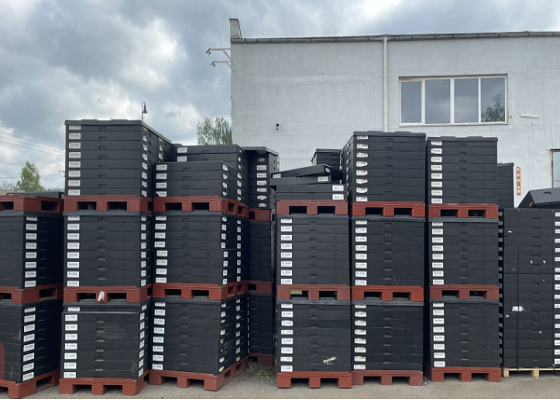
Despite these challenges, EPP is highly recyclable in theory. Once properly densified, recycled EPP can be reprocessed into automotive components, industrial pallets, storage boxes, and construction materials. The key to improving EPP recycling rates in the U.S. lies in reducing volume at the source and creating an economically viable logistics chain. This is where a foam compactor becomes critical.
A practical example can be found at a U.S.-based logistics and packaging center that handles large volumes of EPP protective packaging from automotive parts. Before adopting specialized equipment, the facility stored loose EPP foam in large containers, requiring frequent transportation and resulting in high handling costs. The lightweight foam occupied significant warehouse space while generating minimal recycling value.
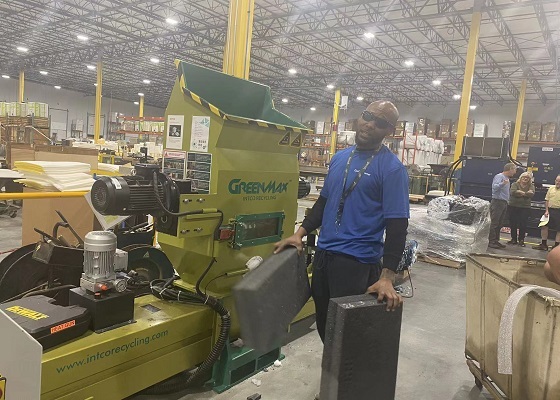
To address this issue, the company introduced a GREENMAX foam compactor, specifically from the Z Series, designed for cold compaction of foam materials such as EPP. By using the Z Series foam compactor, the facility was able to compress loose EPP into dense blocks, reducing the foam volume by up to 50%. This dramatic volume reduction transformed EPP waste from a logistical burden into a manageable and valuable recyclable material.

After compaction, the densified EPP blocks were transported to a regional recycler specializing in polypropylene-based materials. Transportation frequency was significantly reduced, cutting fuel consumption and carbon emissions while lowering overall recycling costs. At the same time, the higher density of the compacted EPP improved its market value, making recycling economically sustainable rather than a compliance-driven expense.
This case highlights a broader trend in the U.S. recycling market. As sustainability regulations tighten and companies commit to ESG goals, efficient on-site processing solutions are becoming essential. A foam compactor not only solves storage and transportation issues but also plays a direct role in increasing actual recycling rates for materials like EPP.
In conclusion, while EPP recycling in the United States still faces structural challenges, real progress is being made through technology and practical implementation. By combining reliable recycling data, growing environmental awareness, and proven solutions such as the GREENMAX Z Series foam compactor, American businesses can significantly improve EPP recycling efficiency and move closer to a circular economy for foam materials.