 Select Language
 English
Recycling EPE Packaging in the Electronics Industry Using Foam Melting Machines
EPE (Expanded Polyethylene) foam has become one of the most widely used protective packaging materials in the electronics and precision components industry. With the rapid growth of global e-commerce and electronics manufacturing, the demand for safe, lightweight, and recyclable packaging has increased significantly. Compared with EPS (Expanded Polystyrene), EPE offers superior flexibility, cushioning performance, and shock absorption, making it especially suitable for protecting delicate electronic parts such as circuit boards, sensors, and precision instruments during transportation and storage. In addition, EPE can be modified into anti-static materials, which is a crucial advantage for the electronics industry where static discharge can damage sensitive components.
Unlike EPS, which is relatively rigid and brittle, EPE foam has a closed-cell structure with excellent resilience. This allows it to absorb repeated impacts without permanent deformation, ensuring long-distance transportation safety for high-value electronic products. Another key advantage is its adaptability. Through material modification during production, EPE can be engineered to achieve anti-static or conductive properties, reducing the risk of electrostatic discharge. This makes it particularly valuable for packaging semiconductors, hard drives, and other sensitive electronic assemblies.
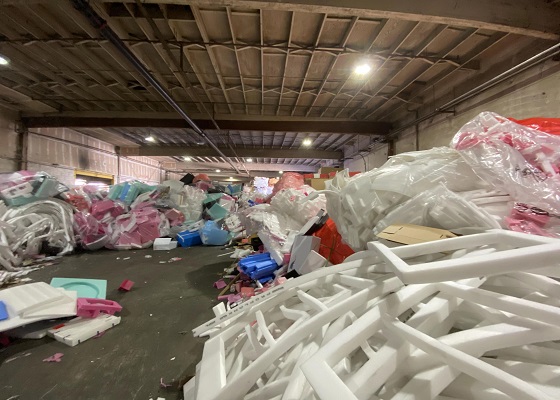
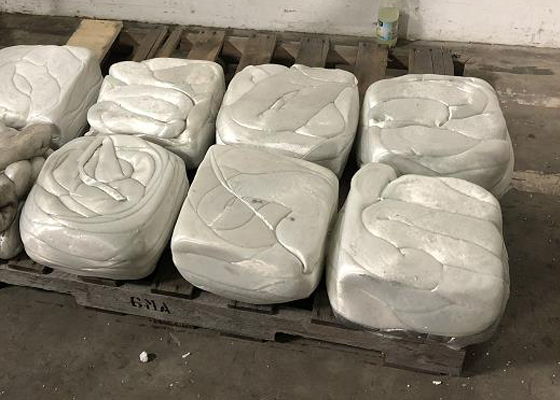
However, the widespread use of EPE also brings significant post-consumer waste challenges. Large volumes of used EPE packaging are generated in electronics warehouses, distribution centers, and recycling facilities. Due to its low density, transporting loose EPE waste is inefficient and costly. This is where foam melting technology plays an essential role. A foam melting machine compresses and heats EPE waste, reducing its volume dramatically and converting it into dense ingots that are easy to store, transport, and recycle into reusable plastic materials.
GREENMAX foam melting machines have been widely adopted in the electronics supply chain to address this issue efficiently. In one case, a large electronics distribution center in North America implemented a GREENMAX M-series foam melting system to handle high volumes of EPE packaging waste generated from daily inbound shipments. Before installation, the company faced rising disposal costs and warehouse congestion caused by bulky foam waste. After introducing the melting system, the facility was able to reduce EPE volume by up to 90%, significantly lowering transportation frequency and improving warehouse utilization. The compacted ingots were then sold to recycling partners for reuse in plastic product manufacturing, creating an additional revenue stream while improving sustainability performance.
In another case, a precision electronics manufacturing plant in Europe integrated a GREENMAX foam melting machine directly into its packaging line. The plant produces high-end electronic modules that require strict anti-static packaging, resulting in large amounts of customized EPE foam waste during quality inspection and packaging adjustments. By installing the foam melting system on-site, the company eliminated the need to transport loose waste off-site. The melted EPE blocks were collected and recycled into raw plastic materials, which were later used in non-critical packaging applications. This closed-loop recycling system not only reduced environmental impact but also improved operational efficiency and cost control.
As environmental regulations continue to tighten and sustainability becomes a global priority, foam melting technology is playing an increasingly important role in the circular economy of packaging materials. For the electronics industry, where EPE is essential for product protection, GREENMAX foam melting machines provide a practical and efficient solution for turning waste into value. By enabling volume reduction, cost savings, and material reuse, these systems help companies achieve both environmental responsibility and operational efficiency in a highly competitive global market.