 Select Language
 English
Recycling EPE Foam with GREENMAX Foam Recycling Machine: A Practical Solution for the Electronics Packaging Industry
EPE foam has become one of the most widely used protective packaging materials in the electronics industry. From smartphones, laptops, home appliances and precision instruments to solar components and medical electronics, EPE packaging is commonly used to protect products from shock, vibration and surface damage during storage and transportation. As the global electronics supply chain continues to expand, the volume of EPE packaging waste is also increasing rapidly. For manufacturers, warehouses and recyclers, how to handle this lightweight but bulky material has become an important issue. A GREENMAX foam recycling machine provides an efficient way to recycle EPE foam and turn packaging waste into a more valuable recyclable resource.
The reason EPE packaging keeps increasing in the electronics industry is closely related to the nature of electronic products. Modern electronic devices are often high-value, fragile and sensitive to impact. Even a small scratch or internal vibration during shipping may lead to product returns, customer complaints or financial losses. Therefore, manufacturers and distributors need packaging materials with good cushioning performance, flexibility and lightweight properties. EPE foam meets these requirements well. It can be cut, laminated or molded into different shapes, making it suitable for customized electronic packaging.
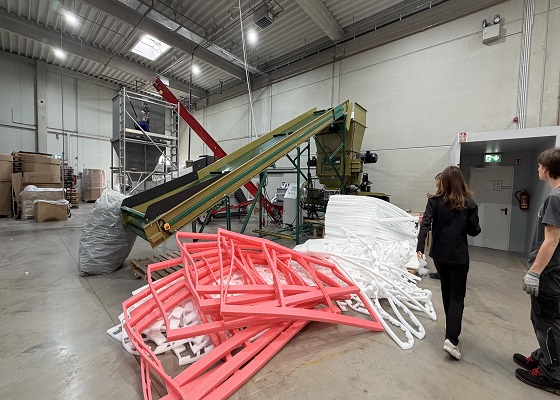
Another important reason is the growth of e-commerce and global logistics. More electronic products are now sold online and shipped directly to consumers or regional warehouses. Compared with traditional bulk shipping, parcel delivery creates more handling steps, which increases the risk of product damage. As a result, electronics companies tend to use more protective packaging to reduce breakage rates. EPE foam is also favored because it is light in weight, helping companies control shipping costs while maintaining protection. However, after unpacking, large amounts of EPE foam waste are generated at factories, distribution centers, repair centers and recycling stations.
Globally, EPE recycling is becoming more important. The overall recycling rate for plastic waste remains low, while regulations and brand sustainability targets are becoming stricter. In Europe, packaging policies are moving toward recyclable design, recycled content and better waste management. For electronics companies selling into the European market, packaging waste can no longer be treated simply as disposable material. Instead, companies are expected to build more circular recycling systems. This creates new demand for on-site foam recycling equipment that can reduce the volume of EPE waste and prepare it for downstream recycling.
The main challenge of EPE foam recycling is its low density. Loose EPE foam occupies a large amount of space but contains relatively little material by weight. If it is transported without compression, companies are essentially paying to transport air. This leads to high logistics costs, inefficient storage and low recycling value. A foam recycling machine solves this problem by densifying EPE foam at the source. After compaction or hot melting, the foam waste can be converted into dense blocks or ingots, making it easier to store, transport and sell to recyclers. The recycled material can then be pelletized and reused in plastic products, packaging materials or other industrial applications.
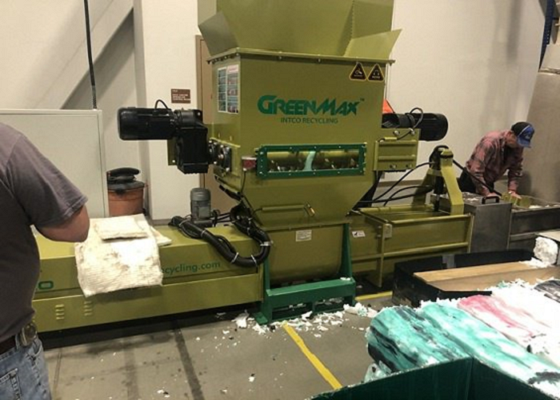
GREENMAX, as a machinery brand under INTCO Recycling, provides foam recycling machine solutions for materials such as EPE, EPS and EPP. For EPE foam, GREENMAX equipment can help customers reduce waste volume, lower storage pressure and improve the economic value of recycling. Instead of letting foam packaging pile up in warehouses or sending loose foam waste to landfill, companies can process the material on site and build a more practical recycling workflow.
A good example is a European foam packaging customer using a GREENMAX Z series machine to handle EPE, EPP and EPS packaging waste. The customer serves industries such as medical, electronics and solar energy, where foam packaging waste is generated continuously. Before using the equipment, foam waste required more space and labor for handling. After introducing the GREENMAX Z-C200 foam recycling machine, the customer was able to process around 30 tons of foam waste per month. The equipment helped reduce manual operation, improve production efficiency and make centralized foam recycling more feasible. During operation, the customer adjusted feeding speed and machine parameters according to different material densities, which helped improve stability and reduce blockages.
.jpg)
For industrial customers, the Z series is also suitable for modern factory management. Its automatic operation, adjustable parameters and control system make it compatible with Industry 4.0-oriented production environments. For European customers in particular, this is a practical advantage. Many European companies face high labor costs, strict safety requirements and growing pressure to improve resource efficiency. A stable and automated foam recycling machine can help them reduce manual work, improve data-based operation management and support circular economy goals.
As EPE packaging continues to grow in the electronics industry, recycling will become an essential part of packaging management. GREENMAX foam recycling machine solutions make it possible to transform bulky EPE foam waste into compact, recyclable material. For electronics manufacturers, packaging suppliers, logistics centers and recycling companies, investing in EPE foam recycling is not only a way to reduce waste disposal costs, but also a step toward a more sustainable and circular supply chain.