 Select Language
 English
Polystyrene recycling attached more importance due to the growing demand of the European market
Polystyrene, which is the made from styrene monomer, is one of the most popular plastic types used for packaging and house insulation. Polystyrene material has wide applications mainly due to the cost-effectiveness characteristic.
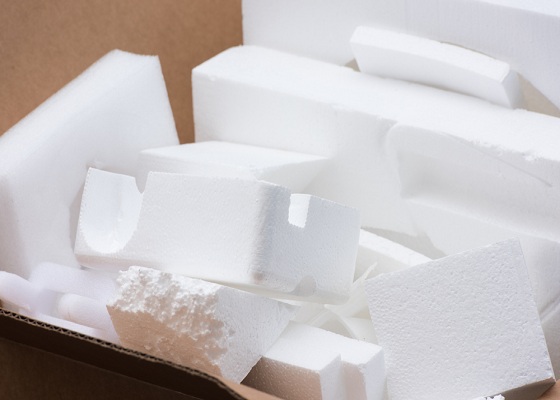
In recent years, the polystyrene market has faced mixed dynamics in Europe, with cyclical declines in 2023 followed by a modest recovery in 2024. In the European Union, the polystyrene market value is estimated at about USD 4.5 billion in 2024 and is forecast to grow to ~USD 5.7 billion by 2035, implying a value CAGR of ~2.2% from 2024 to 2035.
The growth of the polystyrene market in Europe mainly due to technological advances and the supply of cheap raw materials in the region. In addition, industrialization, the growth of plastics and rubber industries and the lack of availability of alternative energy have also boosted the European polystyrene market.
Packaging remains the largest end-use sector for polystyrene in Europe, accounting for more than one-third of total consumption. According to recent global marine pollution assessments, an estimated 11–14 million tons of plastic waste enter the oceans each year — roughly the equivalent of one garbage truck every minute. A significant share of this waste includes foamed plastics such as EPS and XPS, which can persist in the environment for hundreds of years. The durability and volume of discarded polystyrene have intensified regulatory pressure and created higher demands on the development of recycling technologies and circular solutions in the polystyrene value chain.
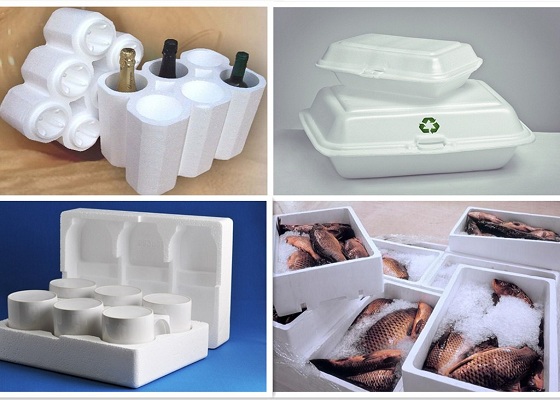
Europe remains one of the leading regions in polystyrene recycling, with an estimated 30–35% of post-consumer EPS and other polystyrene waste being collected or recovered through mechanical and chemical recycling routes. Although the average recycling rate is still below that of PET or HDPE, Europe maintains the largest established EPS recycling network globally. This has led to an increasing awareness of polystyrene recycling.
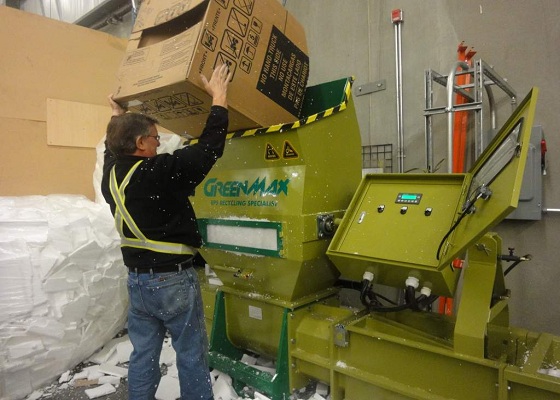
Many European countries like Netherlands, Germany, Belgium, Italy and France are making efforts for polystyrene recycling. Some of the regions have introduced recycling machines like GREENMAX polystyrene compactor to realize foam volume reduction in an efficient way. The machines help compact loose foam into tight blocks at a ratio of 50:1 or higher to save storage and transportation costs. And the compacted foam blocks will be sold at a good price. In this case, polystyrene recycling has risen from environmental problems to economic problems.
Polystyrene recycling reduces the amount of plastic waste, save disposal cost and landfill spaces. More importantly, it can reduce the harm to the life of the earth. So not only Europe, but also the whole world should unite to promote polystyrene recycling.