
 Select Language
 English
Physical recycling of PET plastic bottles with the bottles dewatering machine: a green cycle from dewatering to packaging
The physical recycling of PET plastic bottles is a systematic project that combines environmental value with economic benefits. Its core process revolves around mechanical treatment, achieving maximum resource utilization through efficient dehydration and standardized packaging. This process not only avoids the complex procedures of chemical recycling but also promotes the implementation of a circular economy for plastics through a simple and reliable technical approach.
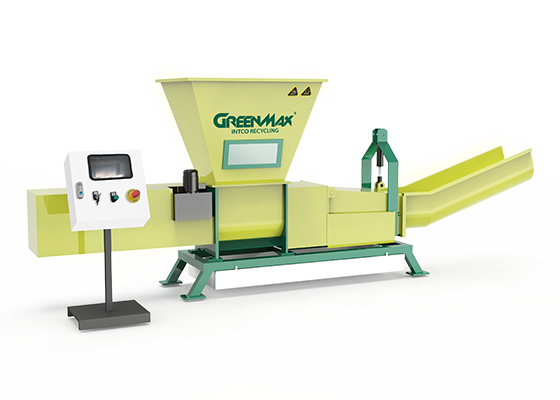
The PET bottles dewatering machine adopts twin-screw extrusion dewatering technology. Under precise working temperatures, the screws’ shearing and pushing actions expel free water and some volatile substances from the bottle flakes in a high-pressure environment. The built-in vacuum venting system can reduce the moisture content to below 0.5%, while frictional heat is used to achieve initial crystallization, enhancing the material’s processing performance. This integrated design increases dewatering efficiency by 40% compared to traditional hot air drying, reduces energy consumption by 30%, and perfectly suits the needs of large-scale recycling production lines. The GREENMAX PET bottles dewatering machine comes in three models: small, medium, and large power, to meet different customer requirements.
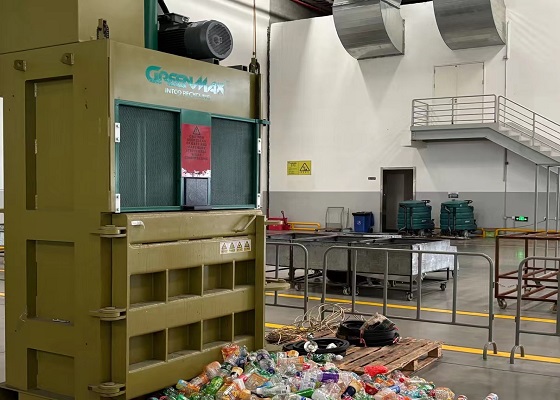
The PET material dewatered by the PET bottles dewatering machine enters the packing process. GREENMAX provides both vertical and horizontal balers, which use the extrusion force generated by the system to compress the fluffy bottle flakes into standard bales.
Data shows that recycling one ton of PET can save the consumption of 8 barrels of crude oil and reduce carbon dioxide emissions by 1.5 tons, while the processing cost is only 60%-70% of that of virgin material. With the EU's "Plastics Strategy" aiming for a 70% PET bottle recycling rate by 2030 and China's "dual carbon" policy promoting the expansion of the recycling industry, physical recycling technology is being upgraded towards intelligence — infrared sorting systems achieve an accuracy rate exceeding 99.5%, and AI visual inspection enables real-time impurity removal. These innovations make PET plastic recycling a model for sustainable development.
The practice of a recycler in Malaysia shows that after introducing GREENMAX equipment, its PET bottle recycling efficiency increased fourfold, transportation costs decreased by 60%, and what used to require 10 trucks to transport loose bottles can now be completed with only 2 trucks after processing. This combined 'dehydration + baling' model has completely transformed the traditional PET recycling scenario of being 'scattered, chaotic, and expensive.'