 Select Language
 English
Maximizing Recycling of Waste Styrofoam with a Styrofoam Compactor in Europe
In logistics, home appliance, and e-commerce supply chains, styrofoam is still one of the most common packaging materials. It protects products well, but once unpacked, it becomes a bulky, low-density waste stream that is expensive to store and transport. Without an efficient recycling solution, many companies end up sending this material to landfill or incineration. A styrofoam compactor changes this equation by turning loose waste styrofoam into dense, marketable blocks that fit easily into a circular economy.
A styrofoam compactor works on a simple principle: reduce volume while preserving material value. Waste styrofoam packaging, boxes, and offcuts are fed into a hopper and crushed into smaller pieces. A powerful screw then compresses the material and extrudes it as dense ingots or blocks. Volume reduction ratios can be dramatic, meaning that what once filled an entire warehouse bay can be stacked neatly on a few pallets. By installing a styrofoam compactor near the unloading or unpacking area, companies can manage this waste stream immediately instead of allowing it to accumulate.
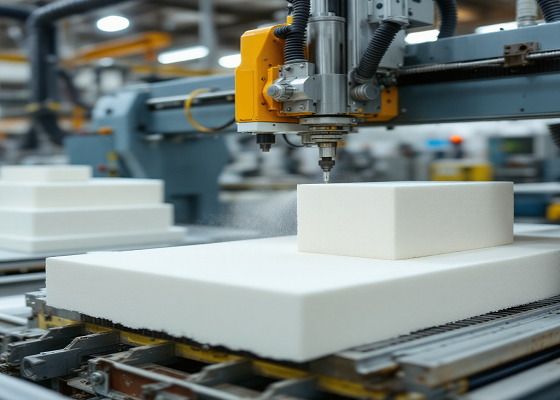
One of the key advantages of using a styrofoam compactor is the shift from cost center to revenue opportunity. Loose styrofoam waste is difficult to handle and has almost no resale value. Once compacted, however, the dense blocks are a desirable secondary raw material. Recyclers can shred and reprocess them into pellets to make frames, moldings, and insulation boards. For companies looking to improve sustainability performance without sacrificing profitability, the styrofoam compactor offers a practical, day-to-day solution that integrates easily into existing operations.
A good example comes from a European case using a GREENMAX styrofoam compactor. A mid-sized distributor of household appliances in Europe received thousands of refrigerators, TVs, and small electronics every month, each protected by large styrofoam cushions. The warehouse team struggled with overflowing cages of foam, frequent waste collections, and high disposal costs. The waste contractor charged by volume rather than weight, so trucks were moving mostly air. At the same time, the company’s management had made public sustainability commitments and needed visible progress on packaging waste reduction.
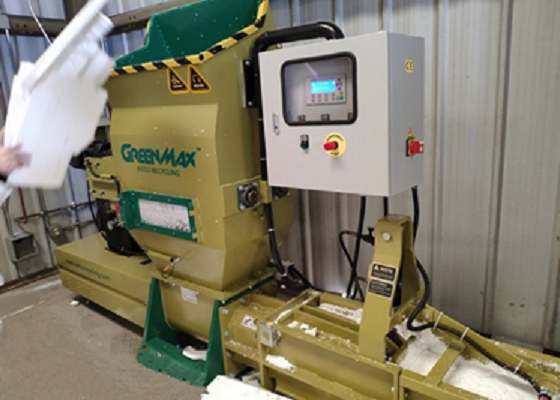
After evaluating different options, the distributor installed a GREENMAX styrofoam compactor directly in its central warehouse. All unpacked styrofoam from incoming goods was routed to this unit. Operators fed the waste into the machine, which crushed and compacted the material into dense ingots. The result was an immediate reduction in storage space needed for waste; instead of dedicating a large area to loose styrofoam, the company stacked compacted blocks on pallets. Collection frequency dropped because each truckload could now carry many times more material by weight.
Within the first year of operation, the company was able to renegotiate its waste contract and start selling the compacted blocks to a local recycler. What had previously been a rising cost became a small but meaningful new revenue stream. Just as importantly, the company could document how many tons of styrofoam were diverted from landfill, using data from the GREENMAX styrofoam compactor to support its internal ESG reporting and external sustainability communication.
This European case illustrates how a styrofoam compactor is more than just a piece of equipment; it is a tool for operational efficiency, cost control, and environmental responsibility. By compacting waste styrofoam into a recyclable resource, businesses reduce their footprint, simplify logistics, and unlock new value from what was once a problematic waste stream. Whether in Europe or any other region, integrating a GREENMAX styrofoam compactor into the recycling line is a straightforward step toward a cleaner, more circular packaging system.
.jpg)