 Select Language
 English
How will the EPS compactor help improve recycling convenience in the Oregon area?
Expanded polystyrene (EPS) foam – the lightweight, airy material often used in packaging and insulation – poses a persistent waste challenge in the United States. In Oregon, this material’s bulky nature and low density make transportation and processing inefficient unless it is first compacted. By using a compaction process, EPS waste is densified and more economically shipped to downstream recyclers, forming an important link in circular-economy systems.
Oregon context and data
According to the Oregon Department of Environmental Quality (DEQ), for calendar year 2022 the state generated approximately 6,091,756 tons of municipal solid waste (generation = recovered plus disposed) and recovered about 2,400,810 tons, yielding a recovery rate of 39.4 %. That recovery metric covers recycling, composting and some energy recovery across all materials, though it does not isolate EPS foam specifically. While there is no comprehensive publicly-available tonnage figure for EPS foam alone in Oregon, national data indicate that EPS recycling in the U.S. has recently grown to over 136 million pounds (≈ 68 000 tons) in 2022.
Application of EPS compaction in Oregon
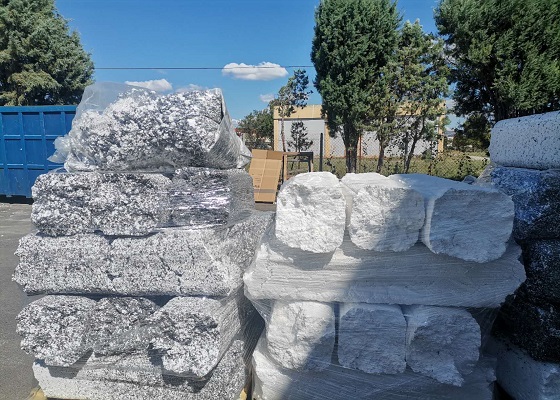
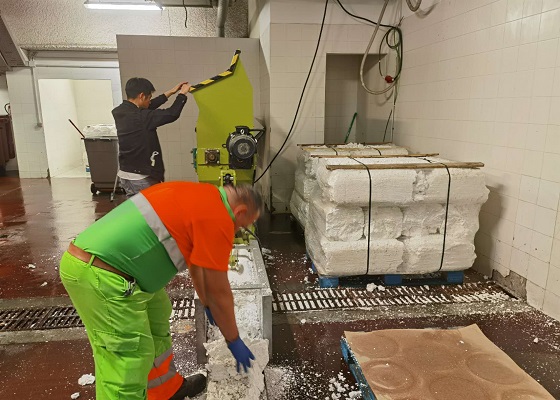
In practice, when an EPS compactor (or densifier) is used, clean, sorted EPS foam – often blocks, loose fill, packaging pieces – is fed into the machine. The air is removed and the material is pressed or melted into dense logs or bricks, which can then be baled, shipped and fed into mechanical or chemical recycling systems. In Oregon conditions – where markets for EPS recycling can be thin, and distances to downstream processors are long – compaction becomes economically and environmentally important.
According to the DEQ study, onsite densification (near the collection point) combined with transport of compacted material to a local chemical-recycling facility produced lower greenhouse-gas and other impacts than off-site densification or landfill disposal.
Case study: Collection and compaction by a nonprofit in Lane County
In Lane County, Oregon, a standout example is the work of the St. Vincent de Paul Society of Lane County (SVdP) in Eugene. SVdP operates donation centres across the region and accepts #6-marked EPS blocks (clean packaging foam) at its drop-off locations for free (or a small fee for larger loads). At their facility they use a densification machine to compress the collected EPS into dense “logs” or bricks which are then palletised and shipped to manufacturers or recycling end-markets.
.jpg "/pics/polystyrene-compactor (3).jpg")
Conclusion
In sum, the use of an EPS compactor in Oregon supports the practical viability of EPS foam recycling by addressing one of the main bottlenecks – the low density of the material. While statewide data specific to EPS remain limited, available figures and studies indicate that densification is an environmentally and economically beneficial step. The case of SVdP in Lane County offers a tangible local example of collection, compaction, and shipping of EPS waste. As recycling systems continue to evolve, the compaction step will likely remain a key enabler in moving EPS from waste to resource.