
 Select Language
 English
How to Recycle XPS Waste with GREENMAX Foam Compactor
XPS is widely used to produce thermal insulation boards for buildings. Cutting and shaping these boards leaves manufacturers with offcuts, damaged sheets and rejected products that still contain recyclable polystyrene. When these materials are collected in loose form, they can quickly occupy space around the production area. Reducing their volume at the factory makes XPS recycling easier to organise and allows more material to be transported in each load.
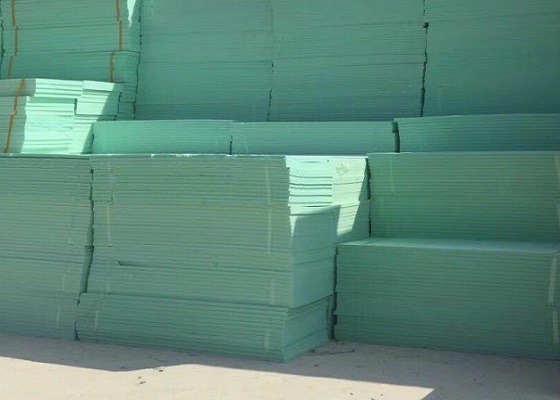
Reducing XPS Board Waste at the Factory
Most XPS production waste is relatively clean because it comes directly from manufacturing. This makes it suitable for recycling, provided that the factory has a reliable way to collect and reduce the material.
GREENMAX foam compactor first breaks the boards into smaller pieces. A screw then applies continuous pressure and forms the XPS into dense blocks without melting it. The compacted blocks take up far less space than loose boards. They are also easier to stack, store and load for transportation. Instead of arranging collections whenever the storage area fills with lightweight sheets, a manufacturer can accumulate a larger weight of material before it leaves the factory.
XPS Recycling with GREENMAX Foam Compactor
Iberfibran is an XPS insulation board manufacturer in Portugal. As its production volume increased, the amount of XPS board waste generated at the factory also grew. The company needed a solution that could handle its current waste while allowing for further production growth. After discussions between the customer and the GREENMAX team, GREENMAX foam compactor A-C200 was selected for XPS recycling. The machine has a maximum processing capacity of 200 kg/h and can reduce foam volume by up to 50:1.
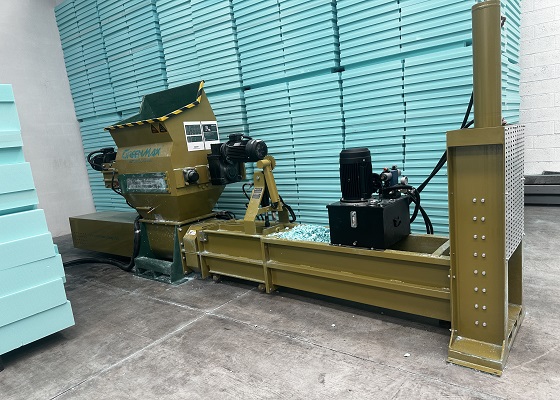
GREENMAX foam compactor A-C200 uses mechanical screw compression rather than hot melting. Waste XPS boards are crushed and pushed through the compression chamber, producing continuous compacted blocks. This gave the factory a more direct way to manage its increasing waste volume without taking up additional storage space.
After compaction, the XPS retained the material quality required for further processing. The dense blocks could be moved to the next recycling stage and eventually returned to production as recycled polystyrene material.
It shows how an XPS manufacturer can introduce volume reduction at the point where the waste is generated. Rather than transporting loose boards, the factory sends out concentrated material that is easier to store and more economical to move.
Choosing a Foam Compactor for XPS Recycling
The required machine size depends on how much XPS waste the factory produces and how quickly it needs to be processed. Board dimensions, material density, available working space and expected production growth should also be considered.
GREENMAX foam compactor range includes different processing capacities. Testing the manufacturer's own XPS waste can help confirm the feeding method, compacted block quality and suitable equipment configuration before the final model is selected.
FAQ
1. Can GREENMAX foam compactor process XPS boards?Yes. GREENMAX APOLO foam compactors can process XPS board offcuts and other suitable polystyrene foam waste.
2. How much can foam compactor A-C200 reduce XPS volume?
GREENMAX foam A-C200 can achieve a volume reduction of up to 50:1, depending on the material condition.