 Select Language
 English
How Styrofoam Compactor Technology Is Advancing Global EPS Recycling
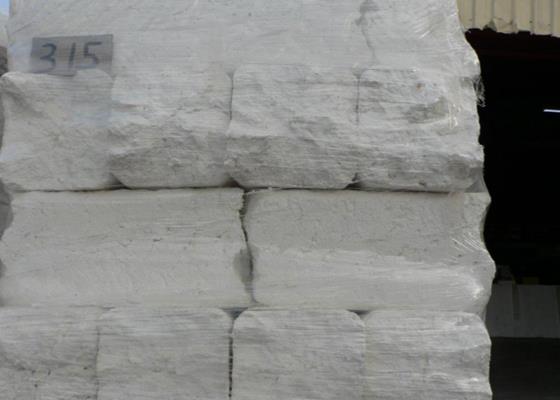
As pressure grows worldwide to reduce landfill waste and improve plastics circularity, cold compaction has become one of the most practical ways to recycle expanded polystyrene (EPS), often called Styrofoam. The reason is simple: EPS is highly recyclable, but its low density makes collection and transportation expensive. Cold compaction solves that problem by mechanically crushing and compressing loose foam into dense blocks that are easier to store, ship, and sell back into the recycling market. Today, this approach is no longer a niche solution. Global EPS recycling data shows that foam recovery is expanding across regions, and cold compaction equipment such as the styrofoam compactor is playing an important role in making that growth economically viable.
The global momentum behind EPS recycling is becoming clearer. The Global EPS Sustainability Alliance reported that 72 countries recycled EPS in 2023, and many of them achieved recycling rates above 30%. The same source notes that EPS transport packaging is recognized by UNEP as being recycled “in practice and at scale,” which is a meaningful benchmark in international circular economy discussions. Separate industry data published by EPS Cycle shows that EPS recycling rates exceed 30% in North America, 40% in Europe, and 50% in Japan, China, and South Korea. EPS Cycle also reports that 4.2 billion people in 34 countries have access to EPS recycling, showing that recycling infrastructure for foam is spreading far beyond a few isolated markets.
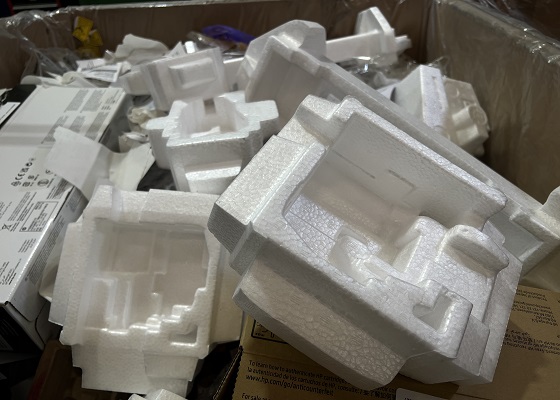
North America offers a particularly useful example of how recycling expands when logistics improve. According to a survey cited by the EPS Industry Alliance, EPS packaging in North America reached a 31% recycling rate, with more than 168 million pounds diverted from landfill in 2022. Importantly, this growth has not depended mainly on curbside systems. Instead, much of it has come from business-to-business recycling channels, collection networks, and compaction-based handling systems that make bulky foam economical to move. The same data shows that access to densifier programs through the Foam Recycling Coalition grew from 4 million people in 2019 to 12.4 million in 2023, while foam collected by FRC-supported programs nearly doubled from 841,000 pounds to 1.6 million pounds during that period. This is exactly where cold compaction proves its value: it transforms a material that is expensive to transport into one that recyclers actively want to receive.
The key advantage of the styrofoam compactor lies in the cold pressing process itself. Unlike melt densifiers that rely on heat, a cold compactor reduces volume through mechanical pressure, typically using screw extrusion. That means lower energy consumption, fewer odor and fume concerns, and simpler day-to-day operation for facilities that want an on-site recycling solution without introducing a thermal process. GREENMAX states that its APOLO series uses cold pressing technology and can typically reduce foam volume by up to 50:1, while other GREENMAX product materials describe 90% to 95% volume reduction in practical use. For many warehouses, seafood plants, retailers, and logistics centers, that difference is crucial because it cuts storage pressure, lowers hauling frequency, improves workplace cleanliness, and converts waste into stackable recyclable blocks with resale potential.
.jpg)
One GREENMAX case from the produce distribution industry shows how cold compaction creates both environmental and operational value. In a North American fruit and vegetable distribution center, large quantities of EPS boxes and trays accumulated every day after unpacking fresh produce. The company struggled with storage congestion, frequent pickups, and high transportation costs because loose foam occupied too much warehouse space. After installing a GREENMAX styrofoam compactor on site, the used packaging was crushed and compressed into dense blocks as part of the daily workflow. According to the case study, the volume of the foam was reduced by up to 90%, freeing warehouse space and making transport to recyclers far more efficient. The company also improved diversion from landfill and, in some cases, was able to sell compacted material instead of paying disposal fees.
A second GREENMAX case from the seafood processing industry highlights why cold compaction is especially useful for fish box recycling. Seafood processors handle large quantities of EPS packaging because foam boxes protect temperature-sensitive products during storage and shipping. In GREENMAX’s U.S. seafood processor case, the A-C200 styrofoam compactor was used to handle high volumes of fish box waste while reducing space consumption and supporting more efficient recycling. The published technical data lists a throughput of 200 kg per hour and a 50:1 reduction ratio, showing that cold compaction can work effectively even in demanding industrial environments with continuous packaging waste generation. For seafood companies facing both waste costs and sustainability pressure, the compactor turns an operational burden into a manageable recycling stream.
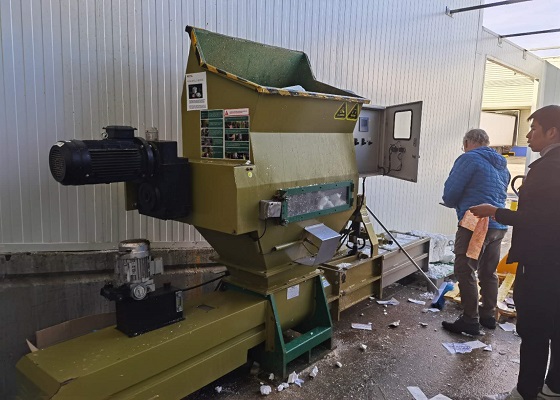
In short, global EPS recycling is growing because the market is finally solving the logistics problem that once made foam recovery difficult. Cold compaction is central to that solution. A styrofoam compactor reduces transport inefficiency, improves on-site handling, lowers operating burden compared with heat-based processing, and helps businesses turn bulky waste into tradable recyclable material. As global recycling access expands and more industries adopt on-site foam reduction, cold pressing technology is likely to remain one of the most practical pathways for scaling Styrofoam recycling worldwide.