 Select Language
 English
How GREENMAX PET Recycling Machines Turn Used Bottles into Value
PET bottles are one of the most familiar forms of plastic packaging in the world, and they are also among the most promising materials for circular recycling. Yet the global recycling challenge remains significant. The OECD has estimated that only about 9% of plastic waste is recycled worldwide, while more targeted PET data shows that bottle collection and recycling performance varies sharply by region. In the United States, the PET bottle collection rate reached 33% in 2023, the highest level in decades, and in Europe PET collection and sorting performance has continued to improve as infrastructure and policy support expand.
This is exactly where a practical PET recycling solution matters. For recyclers, beverage plants, warehouses, and distribution centers, the real problem is not only the bottle itself, but also the logistics around it: leftover liquid, unstable storage, high transport costs, odor, and contamination. GREENMAX PET recycling machines are designed to solve these early-stage problems efficiently, so PET bottles can move from waste to recyclable resource with lower handling costs and better material quality. Public product information from GREENMAX highlights that its bottle dewatering systems are used to squeeze residual liquid from beverage bottles and compact the material, while its balers help create dense, transport-friendly bales for downstream recycling.
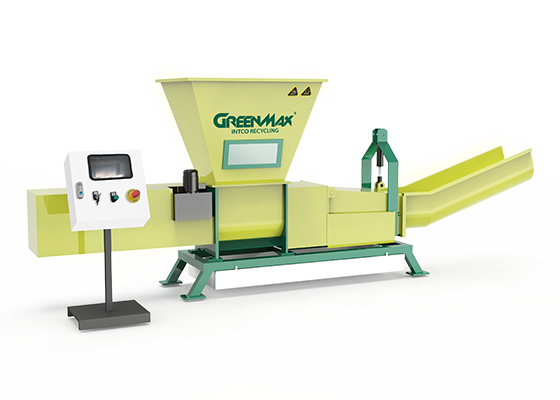
A typical first case involves the use of the GREENMAX dewatering machine in locations where PET bottles still contain liquid, such as beverage warehouses, redemption centers, or event venues. In these environments, workers often face mixed streams of partially full PET bottles that are expensive to move because companies are paying to transport both plastic and liquid. According to GREENMAX product pages, the dewatering machine can remove a high percentage of residual liquid while simultaneously reducing volume, making the material easier to store and ship. In practice, this means a recycling operator can receive bottles from multiple collection points, feed them into the machine, separate the liquid, and produce a much drier and more compact PET stream. The result is cleaner operations, lower hauling costs, and improved efficiency before the material enters the next recycling stage.
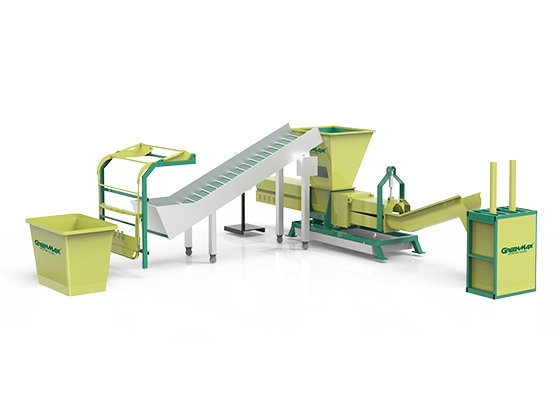
A second useful case is the combination of the GREENMAX dewatering machine and baler in a PET bottle recycling workflow. After bottles are drained and pre-compacted, they still need to be packed for economical storage and shipment. GREENMAX’s baler solutions are positioned for PET bottles, films, cartons, and similar recyclable materials, helping operators produce uniform bales that are easier to stack, handle, and send to recyclers or washing lines. In a real operating scenario, a collection center could first use the dewatering machine to remove liquid and shrink bottle volume, then send the processed bottles to a baler for dense packaging. This two-step approach is especially valuable where floor space is limited or outbound freight costs are high, because it converts loose, messy bottle waste into standardized recyclable commodities with stronger resale and logistics value.
The importance of this kind of equipment is growing as global demand for recycled PET continues to rise. In the U.S., NAPCOR reported that recycled PET content in bottles and jars reached 16.2% in 2023, showing stronger demand for post-consumer PET. In Europe, PET market studies have shown rising collection volumes and better sorting performance, supported by deposit return systems and recycled-content targets. These trends matter because high-quality PET recycling starts with better front-end handling. Bottles that arrive heavily contaminated, waterlogged, or loosely stored are harder and more expensive to process. Machines that reduce liquid, improve density, and streamline handling therefore play a direct role in supporting circular packaging systems.
From a business perspective, GREENMAX PET recycling equipment offers value beyond simple waste reduction. It helps companies cut transport inefficiency, reduce labor involved in draining and handling bottles, improve site cleanliness, and prepare PET for resale or further processing such as washing, flake production, or pelletizing. For companies that generate large volumes of post-consumer bottles, the combination of dewatering and baling can transform a disposal problem into a recoverable asset stream. That is why more recyclers and packaging-related operators are looking not only at end-market demand for rPET, but also at how to optimize the very first steps of collection and pre-processing.
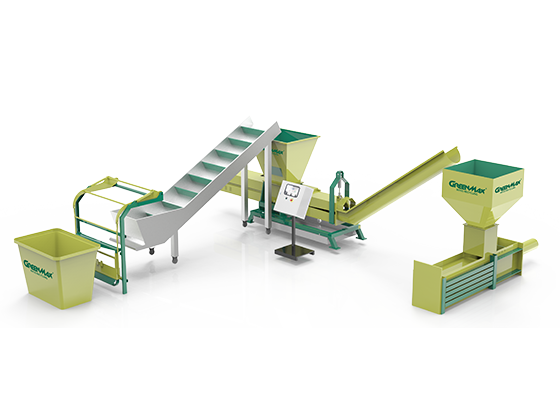
As global recycling systems mature, PET bottles will remain one of the most important materials in the plastics circular economy. But better recycling results do not come from policy alone. They also depend on practical machinery that helps operators manage bottles efficiently from the moment they are discarded. GREENMAX dewatering machines and balers offer a useful answer to that need: remove the liquid, reduce the volume, simplify transport, and make PET bottle recycling more commercially viable. In a market that increasingly values recovered material quality and operational efficiency, that is not just a technical advantage. It is a competitive one.