 Select Language
 English
How Government and Nonprofit Organizations Use GREENMAX Foam Recycling Machines to Serve Their Communities
Government agencies and nonprofit organizations play an important role in improving local recycling systems. Unlike commercial businesses, these organizations are often responsible for serving entire communities while operating under limited budgets, restricted storage space and public environmental commitments. Expanded polystyrene, commonly known as EPS or Styrofoam, is one of the most difficult materials for them to manage because it is extremely lightweight but occupies a large amount of space.
EPS packaging is frequently delivered to community recycling centers after being used to protect appliances, electronics, furniture, seafood and temperature-sensitive products. Although the material can be recycled, transporting untreated foam is rarely economical. A truck may appear full while carrying very little actual material by weight. This increases collection frequency, fuel consumption, labor requirements and operating costs.
A professional foam recycling machine changes this situation by crushing and densifying loose EPS before transportation. Once processed, the foam occupies considerably less space and becomes easier to store, stack and send to a downstream recycler. GREENMAX has supported local governments and nonprofit organizations that need to build practical recycling programs around this principle.
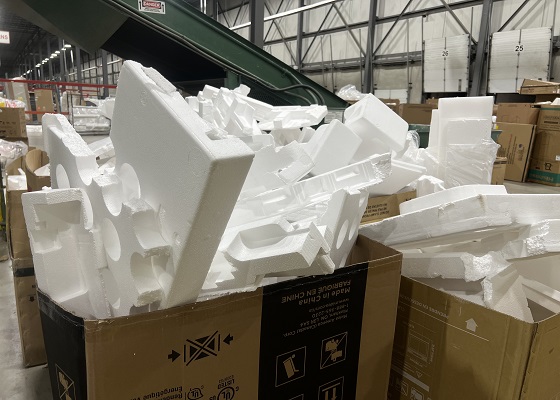
One representative government project involves Blue Mountains City Council in New South Wales, Australia. The council operates a Community Recycling Center where residents and local businesses can deliver EPS waste. Before purchasing GREENMAX equipment, the council rented a small locally available machine and recycled approximately seven to eight tons of EPS each year. As community participation increased, however, the limited capacity of the rented equipment became a bottleneck.
The council needed a more stable and efficient solution capable of supporting its growing public recycling program. After GREENMAX assessed the waste volume, material sources, site conditions and long-term operating requirements, Blue Mountains City Council selected the GREENMAX M-C100.
This foam recycling machine uses hot-melting densification to transform bulky EPS into dense solid material. The output is much easier for the recycling center to store, load and transport than loose foam. The larger processing capacity also helps the council prevent accumulated EPS from occupying excessive space at the facility.
The project demonstrates that recycling equipment can support more than waste-volume reduction. It can help a local authority provide a reliable drop-off service to residents, improve the use of public recycling infrastructure and establish a traceable route for recovered material. After densification, the processed EPS can enter a downstream recycling system and be converted into recycled polystyrene raw material rather than being treated as ordinary municipal waste.
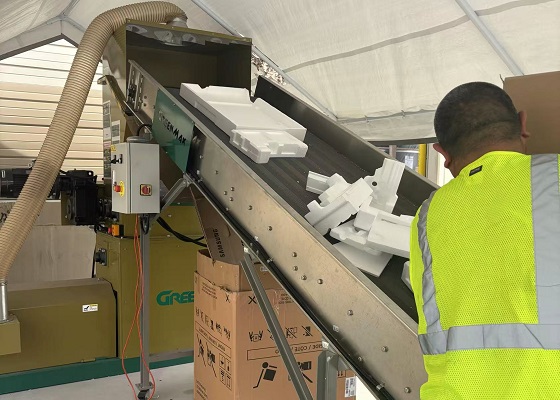
A second example comes from a nonprofit recycling organization in the United States. The organization uses a GREENMAX M-C200 foam densifier equipped with a conveyor belt to process the EPS collected through its recycling activities. The conveyor assists with material feeding, while the machine crushes and densifies the foam into a compact output. According to GREENMAX’s published project information, the system helps the nonprofit handle collected EPS more efficiently and prevents the environmental problems associated with uncontrolled disposal of non-biodegradable foam.
For nonprofit organizations, equipment efficiency has a direct connection with their social mission. Money spent on repeated waste-container collections, landfill charges and inefficient transportation cannot be used for community education, recycling events or other public services. Installing a suitable foam recycling machine can reduce the amount of space required for loose packaging and allow larger quantities of material to be consolidated before shipment.
This is especially important for nonprofit drop-off centers that accept waste from residents and small businesses. A successful collection campaign may quickly create an operational problem if the organization cannot process the incoming material. Bags, cages and containers filled with loose EPS can occupy working areas, create handling difficulties and discourage the organization from promoting the program further.
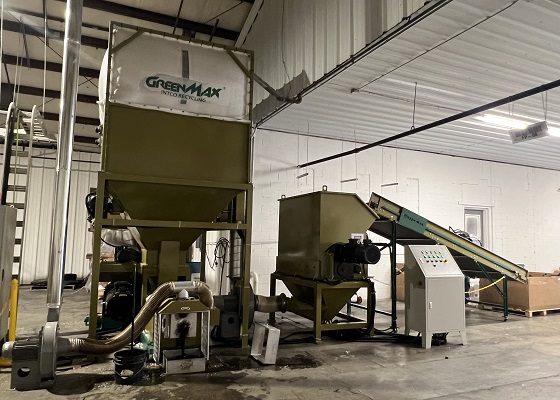
With on-site densification, the organization can move from temporary foam storage to a repeatable recycling process. Incoming EPS is inspected and separated, contaminants are removed, and the acceptable material is fed into the machine. The densified output can then be stored until there is enough material for an economical shipment.
GREENMAX provides different equipment configurations according to a project’s material condition, processing volume, available space and preferred technology. Cold compaction mechanically compresses foam without melting it, while hot-melting densification produces highly compact ingots. A government recycling center or nonprofit organization should therefore select its foam recycling machine according to actual operational data rather than choosing equipment based only on the advertised capacity.
The source of the EPS must also be considered. Clean protective packaging from appliances, furniture and electronics is generally easier to process than material containing food residue, water, tape or mixed plastics. Clear acceptance standards and public instructions help community programs improve the quality of collected foam and protect the performance of the equipment.
.jpg)
The Blue Mountains government project and the U.S. nonprofit project show how GREENMAX machines can serve organizations with broader environmental responsibilities. In both situations, the objective is not simply to dispose of foam more quickly. It is to make EPS collection financially and operationally sustainable so that the program can continue serving the community.
By installing a GREENMAX foam recycling machine, councils and nonprofit organizations can reduce storage pressure, improve transportation efficiency and create a more dependable route for recovering EPS. This allows public recycling programs to manage difficult materials more effectively while demonstrating that community service and circular resource use can work together.