
 Select Language
 English
How EPP Foam Waste into Value?Efficient Recycling with GREENMAX Foam Compactor
Expanded polypropylene (EPP) foam has become one of the most important advanced polymer materials in modern industry, valued for its lightweight structure, high impact resistance, and excellent thermal insulation. From automotive manufacturing to reusable packaging and consumer goods, EPP is now deeply embedded in global supply chains. However, with increasing usage comes a growing challenge: how to efficiently recycle and reuse EPP waste. Foam compactors are emerging as a practical and scalable solution to address this issue, enabling companies to transform bulky EPP waste into valuable recycled material streams.
The global demand for EPP foam continues to expand rapidly. The market is projected to grow from approximately USD 2.2 billion in 2025 to over USD 5.1 billion by 2035, driven by applications in automotive, packaging, and industrial sectors . The automotive industry alone accounts for nearly 46% of total EPP consumption, as manufacturers increasingly adopt lightweight materials to improve fuel efficiency and reduce emissions . In addition, the rise of e-commerce has significantly boosted the use of EPP in protective packaging, particularly for electronics and fragile goods. Beyond these sectors, EPP is also used in construction, HVAC insulation, sports equipment, and even infrastructure applications due to its durability and energy absorption capabilities.
Despite these advantages, recycling rates for plastics—including polypropylene-based materials like EPP—remain relatively low worldwide. Historically, only around 9% of global plastic waste has been recycled, while the majority ends up in landfills or the natural environment . This gap highlights the urgent need for improved recycling technologies and infrastructure. EPP, however, presents a unique opportunity: unlike many other plastics, it can be recycled multiple times without significant loss of performance, making it highly suitable for circular economy models .
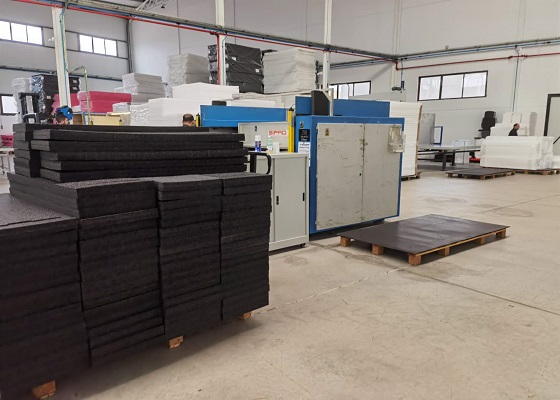
One of the main barriers to EPP recycling is its low density. In its original foam form, EPP occupies a large volume but contains relatively little material, making transportation and storage inefficient and costly. This is where foam compactors play a crucial role. By compressing EPP foam into dense blocks or ingots, these machines reduce volume by up to 90%, significantly lowering logistics costs and making recycling economically viable. The compacted material can then be reprocessed into pellets and reused in new products, closing the material loop.
A practical example of this can be seen in the automotive supply chain. A European automotive parts manufacturer that produces EPP-based components such as bumper cores and seat structures faced increasing costs associated with scrap handling. Large volumes of offcuts and defective parts accumulated daily, taking up valuable factory space. By installing an EPP foam compactor, the company was able to compress production waste into high-density blocks directly on-site. These blocks were then sold to recyclers or reused internally for non-critical components. As a result, the company reduced waste handling costs, improved factory efficiency, and aligned with EU circular economy regulations that encourage the use of recycled materials.

Another case comes from the logistics and packaging sector. A global electronics distributor using EPP returnable packaging systems encountered challenges managing damaged or end-of-life foam inserts. Previously, these materials were either discarded or transported in bulky form to external recyclers, leading to high transportation costs. After implementing a foam compactor at its distribution center, the company was able to densify EPP waste on-site. This not only reduced transportation frequency but also allowed the company to establish a closed-loop recycling system. The compacted EPP was sent to a partner recycler, processed into raw material, and reintroduced into new packaging products. This approach significantly reduced waste disposal costs and improved the sustainability profile of the company’s supply chain.
The adoption of foam compactors is closely aligned with broader global trends toward sustainability and resource efficiency. Governments and industries worldwide are promoting circular economy initiatives, encouraging the reuse and recycling of materials to reduce environmental impact. In the case of polypropylene recycling, increasing regulatory pressure and sustainability goals are driving investments in recycling infrastructure and technologies. EPP foam, with its durability and recyclability, fits well within these frameworks, especially when supported by efficient compaction and densification solutions.
Looking ahead, the role of foam compactors in EPP recycling is expected to grow as industries continue to prioritize waste reduction and cost efficiency. Advances in recycling technologies, including chemical recycling and improved material sorting systems, will further enhance the value of recycled EPP. At the same time, companies that adopt on-site compaction solutions will gain a competitive advantage by reducing operational costs and meeting increasingly stringent environmental standards.
In conclusion, EPP foam is a high-performance material with rapidly expanding applications across multiple industries. While its widespread use presents recycling challenges, foam compactors provide an effective and scalable solution to overcome these barriers. By reducing volume, improving logistics, and enabling closed-loop recycling, foam compactors are helping transform EPP waste into a valuable resource, supporting both economic and environmental sustainability.
.jpg)