 Select Language
 English
How an EPS Recycling Machine Helps Businesses Cut Waste Costs
Expanded polystyrene is widely used in packaging, appliance protection, seafood boxes, furniture delivery, construction insulation and logistics. It is lightweight, but it occupies a large amount of space. For many businesses, the real problem is not the weight of EPS waste but the cost of storing, handling and transporting it.
Loose EPS quickly fills waste containers, warehouse corners and loading areas. Because each truck carries mostly air, companies may need frequent waste collections even when the actual material weight is low. This leads to repeated hauling fees, extra labor costs and inefficient use of valuable storage space. Installing an EPS recycling machine can change this cost structure by reducing the volume of the material before it leaves the site.
A GREENMAX EPS recycling machine crushes and compacts loose foam into dense blocks or ingots. Depending on the machine and material condition, the volume reduction ratio can reach approximately 50:1 with a cold compactor or up to 90:1 with a hot-melt densifier. Instead of paying to transport large quantities of lightweight foam, a company can store more material in a smaller area and arrange fewer collections.
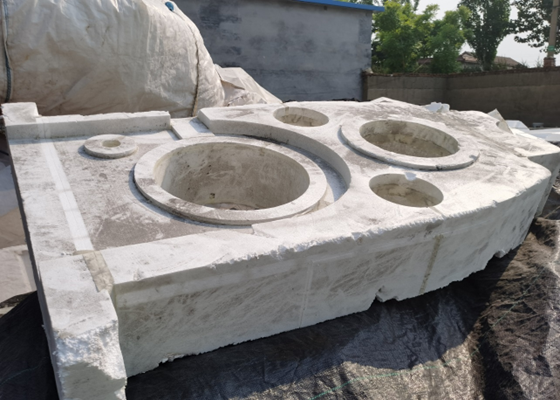
The most immediate saving usually comes from lower transportation costs. A business that previously required several waste pickups each month may be able to reduce the collection frequency significantly after densification. The same truck can carry far more recycled material because the compacted blocks contain much less air. This is especially valuable for retailers, distribution centers, furniture companies and appliance warehouses that generate large amounts of clean packaging EPS.
An EPS recycling machine can also reduce internal handling costs. Loose foam is difficult to control and can spread around loading areas, production sites or warehouses. Employees may spend time breaking down boxes, moving bags and cleaning foam beads from the floor. After installing an automatic or semi-automatic recycling system, the material can be collected and processed at a fixed location. This shortens the waste-handling process and allows employees to focus on more valuable work.
One example is The Brick, a major furniture retailer in Canada. The company generates substantial quantities of EPS packaging from furniture and household goods. Before recycling, the bulky foam required considerable storage space and repeated handling. GREENMAX supplied an M-C300 hot-melt densifier to process the EPS directly at the company’s operation.
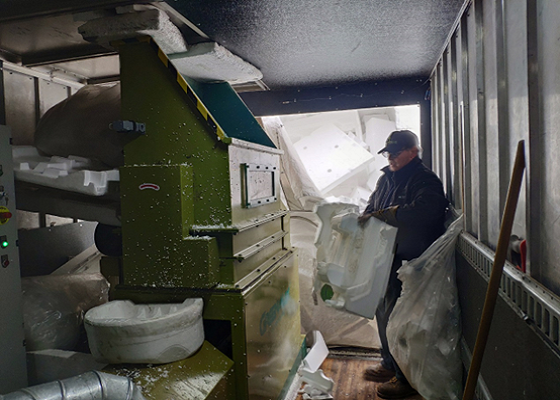
The machine crushes and melts the loose foam into compact EPS ingots, reducing the volume by up to 90:1. This allows The Brick to store a much larger weight of material before arranging transportation. The company has sold more than one million pounds of recycled EPS and generated over USD 200,000 in revenue from the material.
The financial value of this project is not limited to the revenue from selling the ingots. The Brick also benefits from fewer waste pickups, lower transportation costs and reduced pressure on warehouse space. A waste material that previously created ongoing disposal expenses has become a recyclable commodity with measurable value. The successful operation also led to continued cooperation and additional equipment investment.
Another example comes from an electronics manufacturing environment in North America. The facility generated large volumes of EPS packaging and was paying approximately USD 500 to USD 700 for each waste collection. The site required one or two collections per week, creating a potential annual hauling expense of between USD 26,000 and USD 72,800.
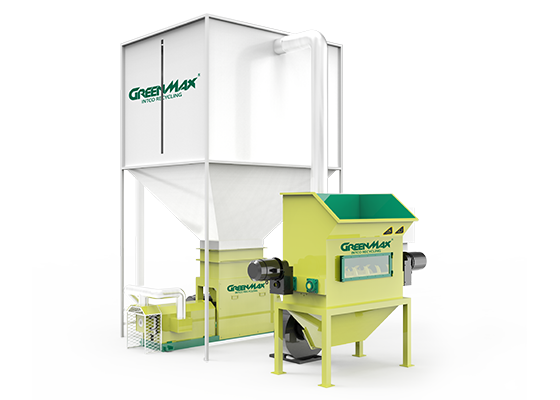
For this type of operation, GREENMAX recommended an M-C200E EPS recycling machine. By reducing the foam volume before transportation, the facility could significantly lower the number of collections required. Even if the company reduced only one USD 600 pickup per week, the annual saving would be more than USD 31,000. Further value could be created by selling the compacted EPS material instead of sending it away as general waste.
This calculation shows why the return on investment for an EPS recycling machine is often based on more than the selling price of recycled foam. The total financial benefit may include avoided disposal fees, fewer truck collections, lower labor requirements, reduced container rental, improved warehouse efficiency and revenue from compacted material.
The best results are normally achieved when the EPS is clean, dry and separated from tape, cardboard and other contaminants. Companies should evaluate their monthly foam volume, current collection frequency, hauling cost and available operating space before selecting a machine.
For businesses that generate EPS continuously, recycling at the source can provide a practical way to control waste costs. A GREENMAX EPS recycling machine does not simply reduce foam volume. It helps transform an expensive waste stream into a more manageable and potentially profitable material, allowing companies to save money every month while improving their recycling performance.