 Select Language
 English
How an EPS Melting Machine Recycles Used EPS Foam Boxes
Expanded polystyrene boxes are widely used throughout the seafood, fresh produce and cold-chain logistics industries. Their lightweight structure, thermal insulation and impact resistance make them suitable for transporting fish, meat, vegetables, fruit and other temperature-sensitive products. However, once the products are removed, businesses are often left with large volumes of bulky EPS packaging that are difficult and expensive to store or transport.
An EPS melting machine provides a practical way to process these boxes at the location where the waste is generated. By crushing, heating and densifying the material, the machine transforms loose EPS foam into compact ingots that can be stored, transported and sold for further recycling.
Where Do Waste EPS Foam Boxes Come From?A major source of EPS boxes is the seafood industry. Fish processors, seafood wholesalers, cold-storage warehouses and fish markets use insulated foam boxes to protect fresh and frozen products during transport. These boxes help maintain a stable temperature and reduce product damage, especially when seafood moves through long international or regional supply chains.
Fresh fruit and vegetable markets also generate large quantities of EPS boxes. Produce wholesalers often receive grapes, broccoli, berries and other temperature-sensitive goods in lightweight insulated packaging. Broken or heavily used boxes cannot always be reused and gradually accumulate around unloading areas and warehouses.
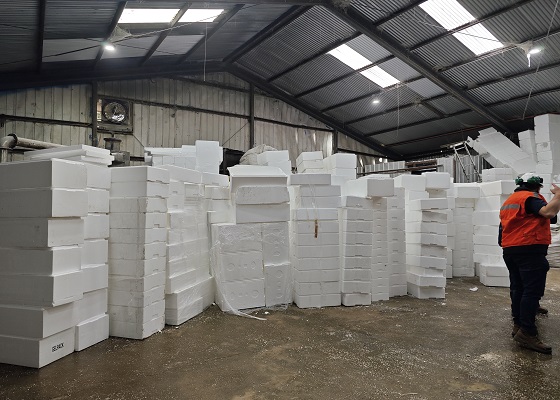
Other sources include meat processors, pharmaceutical distributors, meal delivery companies and cold-chain logistics centres. In addition, recycling companies and municipal collection facilities may receive mixed EPS packaging from retailers, households and commercial customers. EPS boxes are technically recyclable, but recycling remains uneven. The material contains a high percentage of air, so transporting untreated boxes to a recycling facility is often uneconomical. Seafood boxes may also contain water, labels, tape, odours or organic residue. As a result, many businesses still pay for disposal or send the material to landfill even when a recycling outlet is available.
The main challenge is therefore not whether EPS can be recycled, but how to reduce its volume and prepare it economically for downstream processing.
How an EPS Melting Machine Processes Foam Boxes
A GREENMAX EPS melting machine uses crushing and screw-melting technology to reduce the volume of foam waste. After reusable boxes have been separated, the remaining EPS is checked and obvious contamination such as tape, labels, fish residue and foreign materials is removed.The boxes are then fed into the machine’s hopper. A crushing system breaks the large containers into smaller pieces, allowing the material to enter the melting chamber continuously. The rotating screw moves the crushed EPS forward while controlled heating softens and melts the polystyrene.
The material is finally extruded as dense EPS ingots. After cooling, these ingots become solid and stable, making them easier to stack, store and load. GREENMAX MARS Series melting machines can achieve a volume reduction of approximately 90:1, while the finished ingots can reach a density of around 600–800 kg/m³.
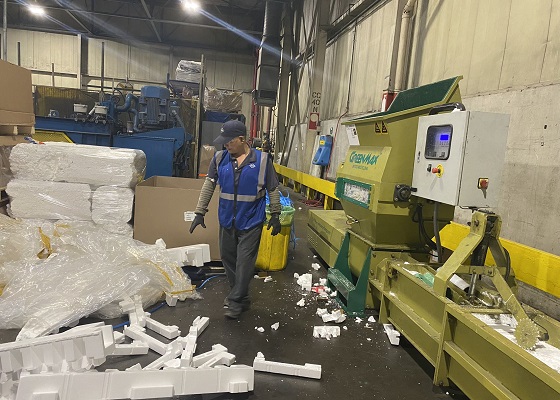
This process changes the economics of EPS recycling. Instead of paying to transport truckloads of lightweight boxes, a business can accumulate dense material and arrange fewer, more efficient collections. The recycled EPS can subsequently be granulated and used to manufacture products such as picture frames, decorative mouldings and other polystyrene products.
For seafood operations, moisture management is important. Boxes should be drained and kept as clean as reasonably possible before hot melting. Where the material is consistently very wet or heavily contaminated, GREENMAX may recommend additional drainage, cleaning equipment or a marine-standard cold compactor instead of relying only on a melting system.
GREENMAX Case: Melbourne Market Recycles Polystyrene Boxes
Melbourne Market handles large quantities of fresh produce and receives many products in polystyrene packaging boxes. The continuous flow of boxes created storage pressure and increased the cost of waste handling.
The market adopted a GREENMAX M-C200 polystyrene melting machine to process the discarded EPS on site. The machine crushes and melts the boxes into dense ingots, allowing the market to significantly reduce the space required for temporary storage.
According to the GREENMAX project information, the hot-melted EPS can reach approximately 800 kg per pallet. This higher loading density makes collection and transport much more efficient than moving loose foam boxes. The project also benefits from local maintenance support and a downstream recycling channel for the processed material.
This case demonstrates why an EPS melting machine is suitable for wholesale markets that generate a steady supply of relatively clean produce and packaging boxes. The system turns an inconvenient waste stream into a manageable recyclable commodity.
GREENMAX Case: EPS Box Recycling for a Seafood Distributor
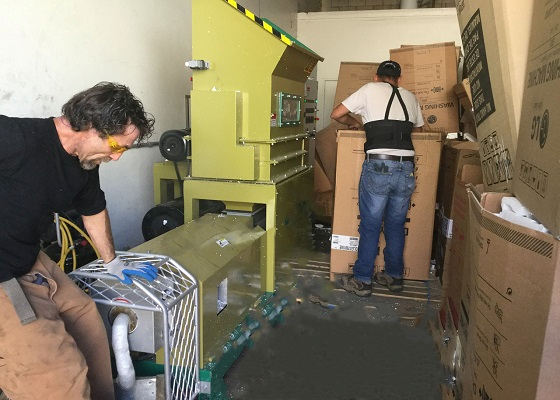
In another GREENMAX application, a seafood distributor needed a more efficient method for handling used EPS packaging from refrigerated product deliveries. The loose boxes occupied valuable warehouse space, while frequent disposal collections increased operating costs.A GREENMAX foam densifier was introduced to crush and hot-melt the EPS boxes. After the boxes were drained and cleaned, they could be processed into compact ingots with a volume reduction of up to 90:1. The distributor was then able to store more recycled material in a much smaller area and arrange transport based on ingot weight rather than loose-box volume.
The dense output could be sold and reused as recycled polystyrene raw material, helping the company move away from a disposal-only model. GREENMAX also supports customers through equipment selection, recycling guidance and the purchase of qualified hot-melted EPS material.Turning EPS Boxes from Waste into Recyclable Material
For seafood markets, produce wholesalers, cold-storage operators and recycling businesses, the biggest obstacle to EPS box recycling is usually logistics. An EPS melting machine addresses this problem directly by reducing volume, improving storage conditions and producing a transportable recycled material.GREENMAX offers MARS Series melting machines with different capacities to match the volume of EPS generated by each operation. By combining on-site processing with downstream material recovery, businesses can reduce disposal pressure and establish a more stable recycling system for EPS foam boxes.