 Select Language
 English
Household store generated EPE foam waste will be completely recycled by the GREENMAX EPE recycling machine and incorporated into the reuse cycle.
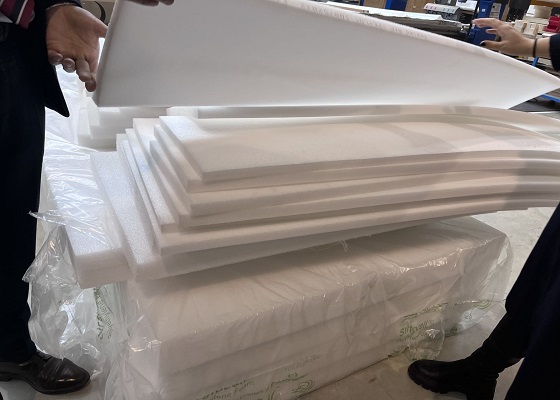
Expanded polyethylene (EPE) foam, often called “pearl cotton,” is one of the most common protective materials used to package fragile household items such as glassware, lamps, mirrors and small appliances in home furnishing stores. Its light weight, flexibility and excellent cushioning performance make it ideal for absorbing shocks during transport and handling. However, these same properties create serious waste-management challenges once the packaging has fulfilled its purpose.
In a typical furniture or home décor store, every delivery of tableware, picture frames or lighting arrives wrapped in thick EPE pads and corner protectors. Because EPE has very low density, even a small volume of sales can generate mountains of white foam that quickly fill backrooms and loading docks. EPE is technically recyclable, but it is rarely accepted in standard curbside programs, and sending loose foam directly to landfill or for incineration is costly and environmentally unsustainable.
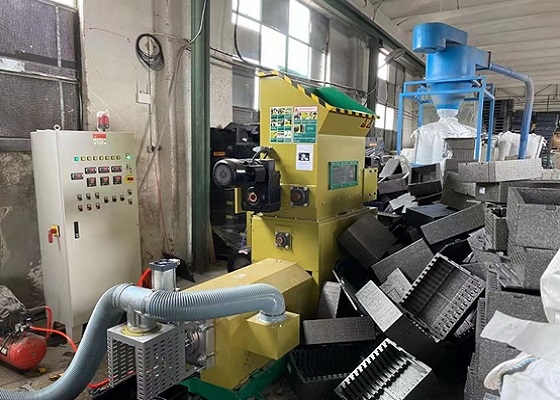
An EPE recycling machine provides a practical solution to this problem. In a GREENMAX system, waste foam is first fed into the machine and shredded by a screw or crusher. The loose pieces then fall into a silo and are compressed into dense blocks using either cold-press compaction or hot-melt densification. For example, GREENMAX MARS foam densifiers can melt and densify EPE to achieve volume-reduction ratios of up to about 90:1, while ZEUS surface-melt compactors can compress foam to roughly one-fiftieth of its original volume. These compact blocks are easy to stack, store and transport.
The benefits for a home furnishing retailer are both environmental and economic. First, compacting EPE waste dramatically reduces the number of bins and truckloads needed, cutting waste-hauling fees and freeing valuable storage space in the store and warehouse. Second, the densified EPE blocks are not trash but a recyclable commodity: they can be sold or sent to recyclers who granulate them into pellets and turn them into new products such as pipes, film and other PE goods, supporting a circular economy.Third, by recycling rather than landfilling packaging foam, retailers improve their sustainability image and prepare for tightening regulations that demand higher recycling rates for packaging materials.
GREENMAX, the foam-recycling brand of INTCO Recycling, has developed EPE recycling machines specifically for these scenarios. Its foam densifiers are designed to handle multiple foams, including EPS and EPE, and are widely used in packaging, construction and retail industries where foam waste is prevalent. This versatility allows a home furnishing store to manage different kinds of protective foam with one integrated piece of equipment.
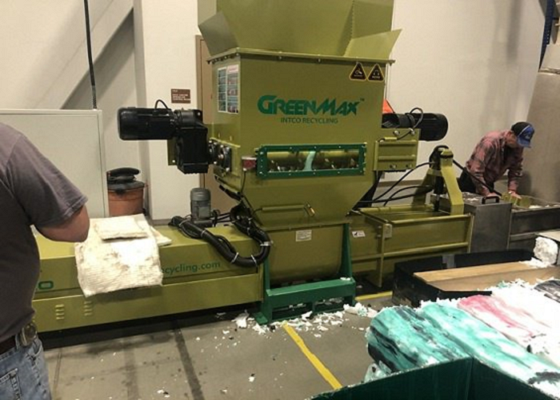
A typical retail case based on GREENMAX’s projects with home furnishing stores works like this: a large U.S. home furnishing retailer receives constant shipments of flat-pack furniture, glass cabinets and decorative items. Previously, the EPE foam pads and corner blocks were thrown into cages, filling a 40-cubic-meter container every few days. Hauling loose foam to landfill was expensive, and the back-of-store area was perpetually cluttered. After installing a compact GREENMAX foam densifier near the loading dock, staff now toss all EPE waste foam directly into the hopper. The machine shreds and densifies the foam into compact bricks that can be stacked on pallets. According to GREENMAX, furniture companies using EPE recycling machines can not only lower waste-treatment costs but also, when they reuse the recycled material, reduce raw-material consumption by around 15–20%.
Once a pallet of EPE blocks is ready, the retailer sells it to a plastics recycler—often via INTCO’s own buy-back network—creating a new income stream instead of paying purely for waste disposal.The store also uses the presence of the EPE recycling machine in its sustainability communication: in-store posters explain that the foam protecting customers’ fragile purchases is recycled on-site and turned into new products rather than ending up in landfill. This improves customer perception and strengthens the brand’s “eco-friendly home” positioning.
In summary, EPE waste foam from fragile item packaging is a growing challenge for home furnishing retailers, but it is also a hidden resource. By installing an EPE recycling machine such as a GREENMAX foam densifier or compactor, stores can turn bulky, low-value packaging waste into dense, marketable blocks, reduce logistics and disposal costs, and demonstrate real environmental responsibility. For modern retail, EPE recycling is no longer just a nice-to-have green initiative—it is an efficient business practice that aligns sustainability with profitability.