 Select Language
 English
GREENMAX Washing Series: Smarter Cleaning Solutions for Higher-Value Plastic Recycling
In plastic recycling, washing is not a secondary step. It is one of the most important stages in determining the quality, value, and usability of recycled material. Across the industry, recyclers are facing tighter quality expectations, more complex waste streams, and increasing pressure to produce cleaner flakes and regrind for downstream pelletizing or reuse. Recent industry reporting shows that plastic recycling capacity in the U.S. and Canada continues to expand, while OECD tracking also highlights ongoing shifts in global plastic waste and scrap trade, which makes material quality and processing efficiency even more important for recyclers competing in a changing market.
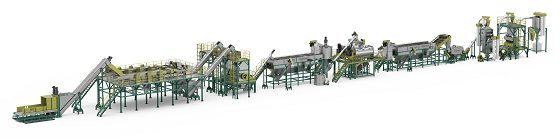
That is why the GREENMAX washing series has become an important part of the company’s broader recycling offering. According to GREENMAX’s current product structure, its washing system lineup includes Foam Washing, PE/PP Film Washing, and PET Bottles Washing. These systems are designed not as generic equipment, but as application-specific cleaning solutions that match different materials, contamination levels, and downstream recycling goals.
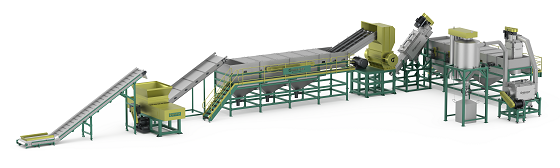
The first major category is GREENMAX Foam Washing. Foam waste often carries dust, labels, dirt, food residue, adhesive contamination, or mixed handling debris, especially when it comes from packaging, logistics, retail, and post-consumer recovery channels. A dedicated foam washing system is valuable because foam materials require a process that can clean efficiently without undermining later densifying, melting, or pelletizing steps. Within GREENMAX’s broader foam recycling solutions, the company already works across materials such as EPS, EPE, EPP, and XPS, and its system architecture is built to support integrated recycling from collection to reprocessing. For customers handling used protective packaging, foam boxes, molded foam parts, or industrial foam scraps, washing helps improve final recycled quality and increases the value of recovered material.
The second key category is GREENMAX PE/PP Film Washing, which is especially important because film and lightweight rigid plastics are among the most contamination-prone materials in recycling. GREENMAX states that this system can efficiently handle both rigid and flexible plastics, using modules such as sorting, size reduction, metal removal, cold and hot washing, friction washing, and drying. The company also notes that its solutions can process a wide range of PP and PE scraps, including LDPE/LLDPE film, PP woven bags, PP non-woven fabric, PE bags, milk bottles, cosmetic containers, vegetable and fruit boxes, as well as blow-molded items such as bottles, boxes, cups, barrels, and buckets. For recyclers, this matters because these materials often come mixed with sand, oil, glue, paper, and labels. A system that removes those contaminants effectively is essential if the goal is to produce consistent recycled feedstock rather than low-grade waste.
The third category is GREENMAX PET Bottles Washing, a solution aimed at one of the most important recycled plastics in the world. PET recycling depends heavily on effective washing because bottles frequently arrive with caps, labels, glue, beverage residue, and other contaminants that reduce flake quality. GREENMAX describes its PET Bottles Washing System as a multi-stage process designed to improve recycling efficiency and transform PET waste into reusable material. This is especially relevant in today’s market. NAPCOR’s latest reporting emphasizes how closely the PET industry watches collection rates, reclamation efficiency, recycled content, and end-market demand. In other words, better washing is directly connected to better commercial outcomes.
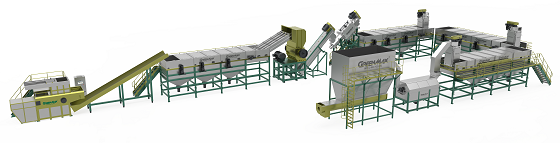
What makes the GREENMAX washing series more compelling is that these systems fit into a larger recycling logic rather than operating as isolated machines. GREENMAX’s public materials repeatedly position washing alongside shredding, crushing, drying, densifying, and pelletizing, which means customers can build a more complete and customized recycling workflow. That flexibility is important because the industry no longer treats all plastic waste the same. Foam requires one approach, films another, and PET bottles another. By designing separate cleaning systems for these streams, GREENMAX is addressing the real operational differences that determine whether recycling is efficient and profitable.
As recyclers continue to pursue cleaner output, higher resale value, and stronger processing efficiency, washing technology will only become more important. GREENMAX’s current cleaning lineup covers three of the most commercially significant categories in plastics recycling: foam, PE/PP films and rigid packaging, and PET bottles. For businesses looking to upgrade recycling quality rather than simply reduce waste volume, the GREENMAX washing series offers a clear message: cleaner input leads to better output, and better output creates stronger recycling value.