 Select Language
 English
GREENMAX Styrofoam Recycling Solution: Turning Foam Waste into a Circular Business Opportunity
Styrofoam, commonly known as EPS foam, is widely used in packaging, construction, cold-chain transportation, seafood boxes, appliance protection, and many other industries. Its lightweight structure and excellent cushioning performance make it a useful material in daily business operations. However, these same advantages also create serious recycling challenges. Loose Styrofoam takes up large amounts of space, is difficult to transport efficiently, and is often discarded when companies do not have a proper recycling system.
Before using a professional styrofoam recycling solution, many companies face similar problems. Foam waste may pile up around warehouses, loading areas, factories, supermarkets, seafood markets, and logistics centers. Because Styrofoam is light, it can easily be blown away by wind and spread into streets, rivers, drains, and surrounding communities. Once broken into small pieces, it becomes even harder to collect. These scattered foam fragments can harm urban cleanliness, affect drainage systems, and create long-term pollution risks. If Styrofoam is sent directly to landfill, it occupies valuable landfill space for a long time. If it is handled improperly or burned, it may also create environmental and safety concerns.
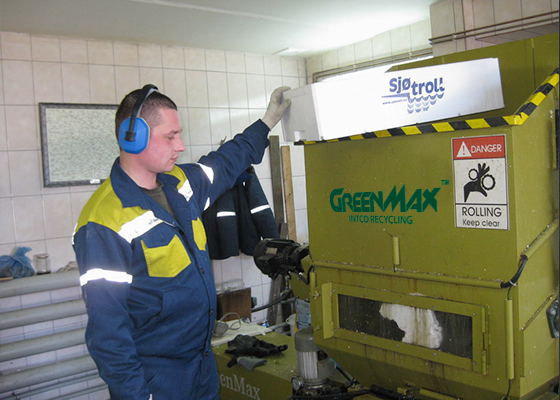
This is why an efficient styrofoam recycling solution is becoming increasingly important for modern businesses. Instead of treating EPS foam as useless waste, companies can use GREENMAX foam recycling machines to process Styrofoam at the source. The machine compresses or hot-melts loose foam into dense blocks or ingots, greatly reducing the volume of the material. Once compacted, the foam becomes easier to store, transport, and sell. This simple change can transform a disposal problem into a recyclable resource.
GREENMAX, as a machinery brand under INTCO Recycling, provides professional foam recycling machines for EPS, EPE, EPP, and other foam materials. For Styrofoam waste, GREENMAX equipment can help customers reduce storage pressure, improve site cleanliness, and build a more valuable recycling process. A large pile of loose foam may require frequent transport and high labor input, but after processing by a GREENMAX machine, the same material can be turned into compact blocks that are convenient for collection and downstream recycling.
The environmental improvement is also clear. After installing a GREENMAX styrofoam recycling solution, companies can keep their working areas cleaner and more organized. Foam waste no longer needs to be stored loosely in corners or outdoors, where it can be scattered by wind. The risk of littering is reduced, transportation frequency can be lowered, and recyclable materials are prevented from entering landfill or the natural environment. For companies with sustainability goals, this also helps improve their environmental image and demonstrate responsible waste management.
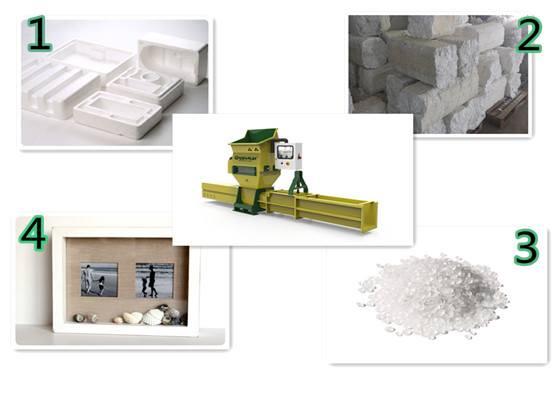
More importantly, GREENMAX focuses not only on machine sales, but also on the value of recycled materials after processing. Compressed Styrofoam can be further recycled into PS pellets and reused in various plastic products. These recycled materials may be applied in products such as decorative frames, construction profiles, office supplies, hangers, insulation-related products, and other plastic applications. This means Styrofoam waste can return to the material cycle instead of ending as pollution. The recycling process creates both environmental value and commercial value.
A key advantage of GREENMAX is its practical business model. In many cases, customers do not only purchase a foam recycling machine; they can also build a long-term recycling cooperation with GREENMAX. The customer uses the machine to compress Styrofoam waste, and the compressed blocks can then be sold back to GREENMAX or connected to downstream recycling channels. This model gives customers more confidence because they know the recycled material has a destination. It also helps them recover part of their investment through the value of the recycled foam.
One GREENMAX customer provides a good example. The customer generated a large amount of Styrofoam packaging waste during daily operations. Before using the machine, the waste occupied too much warehouse space and required frequent handling. The foam was bulky, difficult to store, and not easy to transport economically. After introducing a GREENMAX foam recycling machine, the customer began compressing the Styrofoam on site. The compacted foam blocks greatly reduced storage volume and made transportation much more efficient. Instead of paying only for waste disposal, the customer was able to sell the compressed foam waste back to GREENMAX, creating a more sustainable and commercially workable recycling process.
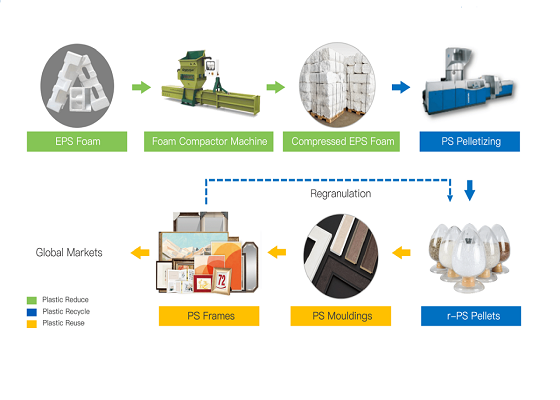
This case shows that a styrofoam recycling solution is not only about reducing waste. It is also about creating a complete closed-loop system. The machine solves the first problem by turning loose foam into dense recyclable material. The buy-back or downstream recycling channel solves the second problem by giving the material a real market destination. Finally, the recycled material application completes the cycle by turning old Styrofoam into new products.
For packaging companies, logistics centers, appliance manufacturers, seafood processors, retailers, and recyclers, GREENMAX provides a practical path from waste disposal to resource recovery. As environmental regulations become stricter and customers pay more attention to sustainable operations, companies that recycle Styrofoam properly will gain both cost and brand advantages.
A GREENMAX styrofoam recycling solution helps businesses reduce pollution, improve working environments, lower logistics costs, and create value from recycled foam. By combining reliable recycling equipment, material recovery experience, and a practical commercial model, GREENMAX makes Styrofoam recycling easier, cleaner, and more profitable for global customers.