 Select Language
 English
From Bulky Foam Waste to Recyclable Value: Why the EPS Densifier Is Becoming a Global Recycling Solution
Expanded polystyrene, commonly known as EPS or Styrofoam, is widely used in protective packaging, cold-chain boxes, seafood containers, construction insulation, appliance packaging, and e-commerce logistics. Its cushioning, insulation, and lightweight properties make it highly useful, but these same features also create a major recycling challenge. EPS contains a large amount of air, so loose foam quickly fills warehouses, dumpsters, trucks, and landfill space. For many businesses, the real barrier to EPS recycling is not whether the material can be recycled, but whether it can be collected and transported economically. This is where the EPS densifier becomes an important solution.
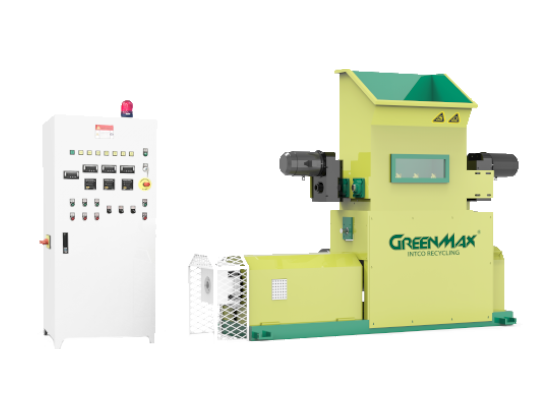
A hot-melt EPS densifier works by crushing waste foam into smaller pieces, heating and melting the material, and then extruding it into dense blocks or ingots. Compared with loose foam, these melted ingots are much easier to stack, store, and ship to downstream recyclers. GREENMAX describes its hot-melt densifier as a machine that uses heat to process EPS and other foam scraps, with a melting ratio of up to 90:1. This means that a large volume of foam waste can be reduced into a compact recyclable output, helping companies lower storage pressure, reduce transportation costs, and create material that can be further processed into recycled PS pellets or other plastic products.
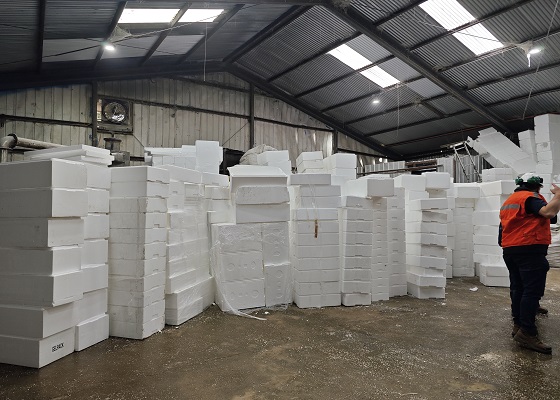
A practical case can be seen in a recycling center in Tacoma, Washington, where incoming EPS foam volumes continued to rise. The site sometimes received around 40 cubic yards of foam every two days, and the old equipment could not keep up with the increasing workload. The recycling center also faced unstable downstream collection and mixed foam streams that included both EPS and EPE. After reviewing the working conditions, GREENMAX recommended the M-C200E foam densifier. Through hot-melt densification, the center was able to process bulky foam into dense ingots or logs, reducing the volume by up to about 90:1 and making storage and transportation far more manageable. This case shows that a GREENMAX EPS densifier is not only a recycling machine, but also a logistics improvement tool for facilities dealing with continuous foam waste.
The global acceptance of the EPS densifier is closely linked to regional recycling systems, environmental policies, labor costs, and transportation costs. In North America, the technology is increasingly used by recycling centers, municipal waste facilities, retailers, appliance distributors, and packaging companies. Because EPS is bulky and local collection is often limited, many businesses prefer to densify foam on site before shipping it to buyers. In the United States and Canada, the EPS densifier is especially suitable for companies that already collect large amounts of clean packaging foam and want to reduce landfill disposal.
Europe has a relatively high acceptance of EPS recycling equipment because of stricter environmental regulations, circular economy policies, and stronger recycling awareness. The European EPS industry reports that EPS post-consumer packaging recycling is around 40% in the EU, while some countries such as Norway, Denmark, Portugal, Belgium, Austria, and Ireland show higher performance. At the same time, the EU Packaging and Packaging Waste Regulation is pushing packaging materials toward better recyclability and circular supply chains. In this environment, the EPS densifier is not just a cost-saving machine; it is also a compliance-supporting tool for companies that need to prove responsible waste management.
In Asia, the acceptance level varies widely. Japan has one of the strongest EPS recycling systems, with JEPSA reporting an effective utilization rate of 94.2% for used EPS in 2024. This shows that when collection, densification, and downstream reuse are well organized, EPS can become a highly recyclable material rather than disposable waste. China and South Korea also have stronger recycling infrastructure compared with many developing regions, supported by manufacturing demand for recycled plastic materials. However, in parts of Southeast Asia, South Asia, the Middle East, Africa, and Latin America, EPS densifier technology still needs wider promotion. These markets often generate large amounts of foam packaging from seafood, electronics, furniture, and logistics, but collection systems and recycling awareness are still developing.
The benefits of using an EPS densifier are clear. It reduces the volume of foam waste dramatically, saves warehouse and transportation space, lowers disposal costs, improves the value of recycled material, and supports cleaner waste handling. For companies, it can turn a troublesome waste stream into a manageable recyclable product. For recyclers, it improves material density and shipping efficiency. For society, it helps reduce landfill pressure and supports a more circular use of plastic resources.
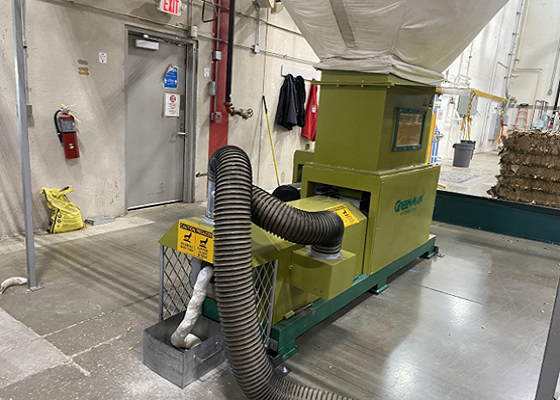
As more countries focus on waste reduction and sustainable packaging, the EPS densifier deserves wider global use. GREENMAX EPS densifier technology provides a practical, proven, and commercially realistic path for businesses that want to recycle EPS waste instead of sending it to landfill. In regions where EPS recycling is already mature, it can improve efficiency and profitability. In regions where recycling still needs to grow, it can become the starting point for building a reliable foam recycling network. The future of EPS waste management should not be simple disposal, but efficient densification, resource recovery, and circular reuse.