
 Select Language
 English
How a Foam Recycling Machine Turns Difficult Foam Waste into Recyclable Value
Foam packaging is widely used in seafood logistics, home appliances, electronics, construction, and industrial protection because it is light and shock-resistant. However, those same advantages create major recycling difficulties. Expanded polystyrene, expanded polyethylene, and other foamed plastics occupy large amounts of space while containing little actual material. When loose foam is stored or transported, companies often pay more for air than for plastic. A suitable foam recycling machine changes this situation by reducing volume and preparing the material for downstream recycling.
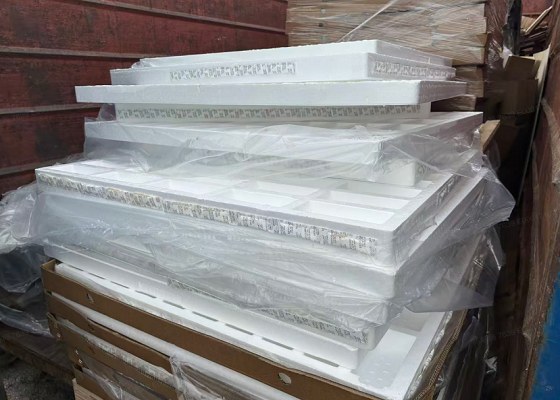
The real objective is not simply to crush foam, but to produce a consistent and transportable output. Depending on the material, a foam recycling machine may use cold compression, hot melting, screw extrusion, or a combination of crushing and densification. The correct configuration depends on foam type, moisture level, density, shape, and daily volume.
For clean EPS packaging, a standard compactor or densifier may be sufficient. For wet fish boxes, coastal foam waste, soft flotation material, or mixed EPS and EPE, additional engineering is often required. GREENMAX develops these solutions around actual operating conditions rather than applying one design to every project.
.png)
A Water-Cooling Foam Recycling Machine for Coastal EPS Waste
One GREENMAX project in Chile involved Ecologica, a recycler handling two foam streams. The first consisted of regular-density EPS packaging, while the second included softer material collected from floats and buoys used in coastal applications. These materials were difficult to process together because their density, elasticity, and melting behavior differed.
GREENMAX supplied an A-C200MS foam recycling machine with a circulating water-cooling system and a melt-detection device. During compression, friction can generate heat, especially when softer or unstable-density material enters the screw chamber. Excess heat may cause premature surface melting, irregular discharge, blockages, or inconsistent compressed blocks. The circulating water-cooling system helped control the operating temperature, while the melt-detection device provided additional protection against overheating.
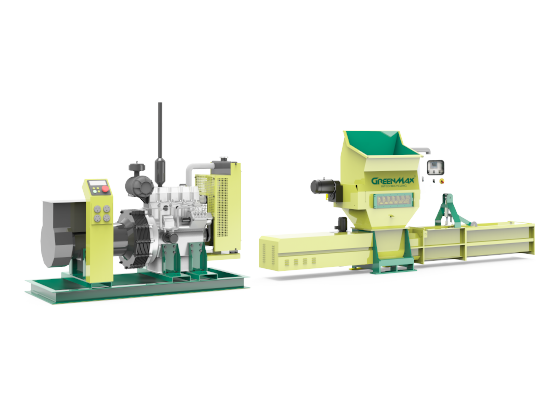
This configuration allowed Ecologica to process both conventional EPS packaging and softer marine foam more steadily. The machine reduced waste volume, improved the form of the compressed output, and made the material easier to store and transport. For coastal recyclers, seafood companies, and organizations collecting foam floats or buoys, this type of foam recycling machine offers a practical way to manage material that may be too soft or inconsistent for ordinary equipment.
A Customized Machine for EPS and EPE Collection in Oregon
Another GREENMAX project was developed for CAA in Oregon, a nonprofit organization building a local foam collection network. The organization mainly handled EPS but also planned to accept PE foam, including EPE. Its main challenge was logistics. Foam came from multiple collection points, yet loose material could not be transported economically over long distances. The system therefore needed to reduce volume locally and adapt to more than one foam type.GREENMAX customized an M-C300 hot-melt foam recycling machine for this application. Instead of using a conventional integrated layout, the crushing chamber and hot-melting chamber were separated so that each function could be started independently. Custom cutting shafts were designed for the expected materials, and the control system included preset modes for EPS and EPE. Operators could switch between the two modes with a one-touch adjustment.
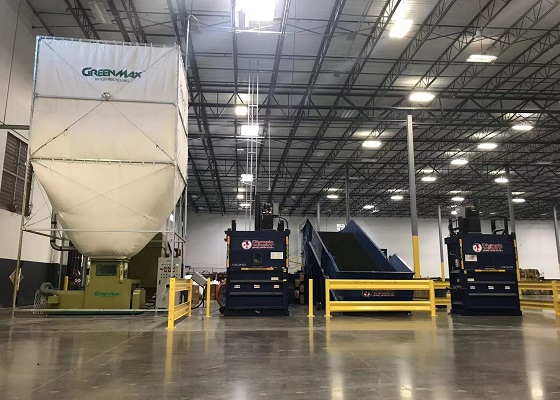
This special design gave CAA greater flexibility. EPS could be processed under one set of parameters, while EPE could be handled under another without a separate production line. The hot-melt process achieved a volume reduction of up to 90:1, converting bulky foam into dense ingots suitable for long-distance transport and recycling. The customized foam recycling machine also supported the organization’s multi-point collection plan by reducing the transport burden between local sites and the final recycling destination.
Why Machine Design Matters
These cases show that successful foam recycling depends on more than machine capacity. Water content, foam softness, melt sensitivity, collection method, and future material expansion must all be considered before equipment is selected. A standard system may work well for uniform EPS packaging but struggle with wet boxes, marine floats, soft EPE, or mixed-density foam.GREENMAX evaluates the material first and then recommends the appropriate crushing, compression, melting, cooling, and feeding configuration. This helps customers obtain stable output, reduce storage pressure, lower transportation frequency, and create a material stream with greater recycling value.
A foam recycling machine should not be viewed only as waste-handling equipment. When correctly designed, it becomes part of a closed-loop recycling system. It converts low-density foam into compact blocks or ingots, making collection and transport more economical. The densified material can then be processed into recycled plastic pellets and used in frames, moldings, insulation components, and other plastic products.
For companies facing difficult foam waste, the best solution is not always the largest machine. The right solution is the machine configured for the material, operating environment, and recycling objective. Whether a project requires circulating water cooling for marine foam or a customized dual-mode system for EPS and EPE, GREENMAX can provide a foam recycling machine designed to turn bulky waste into a manageable and reusable resource.