
 Select Language
 English
Foam Recycling in the UK: How a Foam Recycling Machine Turns Bulky Waste into Value
Plastic foam is widely used across the United Kingdom because it protects products, insulates buildings and reduces transport weight. Expanded polystyrene, or EPS, is common in appliance packaging, seafood boxes and construction products. Expanded polyethylene, or EPE, protects electronics, furniture and industrial components, while expanded polypropylene, or EPP, is widely used in automotive dunnage and reusable insulated containers. Extruded polystyrene, known as XPS, is mainly found in insulation boards. Although these materials can be recycled, their extremely low bulk density makes collection expensive. For many businesses, the practical challenge is not whether foam can be recycled, but how to make it economical to store and transport. A foam recycling machine addresses this problem by reducing material volume before it leaves the site.
The latest UK government packaging statistics demonstrate the scale of the wider plastics challenge. Under the established PackFlow methodology, the UK generated an estimated 2.265 million tonnes of plastic packaging waste in 2024 and recycled 1.154 million tonnes, producing a recycling rate of 51.0%. A second methodology using producer-reported packaging data calculated a provisional plastic packaging recycling rate of 53.7%. However, these national figures group plastic packaging together and do not provide separate recycling rates for EPE, EPP, XPS or other individual foam polymers.
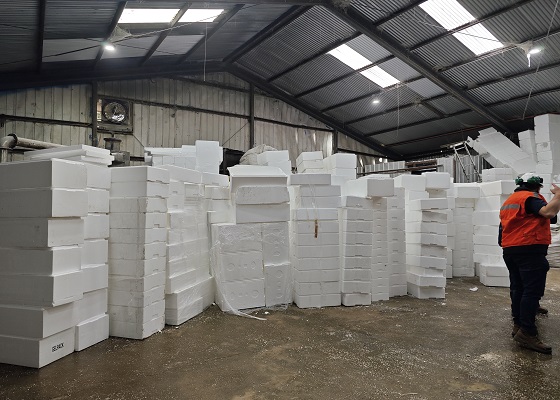
EPS is the clearest exception because the British Plastics Federation’s EPS Group publishes sector-specific information. It reports that 66% of EPS packaging disposed of in the UK was recycled based on 2023 industry data. The organisation also states that more than 10,000 tonnes of EPS are recycled in the UK each year and that recovery is most successful in commercial waste streams containing large, consistent volumes.
These figures reflect the operational reality faced by appliance warehouses, seafood markets, manufacturers and recycling centres. Clean foam can have downstream value, but transporting it in loose form is inefficient because a vehicle fills with air long before it reaches an economical payload. EPS itself is approximately 98% air, which explains why relatively small material weights can occupy cages, skips, loading areas and warehouse floors so quickly.
Current recycling rules also reinforce the need for dedicated foam routes. England’s workplace Simpler Recycling requirements came into force on 31 March 2025, requiring most workplaces to separate dry recyclables, food waste and residual waste. Nevertheless, government guidance identifies expanded and high-impact polystyrene packaging as material that is not typically accepted in ordinary dry-recycling collections. Businesses generating EPS may therefore still require a specialist collector, an authorised recycling partner or an on-site foam recycling machine.
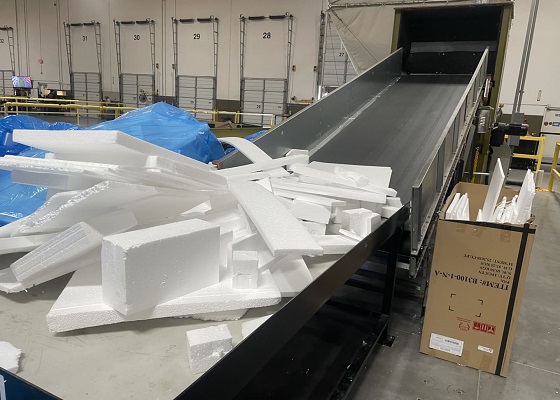
GREENMAX provides different technologies according to the foam type and operating conditions. The APOLO cold compactor crushes EPS and mechanically compresses it without melting the polymer, achieving an indicative volume reduction of up to approximately 50:1. The MARS hot-melt densifier combines crushing, controlled heating and extrusion and can reduce compatible foam by up to approximately 90:1. EPE and EPP require careful configuration because they are softer or more elastic than EPS, while large XPS boards may need suitable crushing and feeding systems.
The correct foam recycling machine should therefore be selected according to the polymer, contamination level, daily quantity, available labour, power supply, site layout and downstream buyer’s requirements. Cold compaction is often preferred for clean packaging and wet EPS seafood boxes, while hot melting may be more suitable where maximum volume reduction and compact storage are the main priorities.
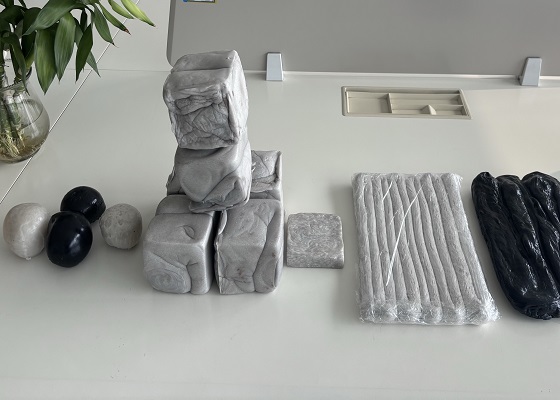
A UK home-appliance logistics company provides one practical example. The business installed a GREENMAX M-C300 polystyrene recycling machine to process EPS packaging generated by incoming appliances. According to the published project information, the machine can process approximately 300 kilograms of EPS per hour and enables the company to handle the material directly at its facility rather than transporting loose foam or sending it to landfill.
The dense output is easier to stack, store and load. Reducing the number of waste collections can lower transport and disposal costs while releasing warehouse space for core operations. For a logistics centre receiving refrigerators, televisions and other protected goods every day, the foam recycling machine changes EPS from an uncontrolled packaging burden into a measurable recycling stream.
A second British customer demonstrates the value of the technology in the seafood sector. GREENMAX has documented a UK operation using its equipment to process large quantities of waste EPS fish boxes. These boxes provide excellent temperature control during seafood transportation, but after unloading they occupy substantial storage space and may contain water, ice or product residue. The customer uses GREENMAX equipment to compact the boxes into dense material that is easier to store and transport for recycling.
.jpg)
This application is particularly relevant because the seafood industry produces EPS in regular, concentrated quantities. Before processing, the boxes must be emptied and kept as clean as possible, since seafood residue, excessive moisture, oils and paper labels can affect the quality and value of the recycled material. UK industry guidance confirms that cold compaction can substantially reduce fish-box volume and improve the amount of EPS carried in each vehicle.
The two UK cases also show that successful recycling depends on more than equipment alone. Businesses need clear sorting procedures, contamination controls, trained operators and a confirmed outlet for the compacted blocks or ingots. GREENMAX can assess potential material buy-back or offtake arrangements according to purity, output form, quantity, location and market conditions.
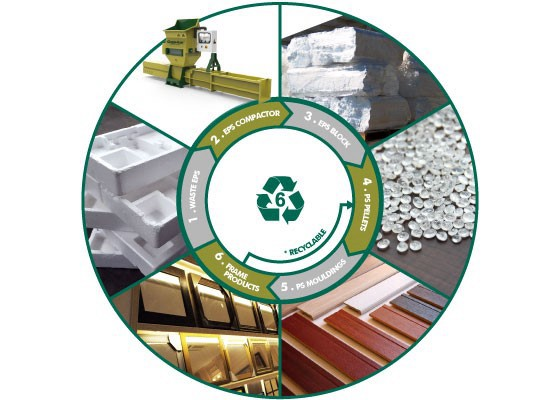
The UK already has an established EPS recycling industry, but national data and collection routes for EPE, EPP and XPS remain less visible. As packaging responsibility, disposal costs and demand for recycled polymers increase, on-site densification will become more important. A correctly specified foam recycling machine can release storage space, reduce vehicle movements, improve material consistency and give businesses clearer control over what happens to their foam waste. For UK retailers, logistics centres, seafood companies, manufacturers and recyclers, the objective is no longer simply to remove foam from the site, but to prepare it for a commercially viable second life.