
 Select Language
 English
Foam Recycling in Europe: Three Leading Industries Using GREENMAX Machines
Europe is accelerating the transition from disposable plastic use toward a more circular economy. Expanded polystyrene, extruded polystyrene, expanded polyethylene and expanded polypropylene are widely used because they provide thermal insulation, impact protection and lightweight transport performance. However, these same materials are difficult to collect economically when they remain loose, because foam products contain a high percentage of air and occupy considerable storage and transport space.
There is currently no harmonised European database that ranks foam recycling rates by individual end-use industry. Nevertheless, available recycling data and established collection practices indicate that seafood and cold-chain logistics, electrical appliance and electronics distribution, and the construction insulation sector represent three of Europe’s most mature and consistently recoverable foam waste streams.
The reasons are practical. These industries generate relatively large volumes of identifiable foam at concentrated locations, making sorting, volume reduction and transportation more economical than collecting small quantities from mixed household waste.
EPS Fish Box Recycling in the Seafood and Cold-Chain Industry
The seafood industry is one of Europe’s most visible users of expanded polystyrene packaging. EPS fish boxes protect seafood from physical damage and help maintain low temperatures throughout processing, auction, storage and transport. Large quantities are generated at fish markets, seafood processing plants, ports, wholesalers and distribution centres.This waste stream has strong recycling potential because fish boxes are generally made from a single material and are collected at commercial sites. EUMEPS reports that EPS packaging recycling rates already exceed 50% in many European countries, often supported by separate collection systems. The organisation also notes that most EPS fish boxes currently used are highly compatible with recycling when properly collected and cleaned.
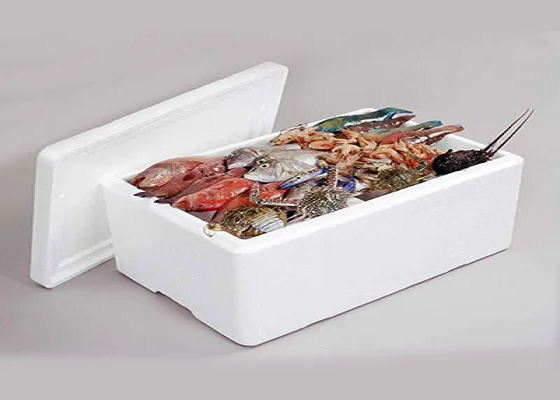
The main operational challenge is moisture. Fish boxes may contain residual water, ice or organic contamination, which can make ordinary hot-melting equipment less suitable without proper preparation.
For this application, the GREENMAX APOLO Series provides a practical cold-compaction solution. Its screw compression system operates without heating and can compact EPS in humid working environments. The machine is specifically designed to handle fish boxes containing water, while producing dense foam blocks without generating melting odours. The GREENMAX A-C200 can process up to 200 kilograms per hour and reduce foam volume at a ratio of up to 50:1.
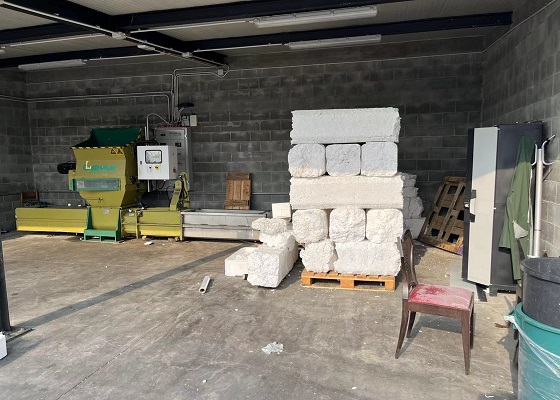
By installing the machine near the point where boxes are collected, seafood businesses can reduce storage requirements, decrease collection frequency and make the material more economical to transport. The compacted EPS can then be sent to a professional recycler and converted into recycled polystyrene raw material for manufacturing new plastic products.
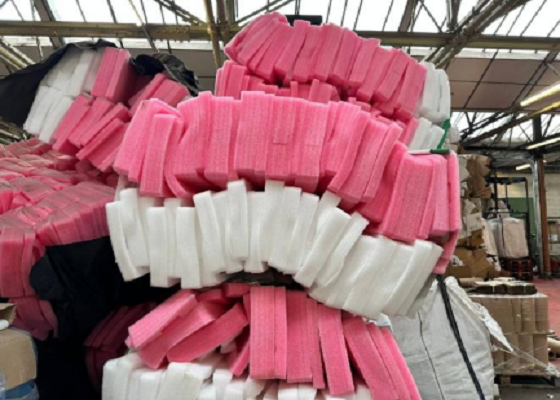
Foam Packaging Recycling in the Appliance and Electronics IndustryElectrical appliances, consumer electronics and industrial equipment require protective packaging during international and domestic transportation. Refrigerators, televisions, computers, air-conditioning systems and sensitive electronic components are frequently protected by moulded EPS, EPE or EPP foam.
This industry has one of the most favourable recycling conditions because packaging is normally removed at factories, warehouses, retail distribution centres or installation hubs. The foam is often clean, dry and available in predictable volumes. Instead of mixing it with general commercial waste, companies can establish a dedicated collection area and process it directly on site.
Packaging is also receiving increasing regulatory attention in Europe. The Packaging and Packaging Waste Regulation entered into force on 11 February 2025 and generally applies from 12 August 2026. It covers packaging of every material and origin and introduces stronger requirements concerning waste prevention, recyclability, collection and recycled content. By 2030, most plastic packaging categories will also need to meet minimum post-consumer recycled-content requirements.
For distribution centres handling a mixture of EPS, EPE and EPP, the GREENMAX ZEUS Z-C200 offers an adaptable solution. ZEUS uses surface-melting technology to stabilise compacted foam, particularly flexible EPE that may otherwise expand again after conventional screw compression. It can process EPS, EPE and EPP, reduce volume by up to 50:1 and achieve a throughput of up to 200 kilograms per hour.
This allows appliance manufacturers and logistics operators to combine multiple compatible foam streams into a more manageable recycling programme. Dense, stable blocks require less warehouse space, create cleaner loading areas and improve the economics of transporting recovered foam to downstream recyclers.
EPS and XPS Recycling in the Construction Industry
The construction sector is another major source of recoverable foam, particularly EPS and XPS insulation. Waste is generated during insulation board production, cutting, façade installation, roof construction, renovation and demolition.
Construction and demolition waste represents more than one-third of all waste produced in the European Union. European rules require Member States to promote selective demolition and sorting systems for materials including plastics. The Waste Framework Directive established a target of at least 70% preparation for reuse, recycling or other material recovery for non-hazardous construction and demolition waste, although actual performance and recycling quality vary considerably between countries.
Foam insulation requires special attention because loose offcuts are extremely lightweight and can easily scatter around a site. Clean production offcuts and separated installation waste offer the best recycling value, while demolition material may require additional sorting to remove cement, adhesive, mesh, wood and other contaminants.
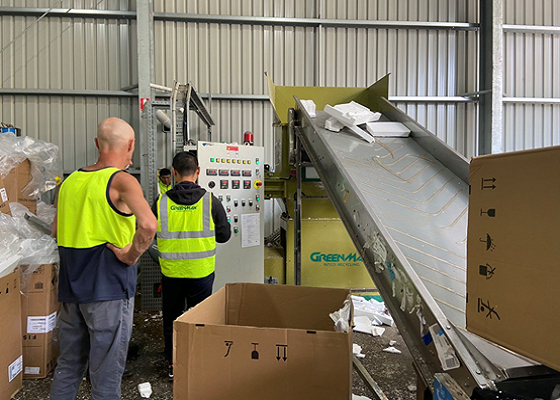
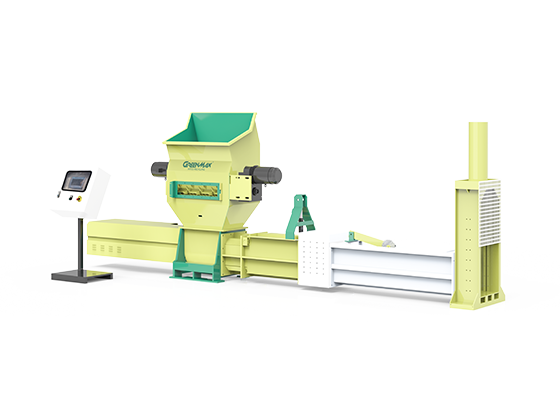
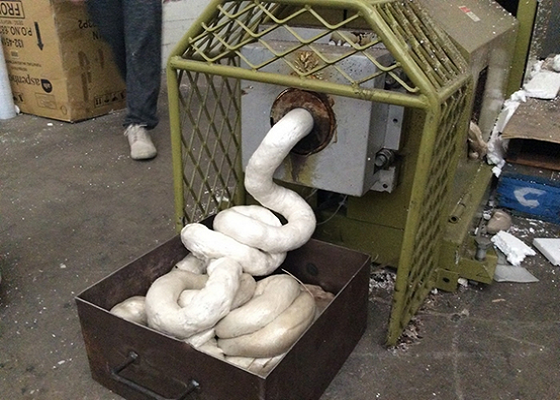
The GREENMAX MARS Series is suitable for densifying EPS and XPS insulation waste. Its screw-melting system processes PS, PE and PP foams and uses three-stage temperature control to improve the quality of the resulting ingots. The system can reduce foam volume by as much as 90:1. For medium-to-large insulation manufacturers or recycling facilities, the M-C200 offers a processing capacity of up to 200 kilograms per hour.
By densifying insulation waste at the factory or collection centre, companies can prevent lightweight foam from occupying containers that should carry heavier recyclable material. The densified output is easier to stack, record and transport, supporting traceable recycling routes and helping businesses meet customer and regulatory expectations.
GREENMAX Supports More Practical Foam Recycling in Europe
European foam recycling is developing fastest where waste is clean, separately collected and generated in sufficient quantities. Seafood businesses, appliance and electronics supply chains, and construction companies are therefore well positioned to turn bulky foam waste into a commercially recoverable material.
The correct GREENMAX machine depends on the foam type, moisture level, contamination, required capacity and preferred output. APOLO provides cold compression for EPS, including wet fish boxes. ZEUS stabilises flexible EPE and EPP while also processing EPS. MARS produces highly densified ingots from EPS, XPS and other compatible foam materials.
As European policy places greater responsibility on producers, distributors and waste holders, on-site densification will become increasingly important. A suitable foam recycling machine does more than reduce volume: it connects collection, efficient logistics and downstream material recovery, allowing European businesses to convert difficult foam waste into a more manageable and valuable recycling stream.