
 Select Language
 English
Foam Densifier for EPE Packaging Waste at Logistics Hubs
EPE foam is widely used to protect furniture, appliances, electronics and other products as they move through the supply chain. At logistics hubs and transfer stations, the material is usually removed after goods are unpacked, sorted or repacked.
Although EPE is lightweight, it quickly fills cages, containers and temporary storage areas. Its strong rebound also makes it difficult to keep compressed by hand. For logistics operations receiving EPE packaging every day, processing the material onsite can reduce space pressure and make transportation more economical.
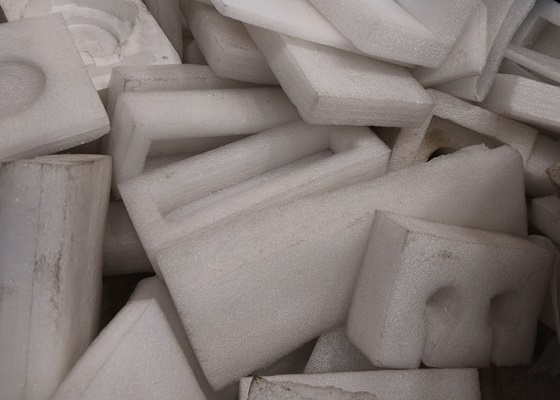
Foam Densifier Processes EPE Packaging
GREENMAX EPE foam densifier first crushes the EPE packaging into smaller pieces. The material then moves through a heated screw section, where it softens and is extruded into dense ingots. This hot-melt process reduces the rebound and volume of loose polyethylene foam. The ingots require less storage space and are easier to stack and transport than sheets, rolls or molded packaging.
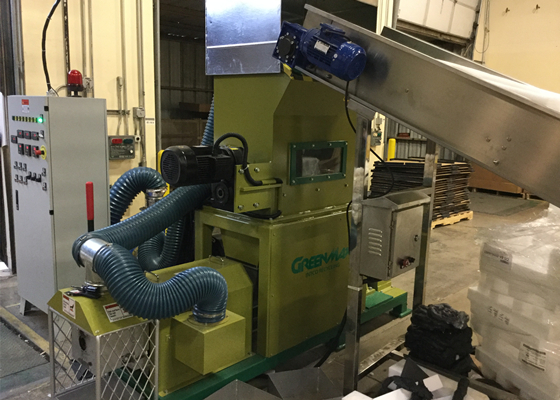
The actual compression ratio and processing capacity depend on the density, shape and condition of the EPE. Testing the material before selecting a configuration helps confirm the required crushing, heating and screw settings.
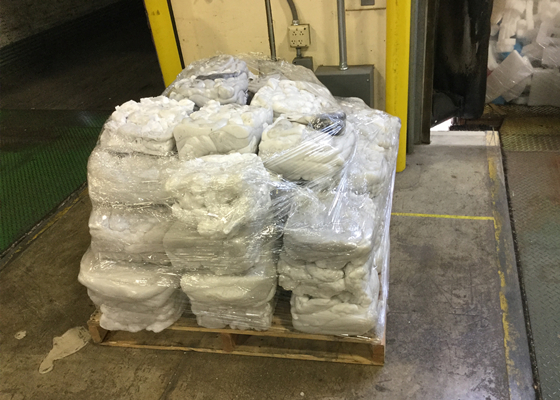
GREENMAX EPE Recycling at a Logistics Hub
A logistics transfer station produces EPE packaging waste while receiving and redistributing goods. Because the loose foam occupied too much space before collection, the company selected GREENMAX foam densifier to process the material onsite.
The equipment configuration was matched to the EPE waste and the facility’s operating conditions. Instead of storing loose packaging until collection, the logistics hub can reduce the material close to where it is generated and prepare a denser output for downstream recycling. The project shows that equipment selection for a logistics site is not based only on monthly tonnage. The size of the packaging, the timing of inbound deliveries and the hours available for processing also influence the suitable configuration.
Choosing Foam Densifier for a Logistics Hub
Start by reviewing how much EPE the site generates during normal and peak periods. The common size and form of the packaging will affect the feeding and crushing arrangement, while the available processing hours will determine the required capacity. The destination of the densified EPE should also be confirmed. After hot-melt processing, the ingots can be transported to a downstream recycler for granulation and further use as recycled polyethylene material.
GREENMAX can test representative EPE samples and recommend a foam densifier according to the material, waste volume, feeding method and available working space.
FAQ
1. Can a foam densifier process EPE packaging?
Yes. Selected GREENMAX foam densifiers can process EPE packaging. The configuration should be confirmed using representative material samples.
2. Where should a logistics hub place the foam densifier?
The machine should be close enough to the main EPE collection area to limit unnecessary internal movement, while leaving room for feeding and storing the densified output.
3. What happens to EPE after densification?
The dense EPE ingots can be sent to a downstream recycler for granulation and processing into recycled polyethylene material.