 Select Language
 English
GREENMAX Foam densifier can recycle EPS foam used to make insulation boards effectively
EPS foam is widely used in the construction industry, especially for insulation boards due to its excellent thermal insulation performance and lightweight structure. However, the increasing use of EPS also means more waste is generated. Waste EPS mainly comes from two sources: scraps and dust produced during the manufacturing of EPS insulation boards, and discarded insulation boards removed during building renovation or demolition. As construction waste recycling becomes a global focus, finding efficient ways to recycle EPS foam is becoming increasingly important.
In Europe, EPS insulation recycling has already attracted significant attention. The PolyStyreneLoop project in the Netherlands, for example, uses CreaSolv® technology to recycle EPS demolition waste and transform it into high-quality recycled raw materials. This project demonstrates that EPS insulation waste can be recycled and reused rather than sent to landfill. Similar recycling initiatives are being promoted across Europe as governments and businesses seek to improve resource efficiency and reduce construction waste.
.jpg)
EPS is composed of approximately 98% air and only 2% polystyrene, making it lightweight and an excellent insulation material. However, its low density also creates challenges for recycling. Loose EPS insulation boards occupy large amounts of storage space and are expensive to transport. Therefore, reducing the volume of EPS waste is the first and most important step in the recycling process. Using specialized machinery for EPS recycling is a practical and cost-effective solution for both manufacturers and recycling companies.
With a compression ratio of up to 90:1, GREENMAX foam densifier can significantly reduce the volume of EPS foam waste. The machine first crushes bulky foam into small pieces and then compresses them into dense EPS blocks. These compacted blocks are easier to stack, store, and transport, greatly improving the efficiency of downstream recycling. Without densification, bulky EPS insulation boards are difficult to handle and expensive to transport, making compaction an essential step in the recycling chain.
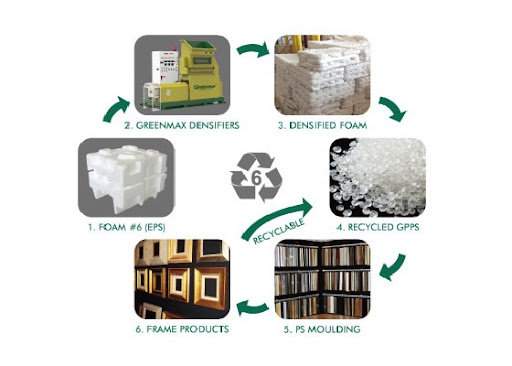
Reducing the volume of EPS foam is only the beginning. The ultimate goal of EPS recycling is to transform waste into valuable resources. GREENMAX is committed to building a closed-loop EPS recycling system, where compacted EPS blocks are further processed into recycled plastic pellets and manufactured into new plastic products. Through efficient recycling technologies, waste EPS insulation boards can be given a second life, supporting the circular economy and helping the construction industry move toward a more sustainable future.
FAQ
1. Can EPS insulation boards be recycled?
Yes. EPS insulation boards can be recycled after use or demolition. Clean EPS waste can be compressed, transported, and reprocessed into recycled raw materials or new plastic products.
2. Why is a foam densifier suitable for EPS insulation board recycling?
A foam densifier uses cold compaction technology to compress EPS into dense blocks without heating. This makes it especially suitable for recycling flame-retardant EPS insulation boards commonly used in construction.
3. What are the benefits of recycling EPS insulation boards?
Recycling EPS insulation boards helps reduce landfill waste, save storage and transportation costs, recover valuable materials, and support a circular economy in the construction industry.