 Select Language
 English
Foam Compactor Solutions for XPS Insulation Offcuts-Turning Cutting Scrap into Cost Savings
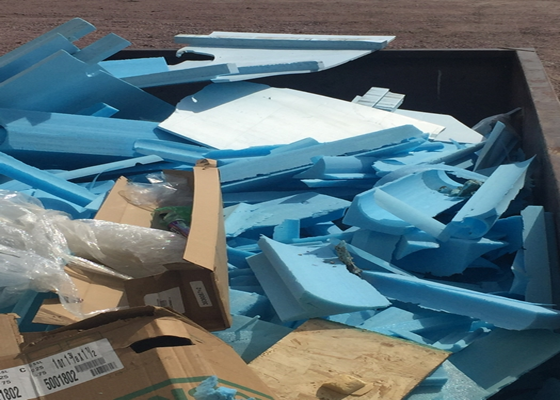
Extruded polystyrene (XPS) insulation boards are everywhere in modern construction. They deliver reliable thermal performance, resist moisture, and install easily across walls, roofs, and foundations. Yet behind every clean jobsite finish is a less visible problem: cutting. Whether boards are trimmed to fit around openings, adjusted for joints, or shaped for irregular surfaces, the fabrication process produces a steady flow of XPS offcuts. These scraps may be clean and uncontaminated, but they are also extremely low in density. A small amount of material can fill a large container, and within days the workspace becomes crowded with bags and piles that are expensive to handle.
The economics are frustratingly simple. Hauling companies charge for container volume and pickup frequency, not for how “light” the foam feels. Landfill and transfer station fees add more cost, while internal handling adds hidden expenses in labor and floor space. Many insulation fabricators and construction-related warehouses end up paying repeatedly to move air. When scrap volumes increase, costs scale up immediately, even though the material itself is not heavy.
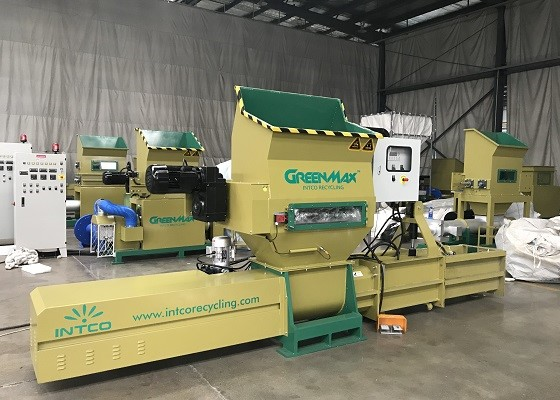
A foam compactor changes the cost structure by removing the air that makes XPS so difficult to manage. Instead of storing loose offcuts that spill and drift across production areas, operators feed the scrap into a foam compactor and produce dense, stable blocks. Once compressed, XPS becomes easier to stack, safer to store, and far more efficient to transport. The same truck that previously carried a few oversized bags of loose foam can now move a much larger amount of usable material in compact form. That means fewer pickups, fewer invoices, and less disruption to daily operations. Just as importantly, densified XPS is more attractive to downstream recycling partners, because transport becomes economical and the material is presented in a consistent format.
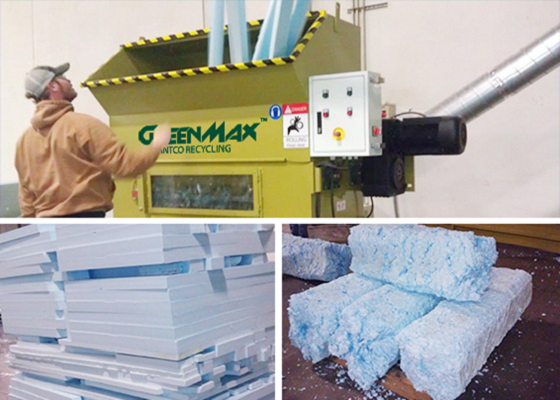
A GREENMAX customer in the insulation fabrication sector illustrates how a foam compactor turns XPS waste from a constant headache into a controlled process. The facility cut XPS boards daily for multiple construction projects, and offcuts accumulated rapidly near the cutting tables. Waste containers overflowed, aisle space narrowed, and the team frequently scheduled extra pickups to avoid safety and housekeeping issues. After installing a GREENMAX foam compactor, the workflow shifted. Operators began compacting clean XPS offcuts at the source, converting loose scrap into dense blocks that could be palletized and stored neatly. Pickup frequency dropped because loads were consolidated, and the facility reclaimed valuable floor space that had been used for temporary scrap storage. Over time, the operation also improved its recycling outcomes, because it could collect enough densified material to ship economically and maintain a consistent outbound schedule.
For businesses cutting XPS insulation boards, the goal is not only sustainability—it is cost control and operational stability. A foam compactor addresses the biggest cost driver, volume, by transforming lightweight offcuts into a transport-efficient form. When XPS scrap is compacted into dense blocks, storage becomes predictable, hauling becomes less frequent, and disposal costs stop escalating with every new batch of cutting work. With a foam compactor, XPS offcuts become manageable, recyclable, and far less expensive to deal with.