 Select Language
 English
EPS melting technology has become one of the most important technologies in the recycling field
The EPS cold pressing technology, using GREENMAX's Apolo series cold press as an example, employs pure physical compression methods. First, the collected EPS waste is sorted to remove impurities such as tape and labels. Next, the waste enters a crusher, where it is broken down into smaller pieces for subsequent processing. Then, these small pieces of EPS are sent into the cold pressing chamber through a spiral device, where they are compressed into high-density blocks under strong mechanical pressure, reducing their volume to 1/50 of the original. This cold pressing method has obvious advantages: it consumes less energy, involves no heating process throughout, does not produce waste gas emissions caused by high temperatures, is environmentally friendly, and has a relatively simple equipment structure with low maintenance costs. It is suitable for recycling scenarios with smaller processing volumes and stringent cost control, such as small recycling stations.
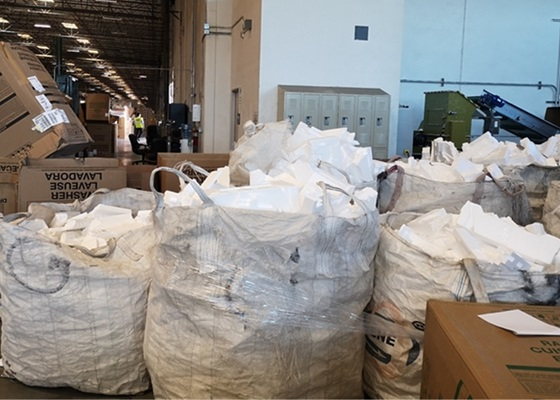
The EPS melting technology, such as that used in GREENMAX's Mars series densifier, employs this technique. First, EPS waste is collected and pre-treated to remove impurities. After that, the waste enters the machine, where it is crushed into small fragments by a crusher. These fragments are then fed into a heated chamber where the EPS gradually melts into a liquid at high temperatures of 140°C to 200°C. The melted EPS is extruded through specific molds and, after cooling, forms high-density ingots with a volume reduction ratio of up to 1/90. This technology can process a large amount of EPS waste, producing ingots that have a uniform texture and high density, suitable for further processing into various plastic products. However, the melting process requires a significant amount of energy, and the equipment, due to the need to withstand high temperatures, has higher manufacturing costs and maintenance requirements.
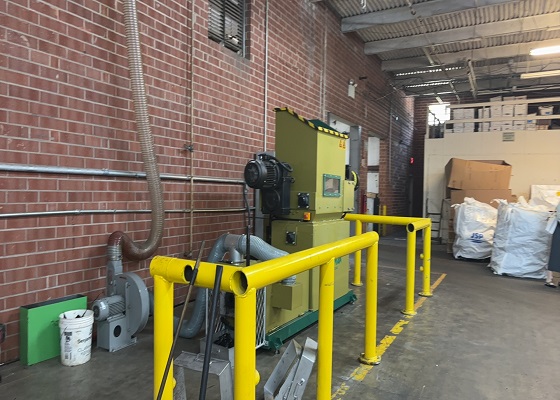
In the actual case of Muswellbrook Shire Council in Australia, the local population is small, resulting in a relatively low volume of EPS waste. However, its large size caused many difficulties for recycling centers and landfills. After an investigation by the GREENMAX team, the local area opted for the Mars series EPS densifier model M - C 50. Once the equipment was in place, it was professionally installed and debugged, and personnel were trained before being put into use.
The originally bulky EPS foam was fed into the machine, significantly reducing in size after compression, which greatly saved storage space and transportation costs. It is estimated that based on the local population size, about $28,800 in EPS processing fees can be saved annually. Calculating based on a minimum equipment lifespan of 10 years, this amounts to a total saving of $288,000 over a decade. In summary, both EPS melting technology and cold pressing technology have their pros and cons. Recycling companies need to reasonably choose the appropriate technology and corresponding GREENMAX equipment based on factors such as their own scale, budget, environmental protection requirements, and expectations for the quality of recycled products, and efficiently carry out EPS waste recycling.
.jpg)