 Select Language
 English
How a GREENMAX EPS Densifier Helps Recycle EPS Waste from Multiple Industries
Expanded polystyrene, commonly known as EPS, is widely used because of its lightweight structure, thermal insulation performance and cushioning ability. It can be found in seafood boxes, appliance packaging, furniture protection, construction insulation, logistics packaging and many other applications. However, these same characteristics also make discarded EPS difficult to manage. Because EPS foam contains a large amount of air, untreated waste occupies considerable storage space and generates high transportation costs. A GREENMAX EPS densifier provides an efficient solution by melting and compacting loose EPS foam into dense blocks that can be transported and recycled more economically.
Recycling EPS Waste from Different Industries
One of the main advantages of a GREENMAX EPS densifier is its ability to process EPS waste generated by multiple industries rather than being limited to one application.
In the seafood industry, EPS boxes are frequently used to transport fish and other temperature-sensitive products because they provide excellent insulation. After use, however, large quantities of boxes can quickly accumulate at seafood markets, processing plants and distribution centers. An EPS densifier can reduce this bulky waste into compact material, helping businesses improve waste handling efficiency.
The appliance and electronics industries also generate significant amounts of EPS packaging. Refrigerators, televisions, washing machines, air conditioners and other products often use molded EPS components to protect goods during transportation. Retailers, warehouses and manufacturing facilities may therefore handle large volumes of clean EPS packaging every day. By installing an EPS densifier close to the source of the waste, companies can process the foam directly instead of continuously paying to transport lightweight, low-density material.
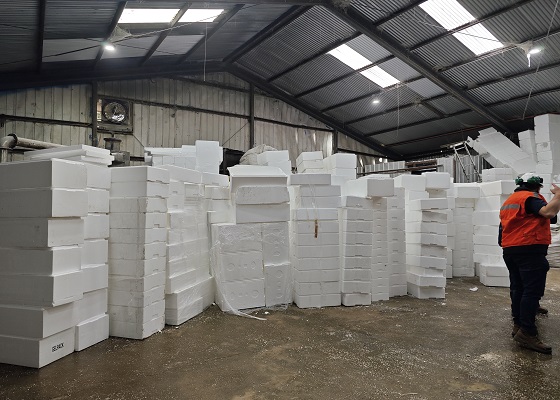
EPS is also used in furniture packaging, logistics centers, supermarkets, construction applications and protective packaging. This wide range of potential material sources makes the GREENMAX EPS densifier suitable for recycling companies as well as businesses that generate EPS waste directly.
Why Choose a Hot-Melting EPS Densifier?
Unlike a cold compactor that compresses foam through mechanical pressure, an EPS densifier uses heat to melt and densify the material. This process provides several practical advantages for companies dealing with high-volume EPS waste.
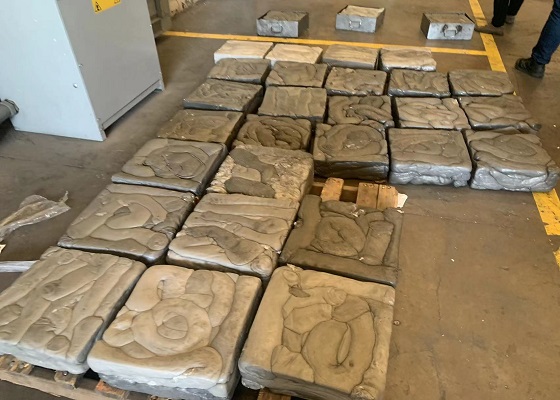
One of the most important benefits is the significant volume reduction. Loose EPS is extremely lightweight, so even a relatively small amount by weight can occupy a large area. After passing through an EPS densifier, the foam is melted and transformed into dense EPS ingots. The resulting material requires much less storage space, allowing companies to maintain cleaner and more organized recycling areas.
The increased density also makes transportation more economical. Shipping untreated EPS means that a truck may carry a large volume but very little actual plastic. Densified EPS allows considerably more material to be loaded into the same transportation space. For companies producing EPS waste continuously, this can reduce the frequency of pickups and improve overall recycling logistics.
Another advantage of hot-melting technology is the stable form of the final material. The EPS densifier produces solid, compact blocks that are easier to stack, store and transport than loose foam. These blocks can then enter downstream recycling processes and be used as recycled plastic raw material for products such as picture frames, decorative moldings and other polystyrene applications.
GREENMAX also designs its EPS recycling equipment with practical operation in mind. Depending on the waste source and processing requirements, the recycling system can be configured to help companies establish a more efficient workflow from foam collection to densification.
GREENMAX EPS Densifier Recycling Cases
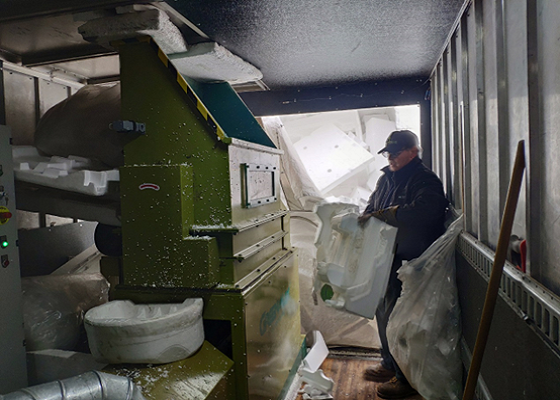
A GREENMAX EPS densifier has been applied in projects involving seafood-related EPS waste. In one case, a seafood business generated large quantities of used EPS fish boxes that previously occupied substantial storage space. After introducing GREENMAX densification equipment, the business was able to process the foam on site and convert it into compact EPS blocks. This made temporary storage easier and reduced the logistical difficulties associated with transporting loose fish boxes.In another GREENMAX project, EPS packaging from electrical appliances was the main recycling material. Protective foam from products such as refrigerators and household appliances accumulated quickly because of its large volume. The EPS densifier allowed the operator to process packaging waste continuously, reducing the amount of space required for foam storage and producing dense material that could be collected for further recycling.
A third application involved EPS packaging generated through distribution and commercial activities. Instead of placing lightweight foam directly into waste containers and paying for repeated collections, the operator used GREENMAX equipment to densify the EPS before transportation. The project demonstrated how an EPS densifier can support businesses that want to improve both waste management efficiency and the value recovery of discarded foam.
Turning Bulky EPS into a Recyclable Resource
EPS waste does not have to remain a costly, space-consuming material. With suitable recycling equipment, foam from seafood packaging, appliances, logistics, furniture, retail and other sectors can become a recyclable plastic resource.
The GREENMAX EPS densifier combines strong volume reduction, convenient storage, improved transportation efficiency and hot-melting technology in one recycling solution. For businesses generating large amounts of EPS, installing an EPS densifier can help simplify waste handling while creating dense EPS material with greater recycling potential.
By connecting waste generators with downstream recycling markets, GREENMAX continues to provide practical EPS recycling solutions for different industries and helps businesses transform difficult-to-handle foam waste into reusable resources.