
 Select Language
 English
EPS compactor is a suitable machine to dispose the waste EPS packaging materials
EPS (Expanded Polystyrene) is one of the most widely used packaging materials in the world. It is commonly found in appliance packaging, electronics packaging, seafood boxes, cold-chain packaging, and food service containers. Thanks to its lightweight structure, excellent cushioning performance, and thermal insulation properties, EPS remains an important packaging material across many industries.
As global demand for protective packaging continues to grow, the amount of waste EPS generated by manufacturers, distributors, retailers, and recycling companies is also increasing. While EPS offers significant advantages during transportation and storage, its disposal presents a major challenge due to its low density and bulky volume.
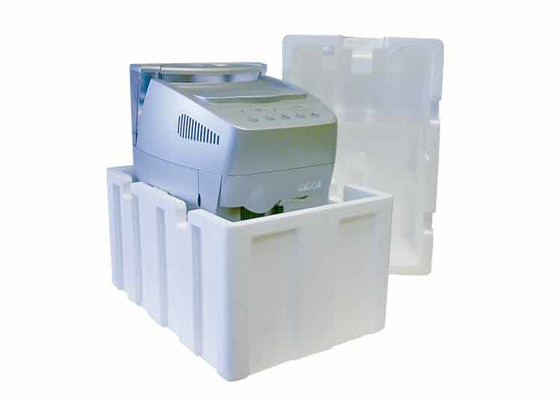
EPS is composed of approximately 98% air and only 2% polystyrene. This unique structure makes it highly effective at protecting products from damage, but it also makes transportation and storage of waste EPS costly and inefficient. A small amount of material can quickly occupy large warehouse areas or fill collection containers, creating additional handling expenses for businesses.
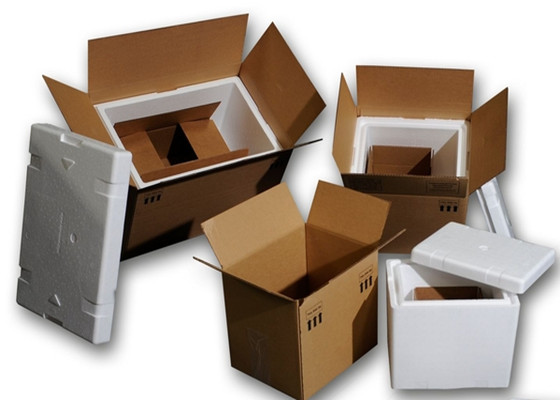
However, EPS is a recyclable material that can be processed and reused to manufacture new products. Compared with many packaging materials that are difficult to recycle, EPS has established recycling channels in many countries. The key challenge is reducing its volume before transportation and reprocessing.
EPS compactor becomes an essential part of the recycling process. By significantly reducing the size of loose foam waste, an EPS compactor helps businesses lower transportation costs, save storage space, and improve recycling efficiency.
GREENMAX EPS Compactor is specifically designed for recycling EPS packaging waste. The machine first crushes bulky foam into small pieces and then compresses the material into high-density EPS blocks through a screw compaction system. With a volume reduction ratio of up to 50:1, the compacted blocks are easier to stack, store, transport, and sell to downstream recyclers.
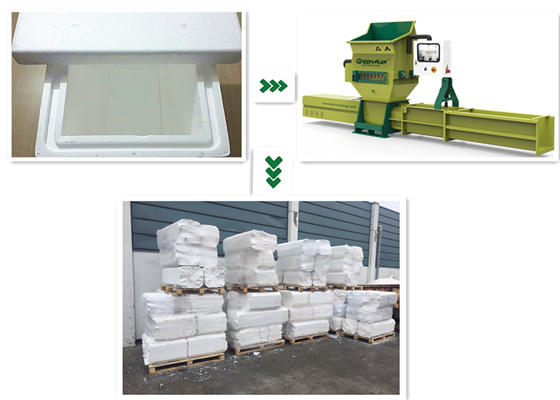
For companies that generate large amounts of EPS waste, such as appliance manufacturers, furniture retailers, logistics centers, warehouses, and seafood processors, using an EPS compactor can provide both environmental and economic benefits. It reduces waste management costs while helping businesses participate in a more sustainable recycling system.
Reducing foam volume is only the first step in the recycling journey. After densification, compressed EPS blocks can be processed into recycled polystyrene pellets and used to manufacture a variety of new products. Through this circular recycling model, waste EPS packaging can be transformed from a disposal challenge into a valuable resource.
As demand for sustainable packaging and recycling solutions continues to grow, EPS compactors are becoming an increasingly important tool for companies seeking to improve operational efficiency and maximize the value of recyclable materials.
FAQ
1. What is EPS compactor?
An EPS compactor is a recycling machine that compresses loose EPS foam into dense blocks for easier storage, transportation, and recycling.
2. What materials can an EPS compactor process?
EPS compactors are commonly used to recycle appliance packaging, electronics packaging, fish boxes, insulation materials, and other EPS foam products.
3. How much can an EPS compactor reduce foam volume?
Most EPS compactors can achieve a volume reduction ratio of up to 50:1, depending on the material and equipment model.