 Select Language
 English
EPP Recycling with GREENMAX Z Series: A Lower-Energy Alternative to Hot Melting
Expanded polypropylene, commonly known as EPP, is widely used in automotive components, reusable transport packaging, protective inserts and industrial trays. It is lightweight, resilient and durable, but these same qualities create problems after use. Loose EPP occupies substantial storage space, fills trucks quickly and is costly to transport. Many companies know that EPP can be recycled through hot-melt densification, yet fewer realize that cold compression is also a practical and increasingly attractive solution.
Hot-melt densifiers reduce EPP by applying heat until the foam softens or melts, producing dense ingots that are convenient to store and transport. This technology can achieve strong volume reduction and may suit sites that prioritize maximum density. However, full melting requires continuous thermal input. It also creates higher heat around the operating area and can generate more odor, making ventilation and energy management important considerations.
The GREENMAX Z Series offers another route. Instead of fully melting the material, the machine shreds and compresses EPP through a screw system. Limited surface heating helps stabilize the outside of the compressed block, while the internal material is mainly densified by mechanical pressure. This combination is commonly described as cold compression with surface bonding. The GREENMAX Z-C200 is designed for EPE and EPP and can reduce foam volume by up to 50:1, with a processing capacity of up to 200 kg per hour. Because the machine does not need to melt the entire material stream, it generally requires less thermal energy than a full hot-melt process. This makes it especially suitable for factories seeking lower electricity consumption and a cleaner working environment.
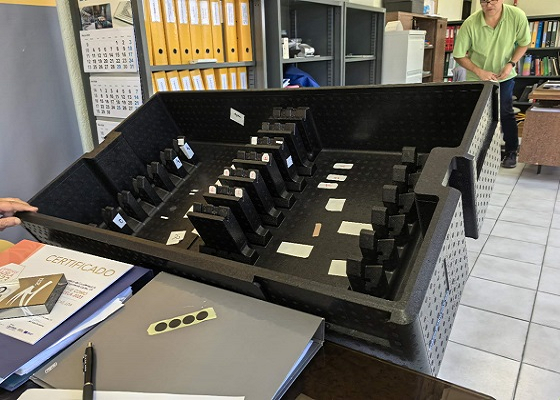
A real cold-compression project involved a German manufacturer using EPP pallets, dividers and reusable transport packaging. The factory served automotive supply chains and generated a steady stream of production scrap and damaged EPP components. The material had a relatively high density, and simple single-stage crushing could not create sufficiently uniform feedstock. GREENMAX therefore configured a Z-C200 system with double shredding before compression.
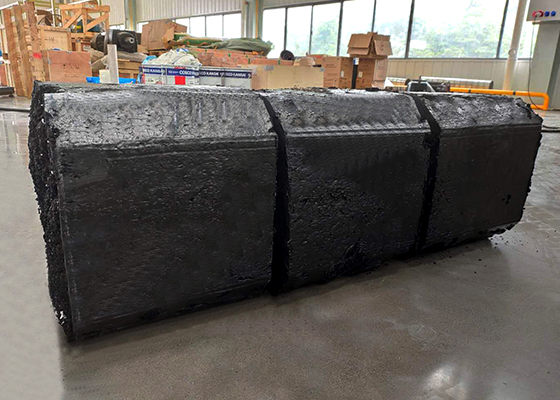
After installation, the EPP was processed into stable blocks measuring approximately one meter long and 380 by 380 millimeters in cross-section. Each block weighed about 50 kilograms, making stacking, internal handling and truck loading much easier. The factory reduced the space occupied by loose foam and no longer needed to arrange frequent collections of low-density material. More importantly, the Z Series solution achieved this result without completely melting the EPP. The customer benefited from lower heat demand, reduced electricity use and a more comfortable production environment. The dense blocks could then be transported economically for further grinding, extrusion and pelletizing.
A second GREENMAX project in Japan demonstrates where hot-melt technology may still be selected. An automotive-related company needed to recycle dense EPP and EPO components with material densities of approximately 60 to 90 kilograms per cubic meter. Because the customer required very high densification and compact ingots, GREENMAX supplied an M-C300 hot-melt system with a double-crushing configuration. The project confirmed that EPP can be processed successfully through hot melting when the downstream buyer or site logistics require maximum density.
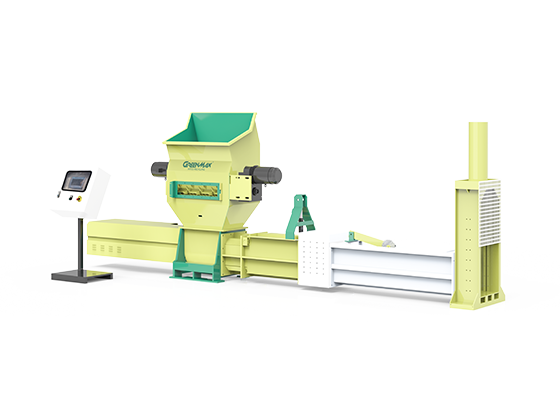
However, the Japanese project also highlights the difference between the two methods. Hot melting is effective, but it uses heaters to soften the full material stream. Cold compression with the GREENMAX Z Series relies primarily on shredding and mechanical pressure, using heat only to stabilize the block surface. For many EPP manufacturers, recyclers and automotive suppliers, the Z Series therefore offers a better balance between volume reduction, energy consumption and environmental performance.
Choosing the correct EPP recycling machine should depend on material density, contamination, hourly volume, available power, ventilation and the requirements of the downstream recycler. Hot melting remains a valid option for maximum densification. Nevertheless, companies should not assume that it is the only method. GREENMAX Z Series cold compression can transform bulky EPP into dense, transportable blocks while using less heat, lowering operating energy demand and supporting a more environmentally responsible recycling process.