
 Select Language
 English
EPP Foam Recycling Solution for Global EPP Waste Recovery
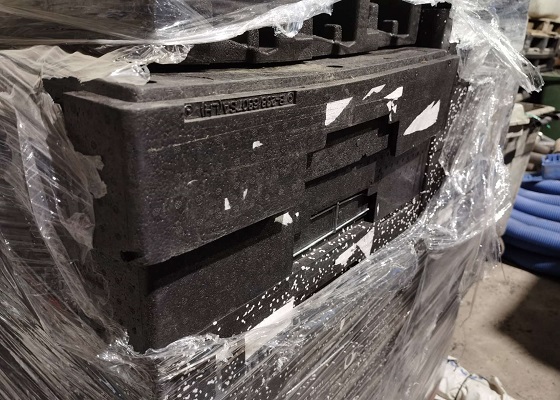
Expanded Polypropylene, widely known as EPP foam, is becoming increasingly common in automotive packaging, returnable logistics boxes, protective packaging, insulation materials and consumer products. Its lightweight structure, strong cushioning performance and excellent impact resistance make it valuable in modern manufacturing, but these same advantages create a challenge at the waste stage. EPP takes up large storage space, is costly to transport when loose, and is often mixed with other plastic waste streams. As global plastic waste continues to grow, an efficient EPP foam recycling solution is becoming essential for companies that want to reduce landfill pressure, lower logistics costs and build a more circular material system.
Globally, plastic recycling is still far from ideal. The OECD reported that global plastic waste reached 353 million tonnes in 2019, while only about 9% was ultimately recycled after losses in the recycling process. Nearly half was sent to sanitary landfills, and a significant share was still mismanaged or leaked into the environment. Although official data usually does not separate EPP waste from broader polypropylene or plastic packaging waste, these figures show the scale of the challenge facing EPP producers, logistics companies, appliance manufacturers and automotive suppliers.
In Europe, recycling systems are relatively mature, but there is still room for improvement. Eurostat data shows that the EU recycled 42.1% of generated plastic packaging waste in 2023, with Belgium, Latvia and Slovakia among the highest-performing countries. However, recycling rates vary greatly between member states, which means bulky EPP foam waste can still be difficult to handle if local collection, sorting and densification channels are incomplete. For European manufacturers, the current solution is moving from simple disposal to on-site compaction, closed-loop cooperation and professional EPP recycling networks. Recently, the launch of the EPP Loop initiative in Europe also reflected the industry’s intention to bring waste EPP back into the material cycle more efficiently.
In North America, the opportunity is also significant. The United States has struggled with low plastic recycling rates, with some reports estimating the post-consumer plastic recycling rate at only around 5% to 6% in 2021. For polypropylene specifically, the Recycling Partnership’s Polypropylene Recycling Coalition has invested more than $15 million in grants and improved PP recycling access for about 48 million people, while the current PP recycling rate is still estimated at around 8%. This shows that PP-based materials such as EPP foam have strong recycling potential, but they need better collection and pre-processing. An EPP foam recycling machine can turn loose EPP waste into compact blocks or ingots, making it easier for recyclers to collect, transport and reprocess the material into recycled PP pellets.

Asia is another important region for EPP waste recovery. In China, the recycled plastics industry has expanded rapidly, and the Recycled Plastics Branch of the China Material Recycling Association reported that China recycled about 19 million tonnes of waste plastics in 2023, up from 18 million tonnes in 2022. With large manufacturing bases in electronics, appliances, automotive parts and export packaging, China generates substantial EPP packaging waste. The practical solution is to install EPP foam recycling machines at factories, warehouses and recycling stations, so EPP can be compressed near the source instead of being transported as low-density waste.
Japan presents a different case. According to Japan’s Plastic Waste Management Institute, the country generated 8.23 million tonnes of plastic waste in 2022, with an effective utilization rate of 87%. However, this figure included 22% material recycling, 3% chemical recycling and 62% thermal recycling, which means mechanical material recovery still has room to grow. For Japan’s automotive, logistics and precision product packaging sectors, a more material-focused EPP foam recycling solution can help shift part of the waste stream from energy recovery to higher-value recycling.
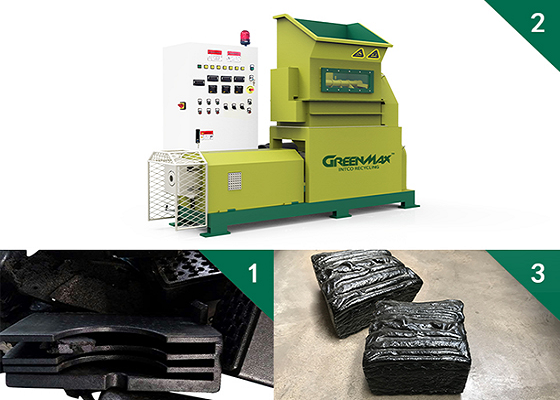
At present, the most common technical solutions for EPP recycling are cold compaction and hot-melt densification. Cold compaction uses screw compression to reduce the foam volume while keeping the material in a solid block form. Hot-melt densification uses heat to melt EPP foam into dense ingots. Both methods solve the key problem of low bulk density and make EPP waste commercially recyclable. After densification, the material can be transported to recycling plants, pelletized into recycled PP granules and used again in plastic products, automotive parts or other applications. GREENMAX notes that EPP compactors can significantly reduce the volume of bulky foam waste, helping companies reduce storage and transportation pressure.
As more regions strengthen plastic recycling targets and circular economy policies, EPP waste should no longer be treated as a disposal burden. With the right collection system, on-site densification equipment and downstream pelletizing channels, EPP can become a valuable recycled polypropylene resource. A complete EPP foam recycling solution not only helps companies reduce waste management costs, but also supports carbon reduction, resource efficiency and sustainable brand development in the global market.