 Select Language
 English
EPP Foam Densifier: An Easier and More Reliable Way to Recycle EPP Foam with GREENMAX
EPP foam is widely used in automotive parts packaging, reusable logistics boxes, electronic product protection, industrial trays and high-strength transport packaging. Compared with ordinary EPS foam, EPP has better toughness, resilience and impact resistance, which makes it an ideal protective material in many industrial supply chains. However, these same advantages also make EPP foam more difficult to recycle efficiently. Loose EPP foam occupies a large storage area, has low transport efficiency and often causes high handling costs if it is not processed before collection or resale.
For many recyclers and manufacturers, the key question is not whether EPP foam can be recycled, but how to recycle it in a stable, simple and cost-effective way. In practical recycling operations, EPP foam can be processed by cold pressing technology. GREENMAX also provides cold press compactors for EPP foam, and this solution can reduce the volume of loose foam and turn it into dense blocks. However, EPP is different from EPS. Because of its elasticity and rebound characteristics, cold pressing EPP foam requires better control of feeding, compression pressure, discharge stability and material condition. If the operator is inexperienced, the compacted blocks may rebound, become loose or fail to reach the expected density. This means that although cold pressing is possible, the technical difficulty of machine operation is usually higher than hot-melt densification.
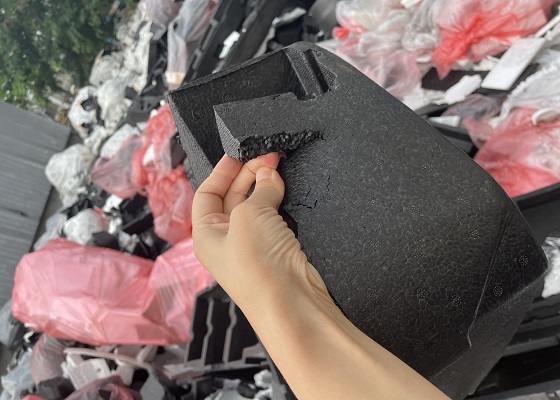
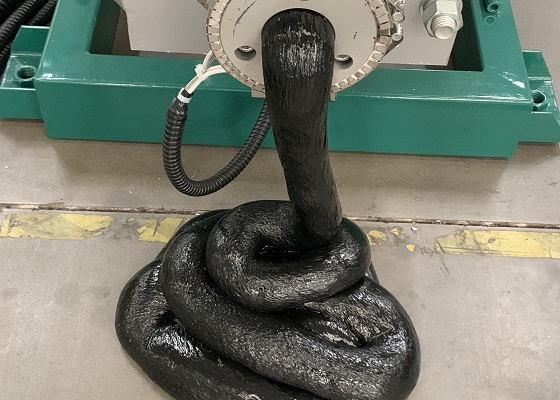
This is why many customers prefer to choose a GREENMAX EPP foam densifier when they want a more convenient recycling solution. Supported by hot-melt technology, the EPP foam densifier first crushes the foam into smaller pieces and then melts it thoroughly through controlled heating. The melted material is then discharged as dense ingots, which are much easier to store, load, transport and sell. Compared with cold pressing, hot-melt densification can better solve the rebound problem of EPP foam. It is especially suitable for companies that do not want to spend too much time adjusting machine operation or managing unstable block quality.
GREENMAX understands that different customers have different recycling needs. Some factories may prefer cold pressing because they want lower temperature processing and block-shaped output. Some recyclers may prefer hot melting because they care more about high volume reduction, stable output and easier operation. Therefore, GREENMAX can provide both cold press compactors and EPP foam densifier solutions. However, if you are worried about complicated operation, unstable compression results or extra training requirements for workers, the EPP foam densifier is usually the better choice. It is designed to make EPP foam recycling simpler and more reliable.
The main advantage of the EPP foam densifier is that it can process EPP foam more completely. EPP foam is not always clean, soft or uniform. In many real recycling sites, the waste may include thick EPP packaging, high-density protective parts, used transport trays or mixed-size foam pieces. If these materials are only pressed, the result may depend heavily on the operator’s feeding method and the material’s original density. With hot-melt technology, the machine can crush and melt the EPP foam more thoroughly, which helps form a more stable and compact final output. This gives recyclers more confidence when arranging storage, transportation and downstream sales.
.jpg)
A practical case can be seen in an automotive parts packaging recycling project. The customer produced a large amount of EPP protective packaging every week. These EPP foam parts were used to protect components during transport between suppliers and assembly plants. Before using a GREENMAX EPP foam densifier, the waste foam was stacked in the warehouse and collected irregularly by a local recycler. Because the foam was bulky and lightweight, the warehouse quickly became crowded, and the transport cost was high compared with the material value. The customer first considered cold pressing, but after testing the material, they found that some EPP parts were relatively tough and had obvious rebound after compression. The production team also did not want workers to spend too much time adjusting pressure and discharge conditions.
After communication with GREENMAX, the customer chose an EPP foam densifier based on hot-melt technology. The machine was installed near the waste packaging collection area. Workers only needed to feed the EPP foam into the machine after basic sorting. The foam was crushed, heated and melted into dense ingots. After densification, the storage space required for the EPP waste was greatly reduced, and the customer could arrange transport in larger batches instead of frequent small-volume collections. More importantly, the final ingots were easier for downstream recyclers to handle, which improved the customer’s confidence in building a regular recycling workflow.
This case shows why choosing the right machine matters. EPP foam recycling is not only about volume reduction. It is also about daily operation efficiency, worker convenience, output stability and final material value. A cold press compactor can be a good option in certain situations, but it may require more experience when processing elastic EPP foam. A GREENMAX EPP foam densifier, on the other hand, uses hot-melt technology to reduce the operation burden and produce a denser, more stable output.
For companies that generate EPP foam waste regularly, such as automotive suppliers, logistics packaging users, electronics manufacturers and industrial recyclers, investing in an EPP foam densifier can turn a troublesome waste stream into a manageable recyclable resource. Instead of paying for frequent waste removal or losing warehouse space to bulky foam, businesses can densify EPP on site and prepare it for recycling, resale or further processing.
GREENMAX can evaluate your EPP foam type, daily waste volume, available space and recycling goal before recommending a suitable machine. If your team is experienced and wants cold-pressed blocks, GREENMAX can provide cold press equipment. But if your priority is easier operation, thorough crushing and melting, stable densified ingots and less concern about foam rebound, the GREENMAX EPP foam densifier is the more practical choice.