 Select Language
 English
Efficient Styrofoam Recycling with Styrofoam Densifiers: A Case Study with GREENMAX Melting Technology
Styrofoam, or expanded polystyrene (EPS), has long been a challenge in waste management due to its light weight and large volume. Despite being highly recyclable, traditional methods of processing Styrofoam often fail to address its bulkiness, making recycling a costly and inefficient endeavor. Fortunately, advancements in technology have made Styrofoam recycling much more efficient. One such innovation is the Styrofoam densifier, a machine that compresses Styrofoam to a much smaller volume, allowing for easier transportation and reuse. Among the most effective methods of Styrofoam recycling is the heat-melting technique, which significantly increases the compression ratio of the material. In this article, we’ll explore how GREENMAX has adopted this advanced technology for recycling Styrofoam and its superior benefits over other techniques.
The Challenge of Styrofoam Recycling
Styrofoam is widely used in packaging, insulation, and disposable products due to its lightweight nature and insulating properties. However, these same qualities make Styrofoam difficult to handle in large volumes. Its low density means that large quantities of Styrofoam are required to produce even small amounts of reusable material. This not only makes it difficult to store but also increases the cost of transportation to recycling centers. As a result, much of Styrofoam waste ends up in landfills, where it can take hundreds of years to decompose.To address this, industries have turned to recycling solutions that focus on reducing the volume of Styrofoam. While various methods exist, the most effective approach involves the use of Styrofoam densifiers, machines that compress the material into a dense block, significantly reducing its volume.
How Styrofoam Densifiers Work
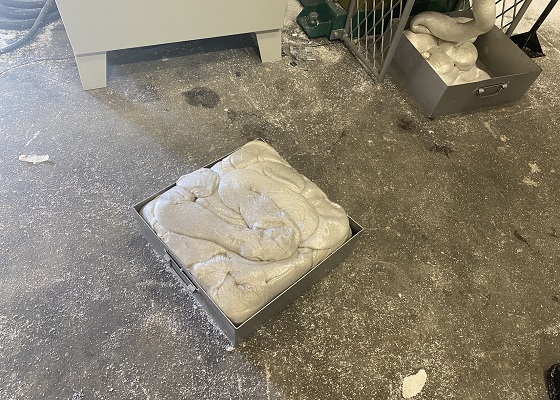
A Styrofoam densifier works by applying heat to the material, causing it to soften and compress. The process involves feeding Styrofoam into a chamber, where it is heated to a specific temperature. Once the material has reached the desired temperature, it is compacted under pressure, which causes it to shrink down to a much smaller volume. The result is a dense block that can be easily transported, stored, and eventually turned into new products such as insulation boards, picture frames, or even new Styrofoam products.
Unlike traditional mechanical methods, which rely on shredding or compacting Styrofoam without significantly changing its structure, heat-melting densifiers offer a much higher compression ratio. This is because the heat causes the Styrofoam to soften, making it more pliable and easier to compress into a dense, solid form. The result is a much more efficient recycling process with a much smaller environmental footprint.
The GREENMAX Approach: A Case Study in Heat-Melting Technology
GREENMAX, a leading manufacturer of recycling machines, has successfully incorporated heat-melting technology into its Styrofoam densifiers, offering an innovative solution for businesses seeking to recycle large volumes of Styrofoam. GREENMAX hot-melt densifier is designed to handle Styrofoam waste in a way that minimizes both storage and transportation costs, making it an excellent choice for industries and businesses dealing with significant amounts of Styrofoam waste.
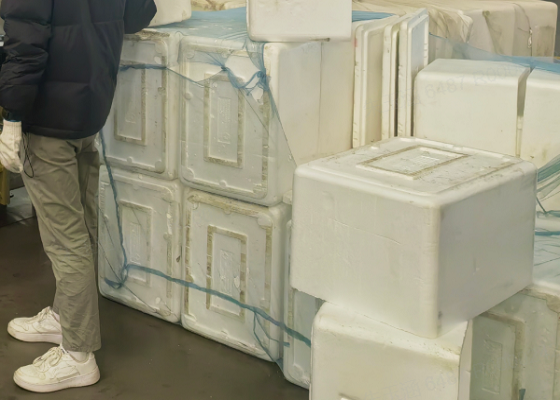
One notable example of the effectiveness of GREENMAX heat-melting densifier is in the food packaging industry. Many food distributors and manufacturers receive their products in Styrofoam containers, which often accumulate quickly. Traditionally, these containers would be bulky and difficult to manage, leading to storage issues and increased disposal costs. By using GREENMAX heat-melt densifier, these companies are able to process their Styrofoam waste into compact blocks that take up far less space and are more economical to transport. Furthermore, the compacted material can then be sold or reused, closing the recycling loop and reducing the demand for new Styrofoam production.
.jpg)
The heat-melting densifier ability to achieve a high compression ratio is one of its key advantages. While other densifiers may only reduce the volume of Styrofoam by a factor of 20 or 30, the GREENMAX hot-melt densifier can achieve a ratio of up to 90:1. This means that a large quantity of Styrofoam can be processed into a small, dense block, which makes it far more manageable and less costly to handle. This efficiency not only saves on space but also greatly reduces the environmental impact of Styrofoam waste.
Conclusion
Styrofoam recycling is a pressing issue in today’s waste management landscape, but the advent of Styrofoam densifiers, particularly those using heat-melting technology, has provided a viable solution. The ability to compress Styrofoam to a high degree, as demonstrated by GREENMAX hot-melt densifier, ensures that Styrofoam recycling is not only more efficient but also more environmentally sustainable. By reducing the material's volume and facilitating easier transportation and reuse, this technology is helping businesses and industries around the world to tackle the problem of Styrofoam waste in a more effective and cost-efficient manner. As more companies adopt these innovative solutions, we can look forward to a cleaner, more sustainable future.