
 Select Language
 English
A comprehensive solution for recycling multiple types and multi-source foams with the Foam Densifier
With the rapid development of industries such as packaging, e-commerce, automobiles, and home appliances, the use of foam plastic is increasing. Among them, EPS, EPE, and EPP are the three most common materials, which are widely used in protective packaging, thermal insulation and structural filling of various products. However, at the same time, a large number of waste foam plastics are also generated, which has become a major problem affecting the environment and resource circulation.
Although these foam materials play an important role in the use process, they are usually large and have very low density when discarded, resulting in high transportation and disposal costs, and traditional landfill and incineration methods are both wasteful and environmentally burdensome. Therefore, how to efficiently and safely recycle these waste foams has become an important topic to promote green economy and recycling.
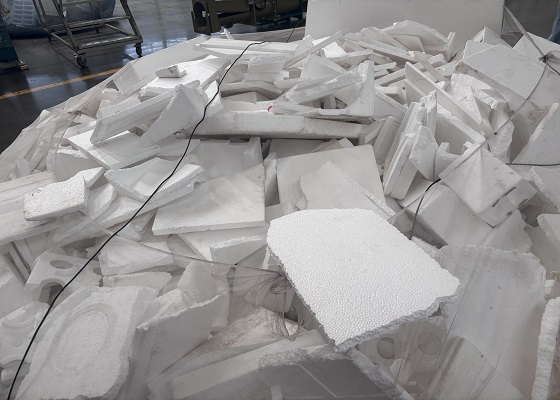
The Foam Densifier is an environmentally friendly device designed to solve this problem. It compresses the bulky foam waste into high-density "brick" solids through heating, melting, extrusion and other processes, making transportation more convenient and laying the foundation for subsequent recycling. One of the biggest advantages of Foam Densifier is its strong compatibility, which can handle multiple types of foam materials such as EPS, EPE, and EPP at the same time, eliminating the need for frequent equipment or process replacements, greatly improving processing efficiency.
In practical applications, these three types of foam materials come from a wide range of sources. EPS is commonly found in home appliance packaging, express fillers, foam fish boxes, etc. EPE appears in a large number of electronic products, shockproof gaskets, furniture transportation and other fields, with soft and reboundable characteristics. EPP is mainly used by automobile manufacturers in the fields of bumpers, car cushioning structures and child seat packaging, with high strength and good heat resistance. Foam waste from different sources has its own characteristics, but through the high-temperature extrusion or screw hot melt process of Foam Densifier, effective volume reduction and unified recycling can be achieved.
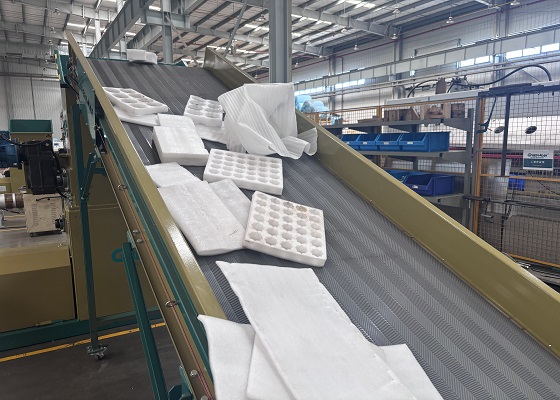
For example, in the e-commerce logistics industry, a large amount of EPS and EPE packaging waste is generated every day, and the Foam Densifier can be used to compress and process it instantly in the distribution center or sorting warehouse to avoid accumulation and footprint problems. In the aquatic and fresh food market, foam incubators are frequently replaced daily, and by setting up recycling points at the back end of the market, waste foam boxes can be directly melted and compressed into high-density blocks, which can be easily transported to recycling plants. In the field of automotive manufacturing, the amount of EPP corner waste is considerable, and internal logistics links are reduced through in-situ processing, saving costs and improving workshop cleanliness.
Foam Densifier not only improves recycling efficiency, but also greatly reduces labor and transportation costs, turning foam recycling from a "problem" to a "resource". High-density molded blocks can be further crushed and granulated for the production of recycled plastic products, such as plastic plates, recycled packaging, building accessories, etc., to achieve true recycling.
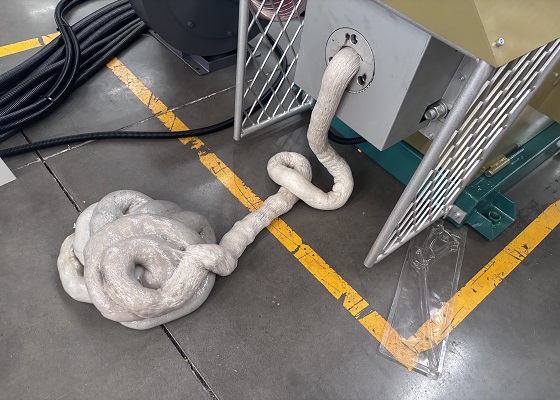
In summary, the use of Foam Densifier to recycle waste foam from various types and sources such as EPS, EPE, EPP is not only an efficient and environmentally friendly technical path, but also a key measure to promote the sustainable development of the industry. In the future, with the promotion of policies and the popularization of green awareness, such equipment will be more widely used in various production and circulation links, injecting strong impetus into the resource recovery system.