
 Select Language
 English
Choose Styrofoam Recycling Machine for Retail Warehouses
Retail warehouses receive large quantities of furniture, appliances, televisions and other products protected by Styrofoam packaging. After unpacking, the protective corners, panels and inserts quickly become bulky waste that is difficult to store and transport. For retailers with busy distribution centers, a Styrofoam recycling machine can reduce the volume of loose foam, improve warehouse operations and prepare the processed material for further recycling.
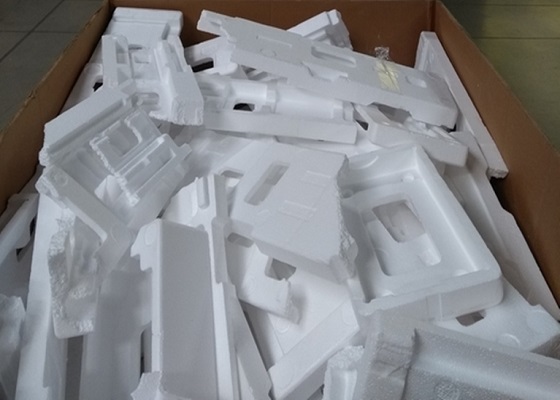
Styrofoam in Retail Warehouses
Styrofoam is widely used because it protects products from impact and vibration during transportation. However, once the products reach the warehouse or customer, the packaging is no longer needed and must be removed from the working area.
Because Styrofoam is lightweight but takes up considerable space, it can quickly fill waste containers and storage areas. When retailers depend only on external recyclers, delays in collection may create additional pressure and increase transportation and landfill costs.
Choosing Styrofoam Recycling Equipment
The right Styrofoam recycling machine depends on the amount and condition of the foam. Clean packaging from furniture and appliance deliveries can usually be collected and processed after removing cardboard, plastic film and other impurities.
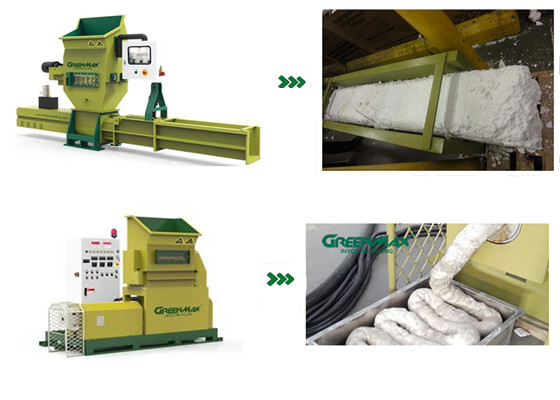
A cold-compaction machine compresses Styrofoam mechanically without heating. For suitable packaging waste, this type of Styrofoam compactor can achieve a volume reduction ratio of up to 50:1 and may be suitable for retailers that prefer lower energy use and a simple recycling process.
A hot-melting Styrofoam densifier heats and compresses the foam into dense ingots. With a compression ratio of up to 90:1, this solution can be suitable for larger retail warehouses that generate substantial amounts of loose Styrofoam and need to reduce storage and transportation pressure.
Furniture Retailer Uses Styrofoam Densifier
The Room Place, a furniture retailer in the United States, generated large amounts of Styrofoam packaging at its distribution center in Chicago. The company had previously used a European compactor, but the equipment required too much labor and produced blocks that were too light to achieve a higher resale value.
GREENMAX recommended Styrofoam densifier M-C300 equipped with a large SILO and sorting table. The system helped separate non-Styrofoam impurities and improve the feeding and storage process. The Room Place eventually installed three Styrofoam densifiers, arranged together so that one worker could control the equipment.
According to the published case, the company was able to save approximately $100,000 through reduced labor requirements. GREENMAX also purchased the densified Styrofoam ingots for granulation and further processing into recycled PS pellets and other plastic products, giving the retailer a way to reduce operating costs and create additional value from its packaging waste.
Styrofoam recycling equipment can help retail warehouses reduce manual work, improve output quality and create a downstream recycling route. GREENMAX provides Styrofoam compactors, densifiers and customized recycling systems according to the customer’s foam, warehouse space and recycling goals.
FAQ
1. Can Styrofoam from Retail Warehouses Be Recycled?Yes. Clean Styrofoam packaging from furniture, appliances and other retail products can generally be collected, processed and sent to downstream recyclers.
2. Which Styrofoam Recycling Machine Is Suitable for Retail Warehouses?Cold-compaction equipment may be suitable for clean packaging when non-heating operation and lower energy use are preferred. A hot-melting Styrofoam densifier may be more appropriate for high-volume warehouses that require greater volume reduction.
3. What Happens to Processed Styrofoam?
Compacted or melted Styrofoam can be stored and transported more efficiently. Depending on quality and local recycling conditions, it may be granulated into recycled plastic pellets or used to manufacture new plastic products.