 Select Language
 English
Basic Process of PET Bottle Delabeling and Baling: GREENMAX Recycling Solution for PET Bottles
PET bottles are widely used in the beverage, food, and daily chemical industries. Because they are lightweight, durable, and convenient for transportation, PET bottles have become one of the most common packaging materials in modern life. However, the large consumption of PET bottles also creates a serious recycling challenge. If discarded PET bottles are not collected and processed properly, they may occupy landfill space, pollute rivers and oceans, and cause long-term environmental pressure. Therefore, building an efficient PET bottle recycling process is important for both resource recovery and environmental protection.
In the recycling process of PET bottles, delabeling and baling are two basic but very important steps. Used PET bottles usually come with labels, caps, and sometimes remaining liquid or impurities. Before further washing, crushing, or pelletizing, the labels on the bottle surface need to be removed as much as possible. This step helps improve material purity and makes the following recycling process more efficient. A PET bottle delabeling machine can separate labels from bottle bodies through mechanical friction and cutting. After delabeling, the bottles are cleaner and easier to sort, which improves the value of the recycled material.
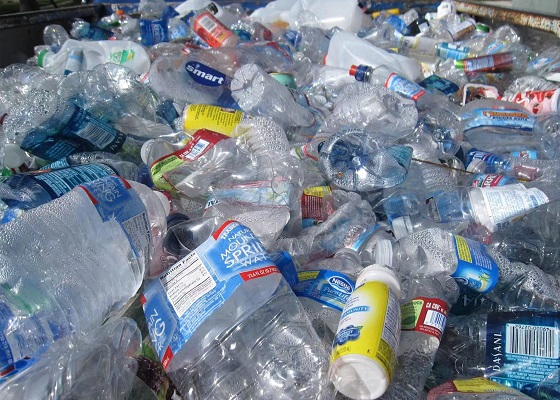
After delabeling, the PET bottles are usually very loose and bulky. Although PET bottles are light in weight, they take up a large amount of storage and transportation space. If they are transported directly without compression, logistics costs will be high and warehouse space will be wasted. This is why baling is necessary. A baler compresses loose PET bottles into compact bales, making them easier to store, load, transport, and sell. Compared with loose bottles, baled PET bottles are more organized and can significantly improve recycling efficiency for collection stations, recycling centers, beverage factories, and waste management companies.
GREENMAX provides a practical PET bottle recycling solution through its baling station, which combines a delabeling machine and a baling machine into an integrated recycling system. This system is designed to help customers complete the basic pre-treatment process of PET bottle recycling more efficiently. First, collected PET bottles are fed into the delabeling machine. The machine removes most labels from the bottle surface, reducing contamination and preparing the bottles for the next step. Then, the delabeled bottles are conveyed or transferred to the baler, where they are compressed into dense and regular bales. In this way, the GREENMAX system connects delabeling and baling into one smoother workflow.
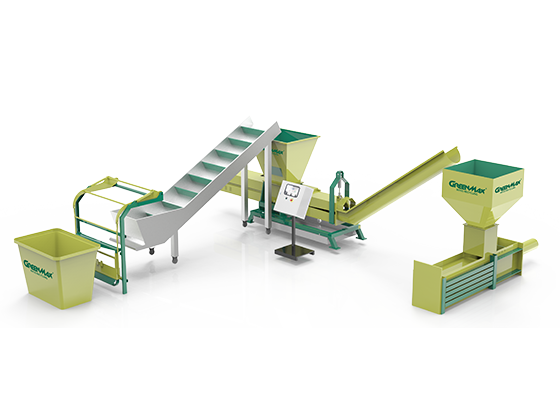
For customers who handle large quantities of PET bottles every day, this system can bring clear operational benefits. For example, a recycling company collected PET bottles from supermarkets, beverage distributors, and local collection points. Before using the GREENMAX system, workers had to store loose bottles in large areas, and transportation costs remained high because each truck could only carry a limited amount of material. In addition, mixed labels reduced the quality of the PET bottles and made later processing more difficult.
After installing the GREENMAX PET bottle delabeling and baling system, the customer’s recycling process became more efficient. The delabeling machine helped remove labels before compression, improving the cleanliness of the bottles. The baler then compressed the bottles into compact bales, greatly reducing the storage space required in the warehouse. The customer could load more material onto each truck, lower transportation frequency, and sell the baled PET bottles more conveniently to downstream recycling plants. This case shows how GREENMAX helps customers improve both recycling efficiency and material value through a complete and practical baling station solution.
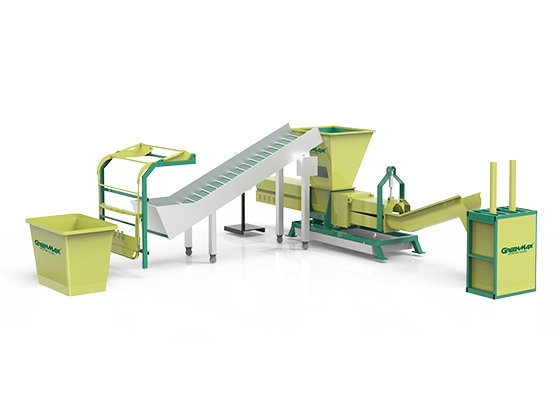
The environmental value of PET bottle recycling should not be ignored. PET plastic can remain in the environment for a very long time if it is discarded carelessly. Bottles that enter rivers, coastlines, and oceans may break down into smaller plastic fragments, creating risks for marine life and ecosystems. Landfilled PET bottles also waste valuable recyclable resources. Through proper collection, delabeling, baling, and further recycling, PET bottles can be turned into recycled flakes, fibers, sheets, straps, or other plastic products. This reduces the demand for virgin plastic and helps lower the environmental burden caused by plastic waste.
GREENMAX PET bottle recycling equipment supports this circular process by making the early stage of recycling more efficient. A well-organized delabeling and baling system can encourage more businesses to recycle PET bottles instead of treating them as waste. When bottles are processed into clean and compact bales, recycling becomes easier, more economical, and more attractive for both collectors and downstream processors.
As sustainability becomes a growing focus for companies and communities, PET bottle recycling is no longer just a waste handling method. It is part of a broader effort to reduce plastic pollution, save resources, and build a cleaner recycling chain. With the GREENMAX baling station, customers can process PET bottles more efficiently, reduce storage and transportation costs, and contribute to a more sustainable plastic recycling system.